
Minding the Gap Journey Through the Six Bardos
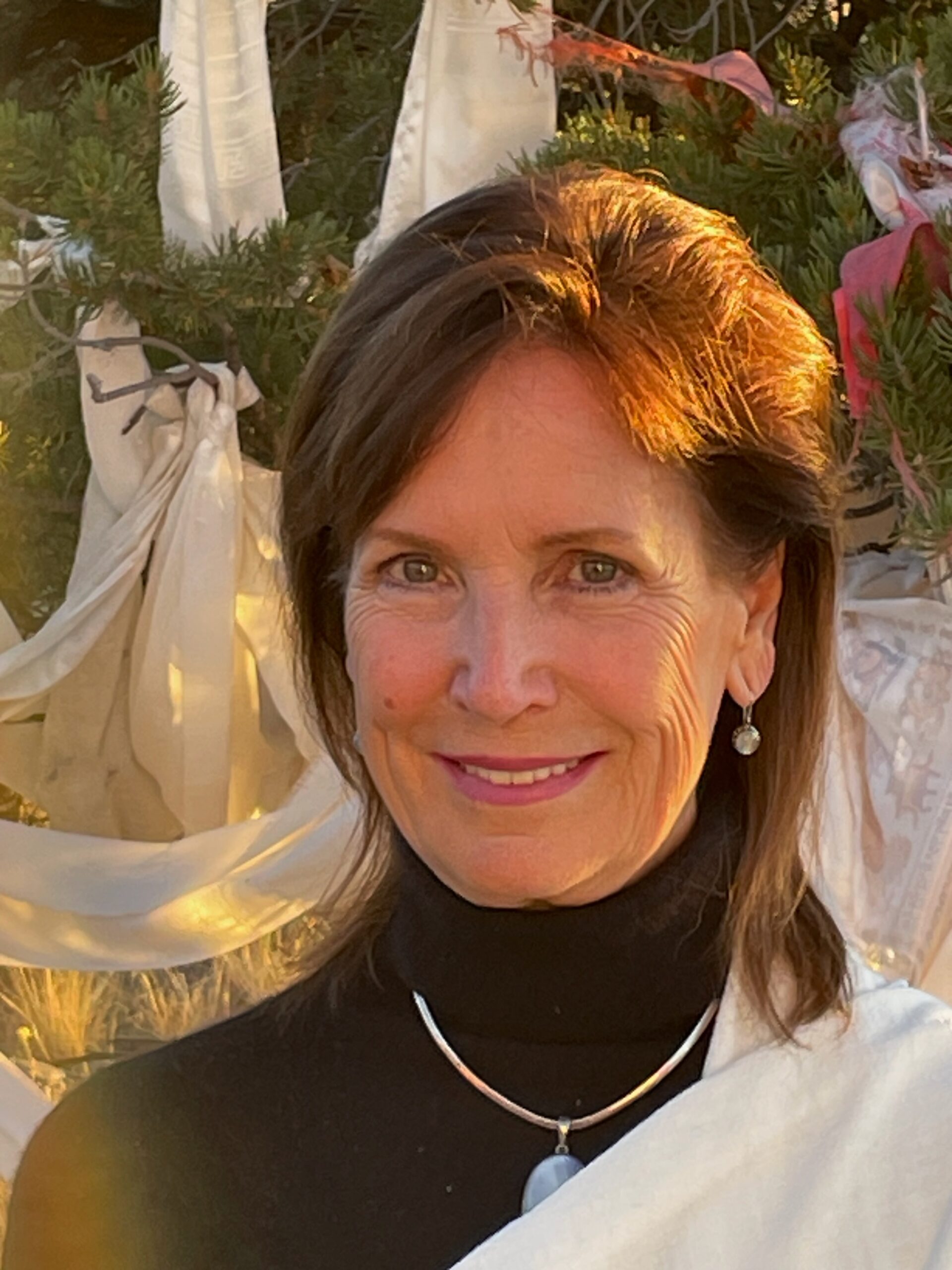
with Lopön Robin Gayle
March 28 - November 8, 2026
with Lopön Robin Gayle
“In life and in death, in meditation and in sleep, every transitional
stage of consciousness, or bardo, provides an opportunity to
overcome limitations, frustrations, and fears.”
~Padmasambhava, in Natural Liberation, 1998
Life is a constant dance between the known and the unknown, a cycle in which death and birth are always interwoven. The bardo represents this in-between state — the gap where uncertainty thrives, yet where profound transformation occurs. In this retreat, we will explore the nature of these gaps in both our lived experiences and through the lens of traditional Tibetan Buddhist teachings.
Through guided meditations, insights, and reflections, you will gain the tools to face the anxiety and uncertainty inherent in these gaps, and learn how to embrace the luminous emptiness that can guide our consciousness toward liberation or a fortunate rebirth.
Each weekend, Lopön Robin Gayle will define a Bardo state through the lens of traditional Buddhadharma, describe how each Bardo is experienced during life, and lead us in traditional and contemporary meditation practices to navigate these transitions effectively.
Join us for this transformative journey to experience peace in the unknown and unlock the possibility of true freedom.
Minding the Gap: Journey Through the Six Bardos will take place over six weekends in 2026, with the option to register for the whole series or by individual course:
| March 28 – 29, 2026 | The Bardo of This Life as Preparation for Death |
| April 25 – 26, 2026 | The Bardo of Meditation: Preparation for All Bardos |
| May 23 – 24, 2026 | The Bardo of Dreams: Recognizing Emptiness and Luminosity |
| Sept. 19 – 20, 2026 | The Bardo of Death: Preparation for Recognizing the Clear Light |
| October 17-18, 2026 | The Bardo of Dharmata: Preparation for Recognizing Our True Nature |
| November 7-8, 2026 | The Bardo of Becoming: Preparation for Life |
════════ ════════
The Bardo of This Life as Preparation for Death
“Large and small gaps take place constantly in life; the sense of ‘I’ is being born and dying every moment.
And we have a choice: continue to establish the ego with all of its reified patterns,
or let go and explore what is in the gap, allowing it to luminously reveal possibilities where anything can happen.”
~ Freemantle, Luminous Emptiness, 2001
In this life, we have the opportunity to prepare ourselves. After death, without the grounding influence of the physical body, events will overtake us with such speed and intensity that there will be no chance to stop, ground, and meditate. How do we take advantage of our precious human situation and practice going into the uncertainty of the daily gaps we face, so we continue to grow and transform?
In this weekend, we will define this transitional phase (Bardo) of Living, a lifetime that has a beginning and an end, explore the variety of ‘gaps’ we encounter in it, and practice contemplative meditation methods that have the potential to liberate us in this life and/or prepare us for the bardo experiences after death. Guided meditations will center around Releasing the Struggle, and Becoming Comfortable in Chaos
════════ ════════
The Bardo of Meditation: Preparation for All Bardos
“Now when the bardo of meditation dawns upon me,
I will abandon the crowd of distractions and confusions
Rest in the boundless state without grasping or disturbance,
And gain stability in creation and completion.
At this time of meditation, one-pointed, free from activity
Do not fall into the power of confused emotions.”
~ Tibetan Book of the Dead
The Bardo of Meditation is considered by some schools to be a gap found within the Bardo of Living. Meditation is possibly the most essential training in life to cultivate the stability to either awaken in, or peacefully navigate, all the other bardos we encounter in life and at death. It is through meditation that we take control of our energy mind with firm mindfulness and introspection, and this alone provides relief from delusion and cultivates an inner stillness, clarity, and discernment that lead to freedom from mental afflictions.
To rest in the evenness of the bardo of meditation, one must have some training, specifically in Shamitha (calm abiding) and Vipassana (insight and discernment). This weekend, we will have the opportunity to deeply release into the gap of meditation and simply rest in the boundless state of the openness and clarity of the true nature of the mind. Guided meditations will center on the Shamatha methods: Taking the Mind as the Path and Resting the Mind in Space.
════════ ════════
The Bardo of Dreams: Recognizing Emptiness and Luminosity
“We who think of ourselves as the living could really be called the dead because we are unawakened and living our lives in a dream.”
~ Lama Alan Wallace, lecture, 2023
Falling asleep is the closest analogy to dying in our normal experience. We can practice in this life to be aware of the subtle dissolutions and to rest in the luminosity of sleep. This luminosity is inherent within a continuation of mind and mind’s appearances, which occur unceasingly in both our waking state and nighttime dreaming, and most of our time is spent reacting to these appearances with either attachment, aversion or indifference.
While in this bardo of life, we train to enter the gap of this subtle dream body and use it as a vehicle for becoming familiar with the dying process, ascertaining the emptiness of appearances, and encountering the luminosity of our natural state. Guided meditations will center around traditional Dream Yoga practices and will also include contemporary methods for cultivating greater lucidity in both nighttime and daytime experiences.
════════ ════════
The Bardo of Death: Preparation for Recognizing the Clear Light
“If we wish to die well, we must learn how to live well. Hoping for a peaceful death, we must
cultivate peace in our mind, and in our way of life.”
~ His Holiness the Dalai Lama, Tibetan Book of Living and Dying, 1992
Death is described in terms of the elements of body and mind being progressively absorbed from coarse to subtle one by one, and this appears to be a final event. And yet, this transformation is actually taking place all the time: the elements that make up our existence continuously arise and dissolve. Whenever we have the feeling of something coming to an end or of trying to hang on to it, that is a taste of the Bardo of Dying. The first experience of death is about uncertainty, whether one is actually going to die, in the sense of losing contact with the solid world. The second experience is the actual dissolution of the body. And the third is a moment of quick luminosity: you can miss it, or you can go into it.
Most people miss that moment of luminosity, but if you train to become comfortable with the death-rebirth cycles encountered while alive and cultivate meditative stability in the inherent uncertainty that arises, there is the opportunity to encounter the clear light of the primordial ground, and at dissolution, the Clear Light of Death. An example of this type of inquiry might include:
– What have I given death to in my life?
– What is my usual response to endings (freeze, fight, or flight)?.
– What am I giving death to right now in my life?
– What appears to be coming for me to give death to?
Guided meditations will center on increasing Vipassana Insight, specifically aimed at the Death-Birth-Death cycle in life and the practice of being aware and letting go. The traditional practices of Chöd, Phowa, and Zhitro will also be introduced.
════════ ════════
The Bardo of Dharmata: Preparation for Recognizing Our True Nature
“O child of awakened family, when your mind and body separate, the dharmata will appear,
pure and clear yet hard to discern, luminous and brilliant with terrifying brightness, shimmering like a mirage on a plain in spring.
Do not be afraid of it, do not be bewildered. This is the natural radiance of your own dharmata, so recognize it.”
~ Tibetan Book of the Dead
In the Bardo of Dharmata, we experience great changes in external appearances. We are transitioning from the appearance of our previous life to the appearances of the next life, and there is a gap between these changes, which occurs in the Bardo of Dharmata. We experience this gap as the radiance of the clear light of the primordial ground, manifesting as light, vibration, color, and sound. Relaxing into this experience without projecting our hopes and fears is central to awakening in this bardo.
The dharmata can also be experienced right here in our lived world, but we habitually densify it by experiencing external phenomena through the thick filter of our sense organs. This leads to a falling away into confusion, illusion, and delusion, projecting our fears and desires onto all we experience with no seeming way out.
According to Tibetan Buddhism, the 42 Peaceful and 58 Wrathful deities arise in the Bardo of Dharmata to help us personify and transform our self-fabricated fears and desires into enlightened, non-dualistic energy. This is greatly assisted by deity and mandala practice during life. Guided Meditations: Feeding Your Demons: transforming hope and fear; Journey through Amithaba’s Pure Land.
════════ ════════
The Bardo of Becoming: Preparation for Life
“Samsara is your mind, and nirvana is also your mind,
All pleasure and pain, and all delusions, exist nowhere apart from your mind.
To attain control over your own mind;
This is the heart of the practice for the bardo of becoming.”
~Venerable Tsele Natsok Rangdrol, 17th century teaching, in The Tibetan Book of Living and Dying, 1992
This weekend, we delve deeply into the Bardo of Becoming, a powerful concept in Tibetan Buddhism, which occurs between the dissolution of death and the emergence of new life. This bardo is marked by confusion and challenge, but also by the potential for liberation.
Without the anchor of a physical body and familiar surroundings, there is a sense of disorientation and instability, as a variety of continually changing images arise from the mind, like a very confused dream. Liberation can occur in this Bardo if we can rest in the state of awareness and resist reacting to whatever appears with greater self-protectiveness.
We can practice in this life when we feel unsure of our ground, not certain what we have gotten into, and feel confused and frightened. If we can release the grasping that causes confusion and become comfortable relaxing our course and subtle mind into their natural state, we may be able to remain focused and aware during the Bardo of Becoming at death, enabling us to choose liberation or a fortunate rebirth. Guided Meditations will include Transforming Felicity and Adversity Into the Spiritual Path; Awareness of Awareness.
════════ ════════
Who Should Attend?
This program is open to everyone.
Program Tuition
$1,425 Standard Tuition
$995 Community Supported Tuition
Learn more about available financial assistance options and apply for a scholarship here.
Installment Payment Plan Option at Registration
Recognizing that everyone’s financial situation is unique, Tara Mandala strives to make its programs as accessible as possible. During registration, participants can either pay the program fee in full or select the Installment Payment Plan. For those choosing the installment plan, a 25% deposit is required at registration, with the remaining balance automatically divided into equal monthly payments. The final payment is due 14 days prior to the program’s start date. If retreat enrollment occurs close to the start date, additional arrangements can be made. For any questions or special requests, the Finance Team is ready to assist at care@taramandala.org.
Sustaining Sangha
If you are currently a member of our Sustaining Sangha, you may apply your Online Program discount to this course. To learn more about Sustaining Sangha membership, benefits, and discounts, click here.
Offering dana to the Teacher
The practice of offering dana, which means “generosity,” is the traditional offering the student makes to the teacher as a symbol of appreciation, gratitude, and reciprocity for receiving the precious teachings. Information on offering dana to the teacher will be provided during the program. To learn more about dana and suggested dana ranges, please click here.
The suggested dana for this program is $240 – $720.
Tentative Schedule
This schedule provides an overview of the retreat’s flow. The sequence of activities and timing may be adjusted before and during the retreat. All times are Mountain Time. Please use this link to view how this daily schedule is translated into your time zone.
Daily Schedule for All Weekends (in Mountain Time Zone):
9:00 am – 12:00 pm: Teaching, Discussion, Meditation
1:30 pm – 4:00 pm: Teaching, Discussion, Meditation
Recording Access
All participants will have 1 year of access to the recordings.
Tara Mandala Pricing Guidelines
As we strive to become an equitable, diverse, and inclusive community, our pricing guidelines are designed to serve as a map, inviting each of us to assess the resources that contribute to our access to precious dharma teachings. While we do ask you to look inward, please know there is no right or wrong answer. We encourage you to select the range or rate that best suits your circumstances. To learn more about Tara Mandala’s pricing guidelines for Online Programs, In-Person Retreats, and Special Promotions, please visit this page.
What is a Tara Mandala Online Program?
Tara Mandala offers online programming via live and pre-recorded curricula, providing you with the opportunity to access dharma teachings, engage in guided practice, experience personal retreats and hands-on learning, and connect with other participants through easy-to-use online platforms and an engaged community network. When needed, the program description and schedule will inform you in advance whether a specific online session must be attended live and whether a direct transmission (Tib. lung) may be given. Access to recordings of all sessions will be available for additional viewing for one year.
Mental Health Disclaimer
While Tara Mandala offers profound Buddhist teachings and a supportive spiritual community, we do not provide mental health services, and our teachers are not operating as mental health professionals. Spiritual guidance provided by a Tara Mandala teacher is not a substitute for professional mental health support. We honor the importance of mental well-being and encourage community members seeking support to connect with licensed professionals in their local area. For immediate assistance with mental health concerns, please contact your local crisis resources or emergency services.
About the Teacher