These days hundreds of people have the opportunity each year to spend time at Tara Mandala. Most attend one of the many residential retreats that are offered from mid-April to mid-October, some are Living Dharma Program participants, while others spend time in personal solo retreats in one of the many cabins tucked away in the mountains. Our retreat center carries a deep continuing traditional Tibetan Buddhist practice combined with Lama Tsultrim’s thorough understanding and voice of the sacred feminine. It is the result of a precious vision by Lama Tsultrim and the support and encouragement of practitioners that throughout the decades have allowed it to become a unique place for study, personal growth and spiritual practice.
While in Manali, India in 1972, Lama Tsultrim had a vision: the creation of a western retreat center where meditation could be practiced as it had been in Tibet. She envisioned a place that would explore the interface between Western psychology and Buddhism. On September 18, 1993, following these dreams and visions, she and her husband, David Petit, found the beautiful
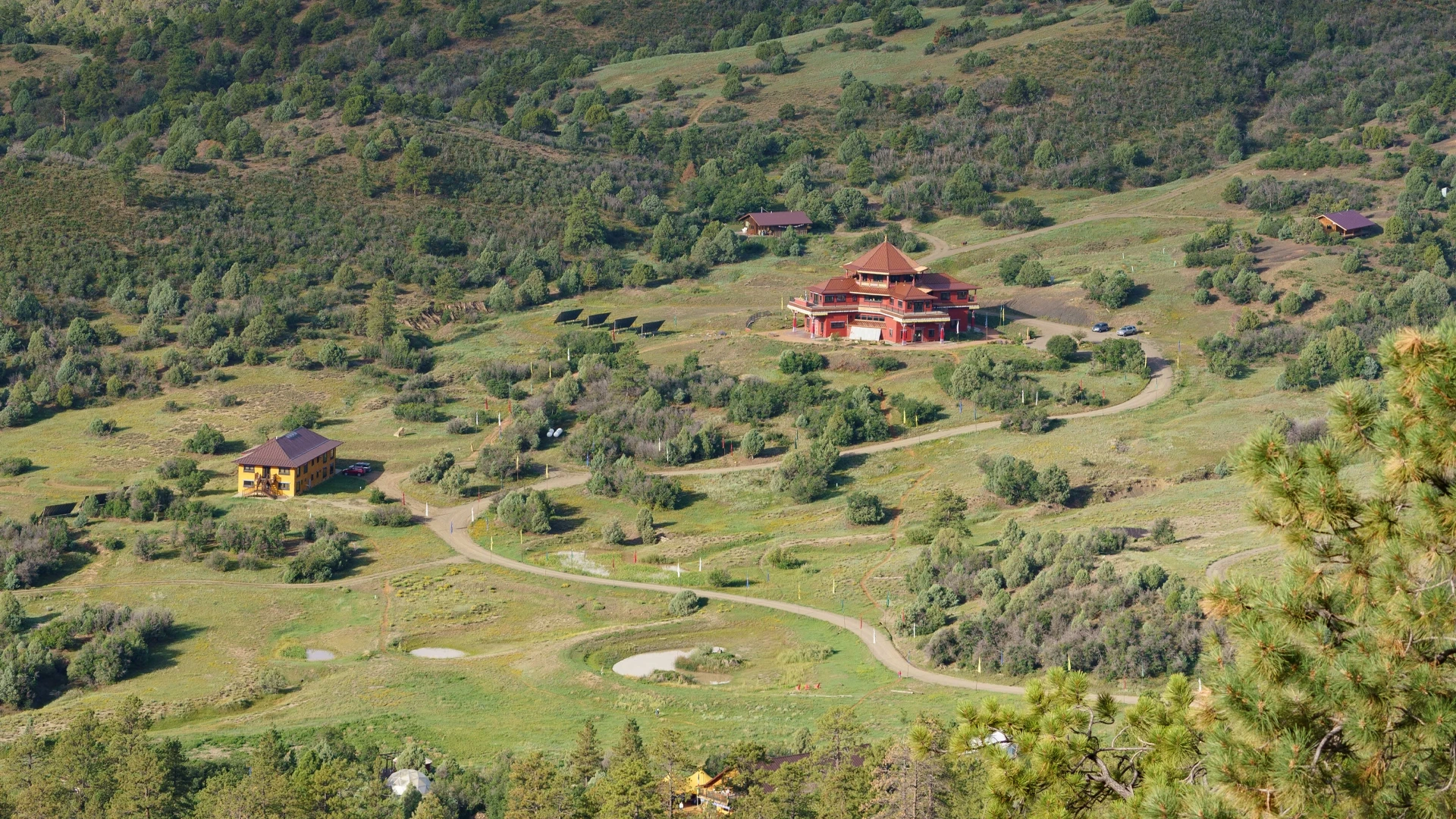
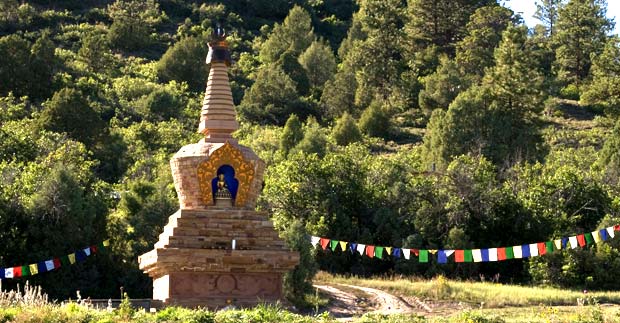
700 acres of rolling hills, flowering meadows and forests in Colorado that have since become the Tara Mandala Retreat Center. In June 1994, Lama Tsultrim and David moved to the land with a group of supporters and began holding retreats. Soon after, retreat cabins were built and they began to host visiting teachers. In 1999, the stupa on the land was consecrated by Chogyal Namkhai Norbu Rinpoche, dedicated to Nyala Pema Duddul, a great Dzogchen master.
Retreats were held in large tents and yurts for the first ten years before any permanent buildings were built.
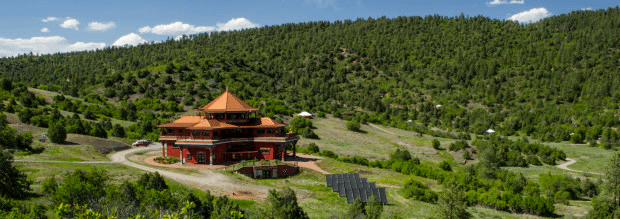
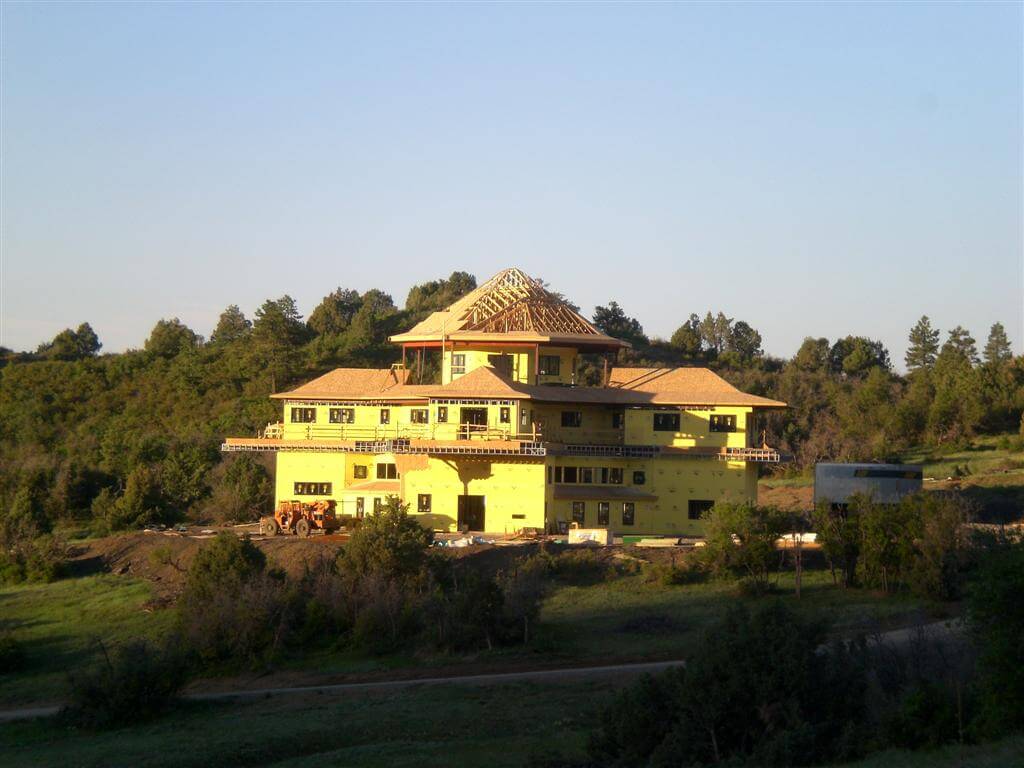
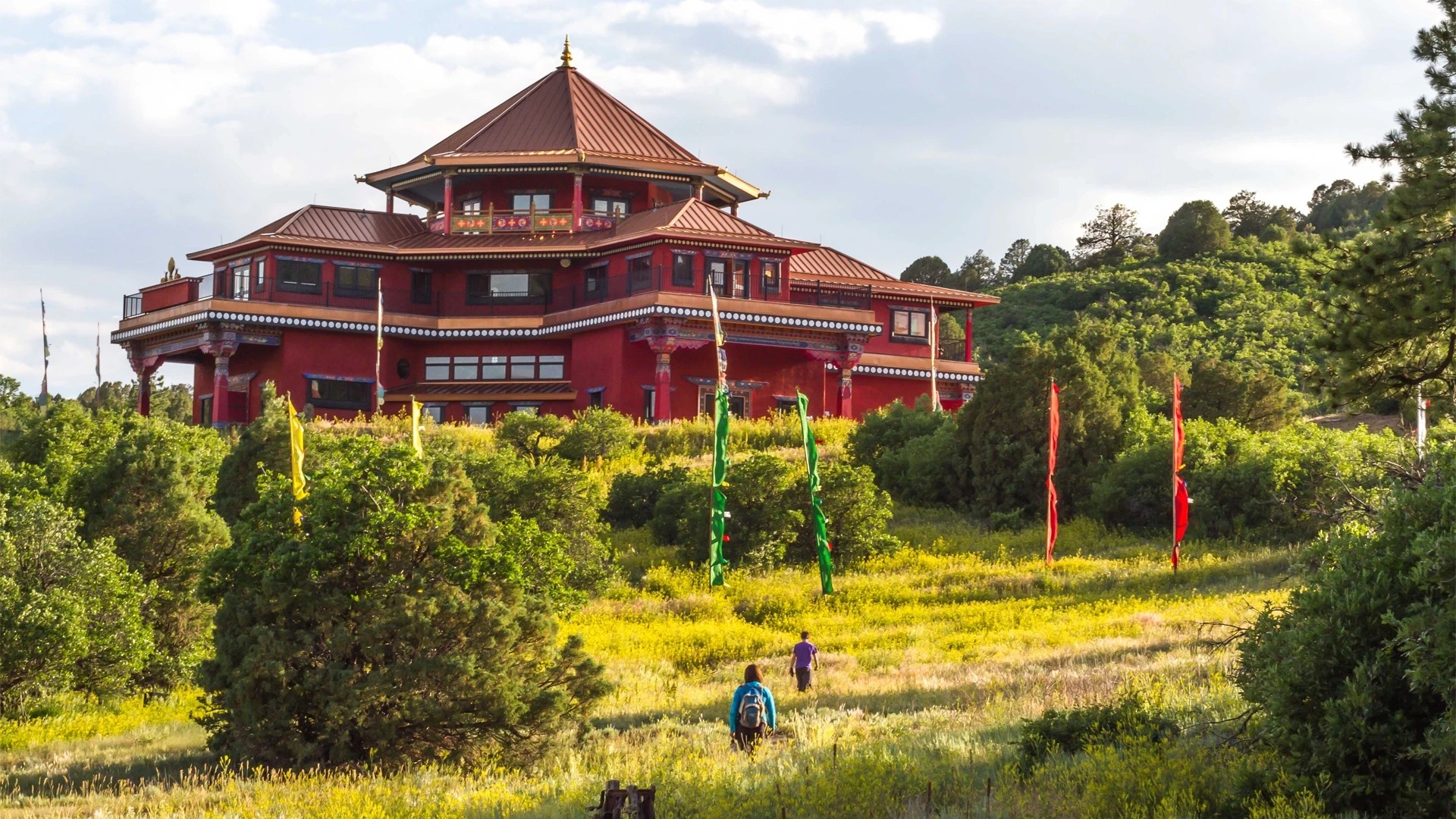
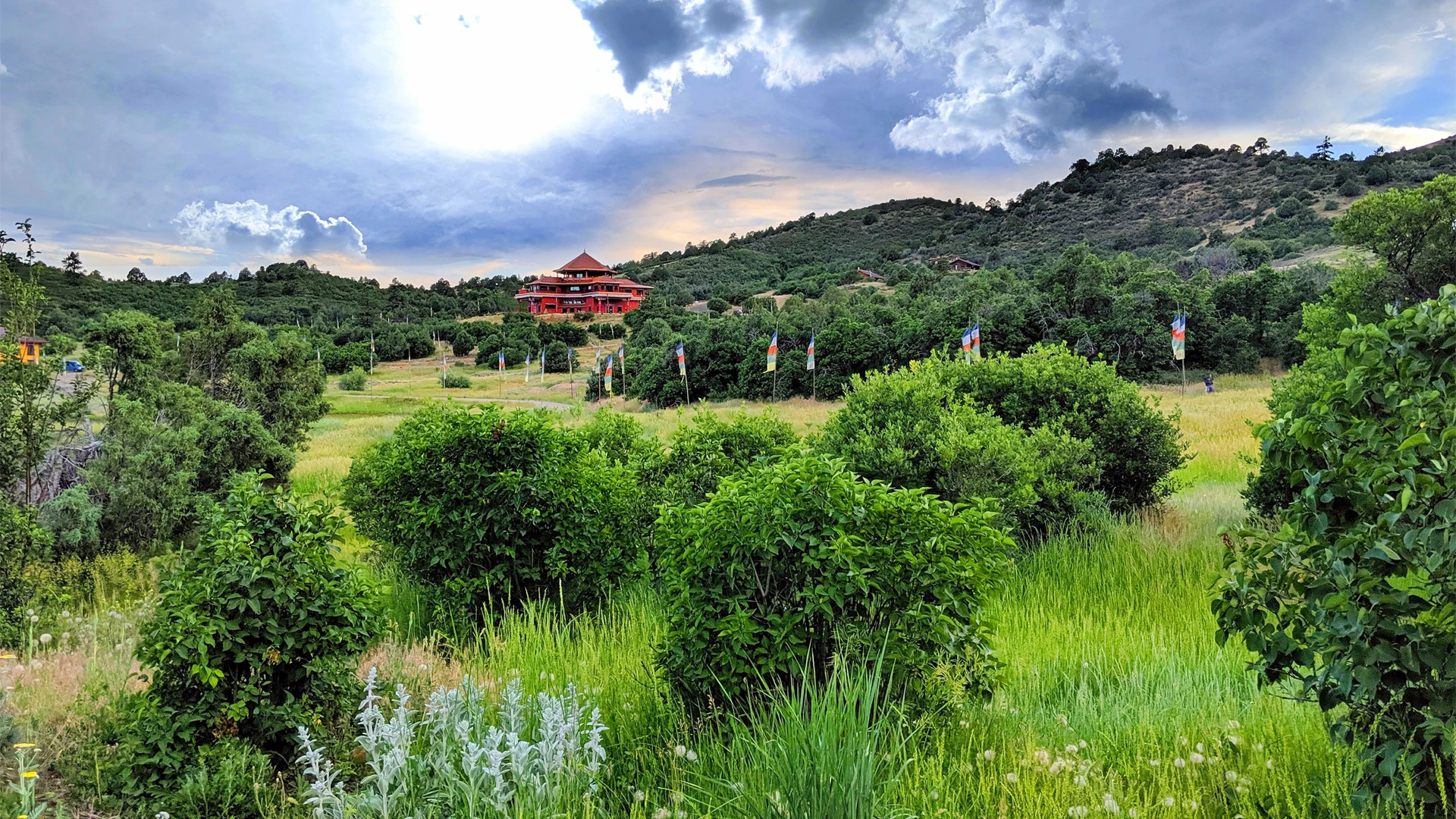
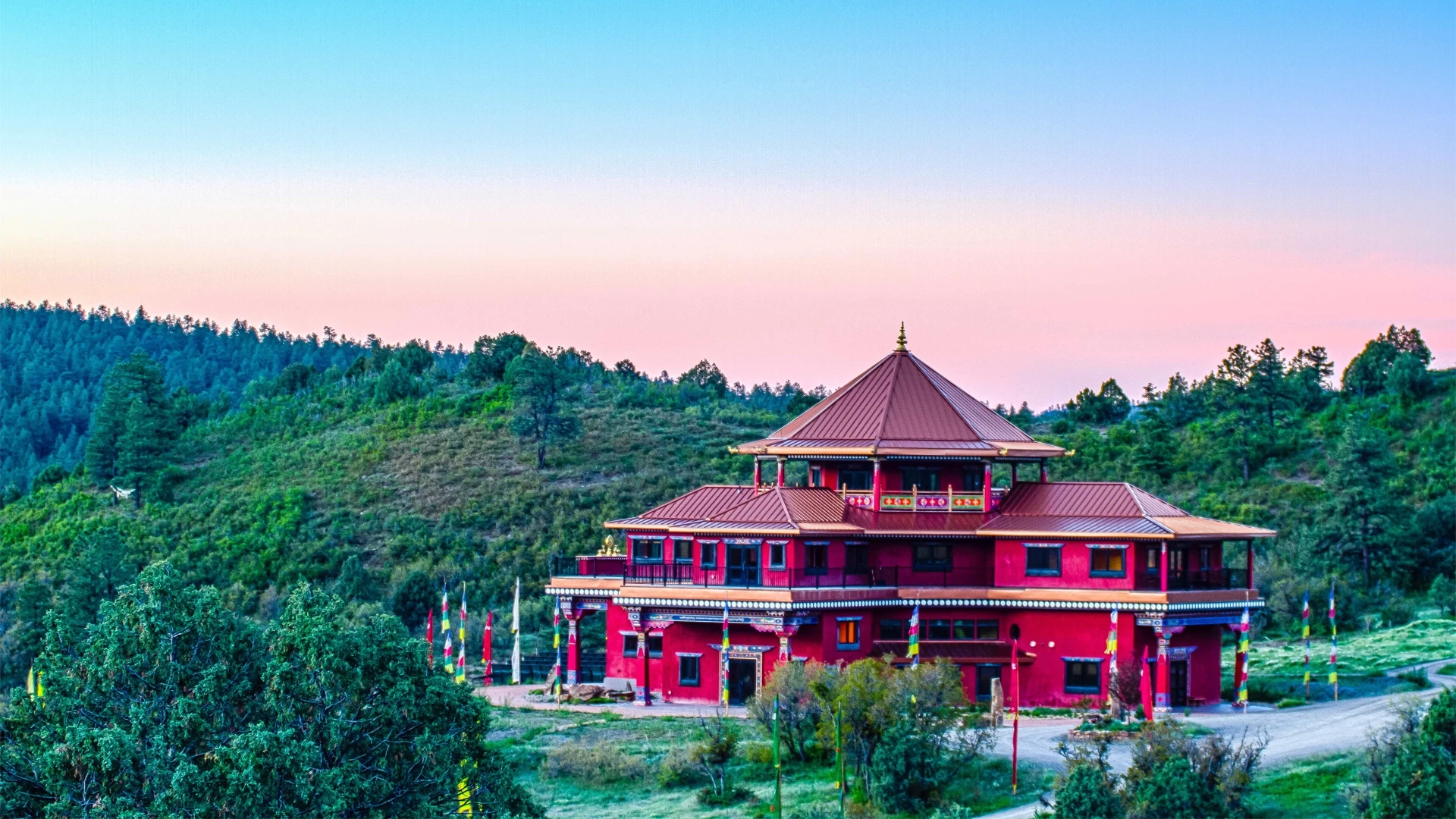
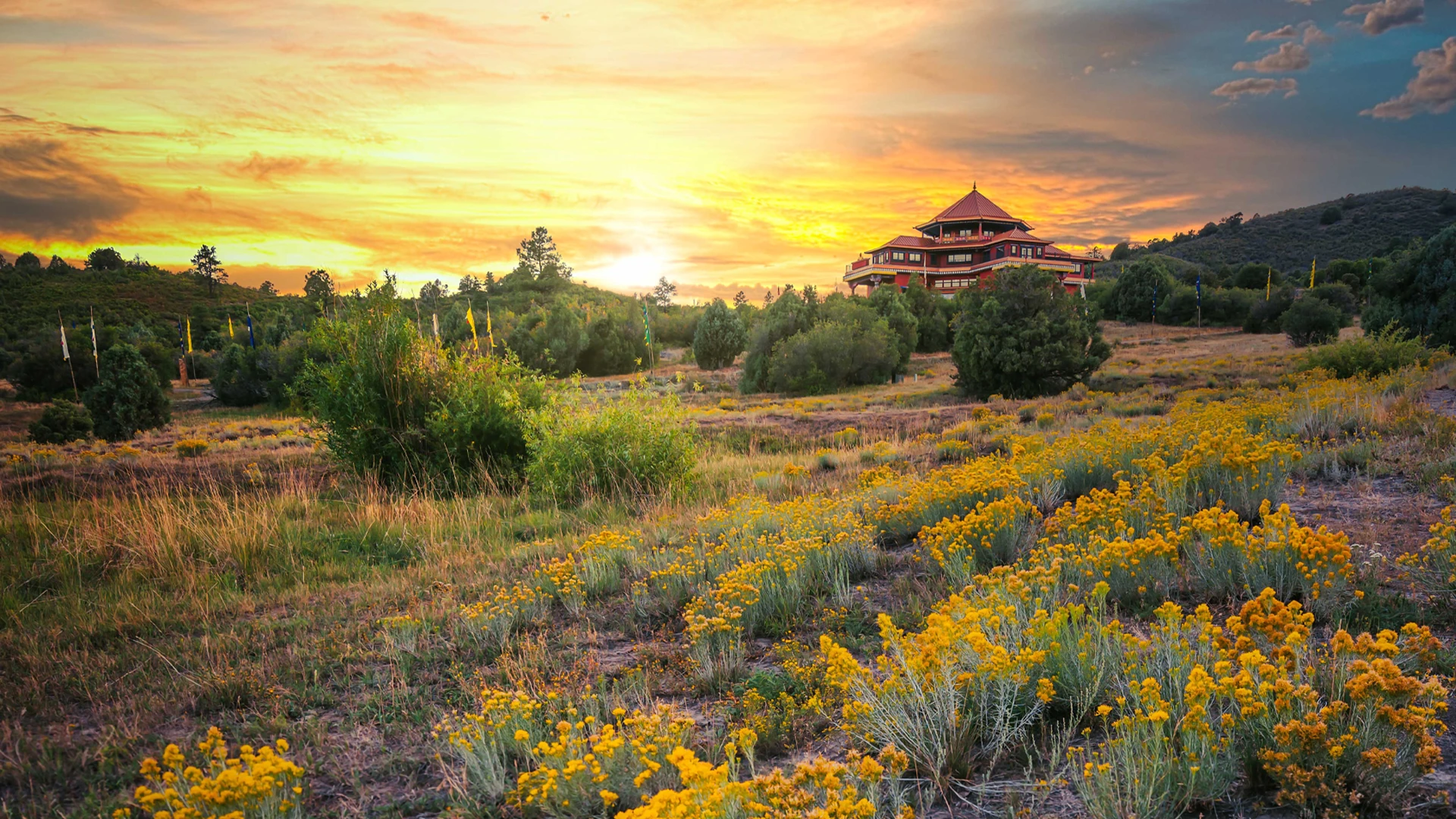
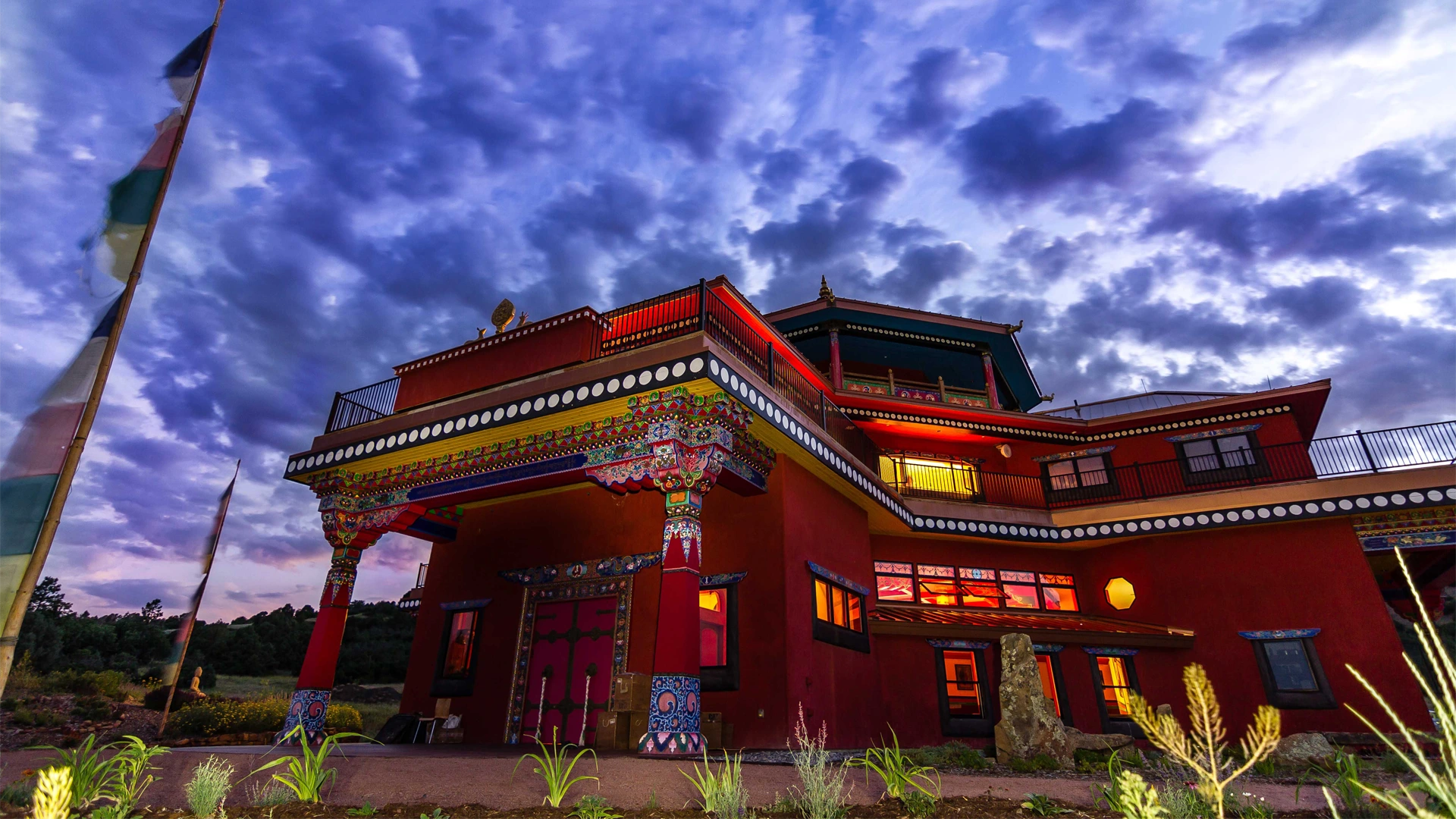
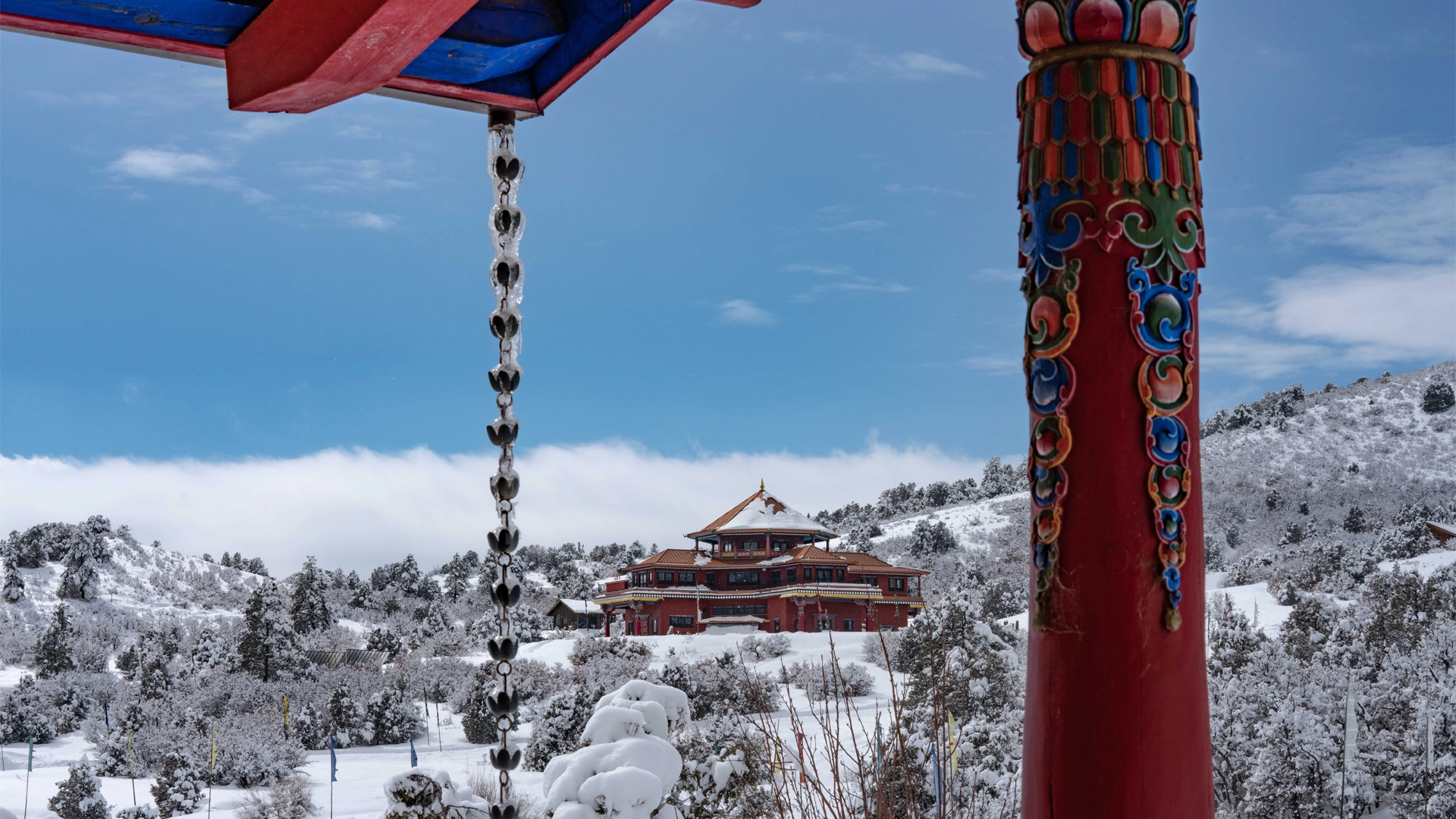
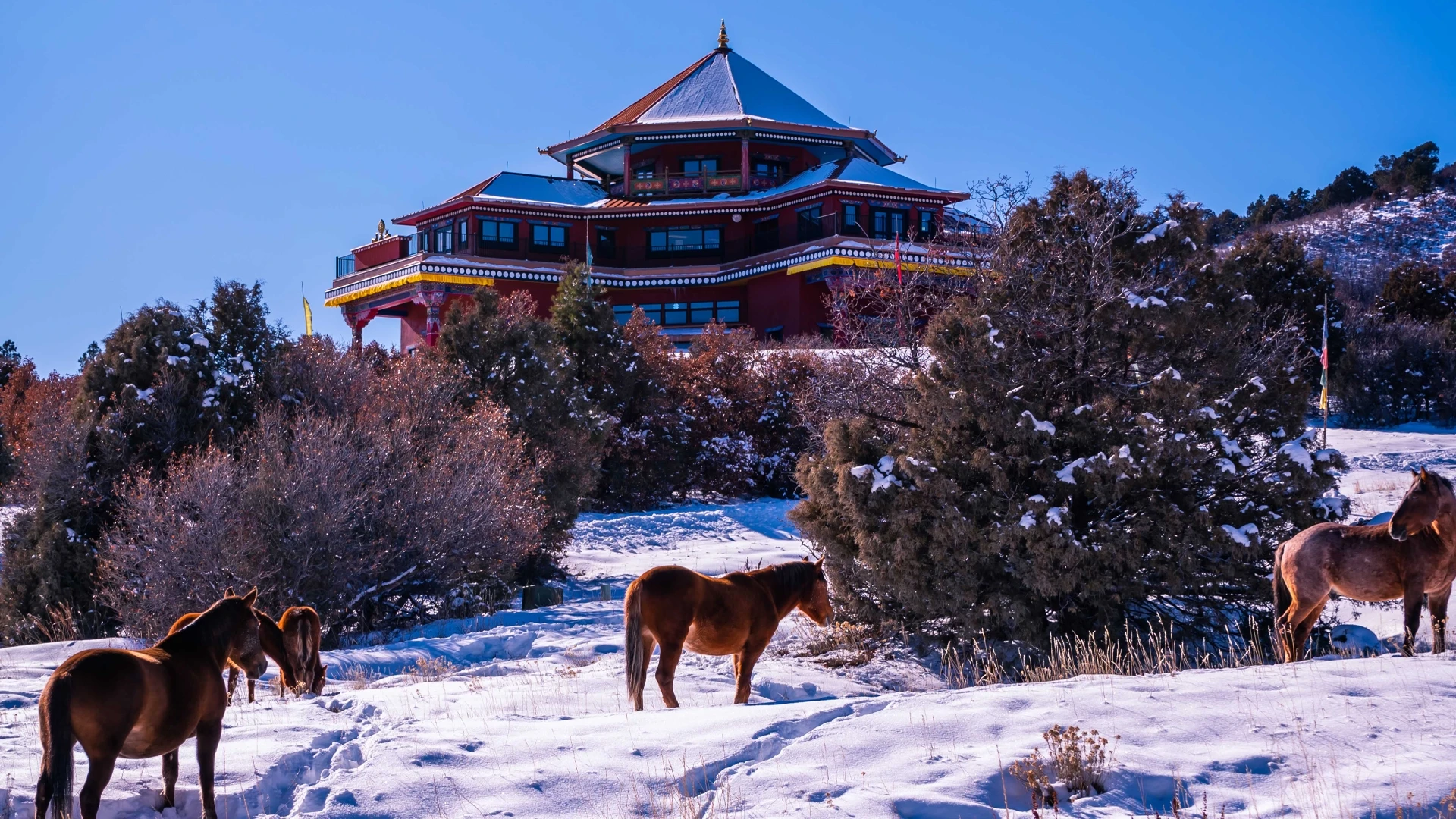
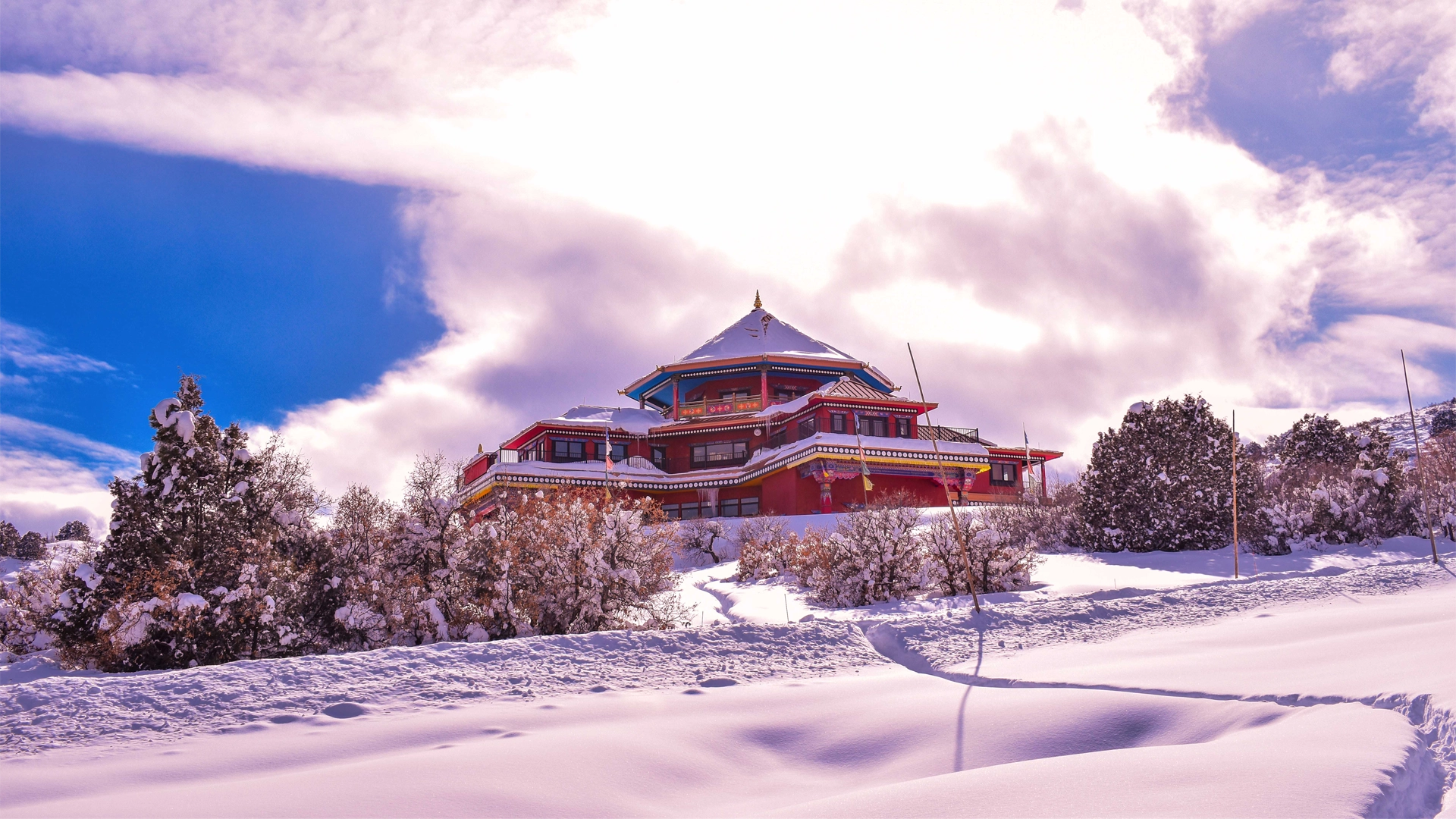
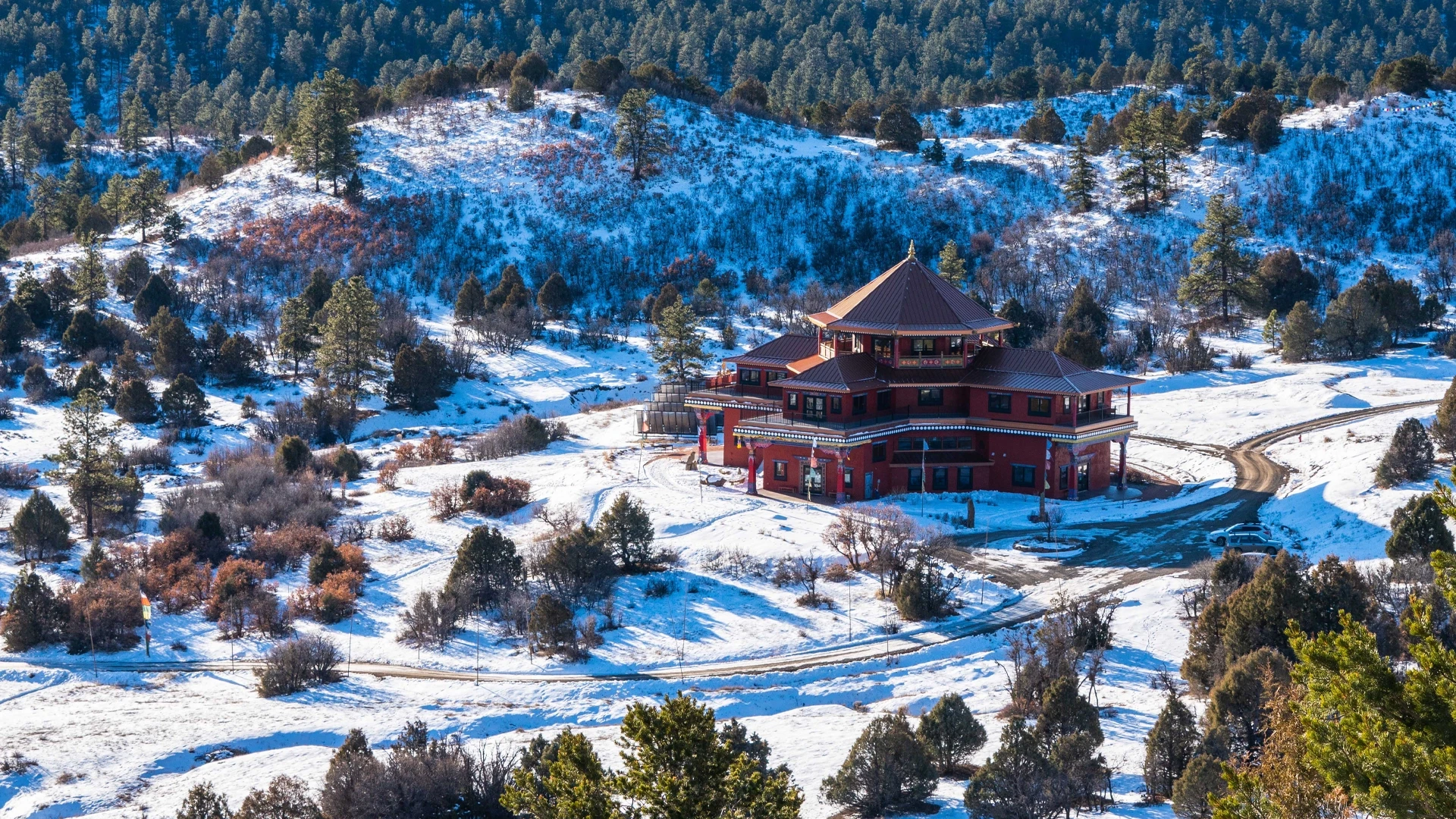
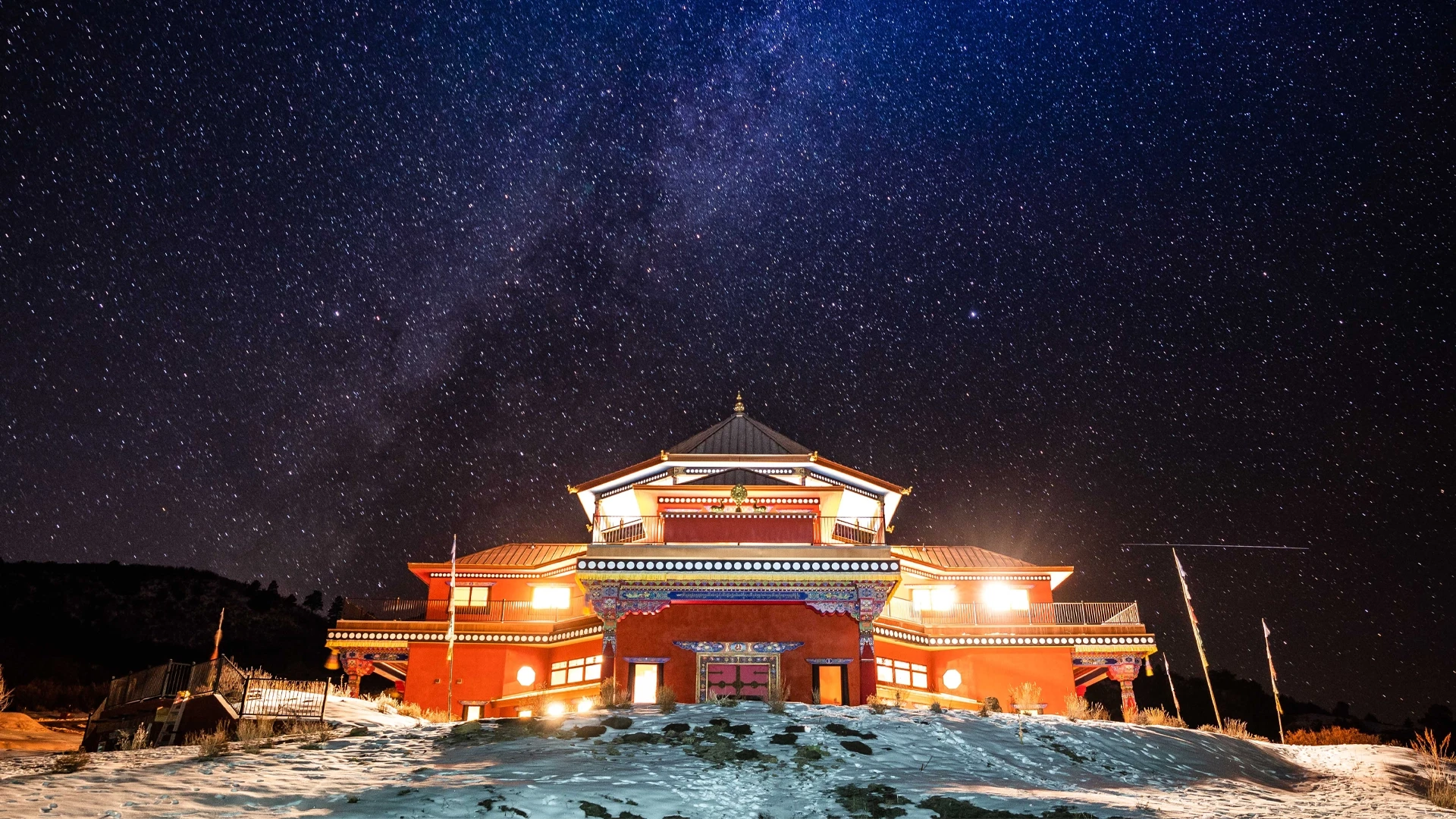
Between 2005 to 2008, three new buildings were completed: the Community Building, which houses the kitchen, dining room, offices, store, and bathing facilities; Prajna Residence Hall, which houses forty people in spacious sunlit dormitory rooms; and the extraordinary three-story Trikaya Tara Temple.
Tara Mandala is located on ancestral Ute and Pueblo land in the San Juan Mountains of Southwest Colorado. For generations, the people of the Ute and Pueblo Nations have resided on this sacred land, forming a deep and symbiotic connection with the natural living ecosystem of rivers, mountains, canyons, lakes, and forests.
Tara Mandala is committed to recognizing the long history of the Ute and Pueblo Tribes, the Southern Ute Indian Tribe, the Mountain Ute Tribe, and all Ute, Diné, Apache, and Pueblo tribal communities whose ancestral roots are intertwined across this region. We acknowledge that centuries of subjugation, physical and psychological violence, occupation, and forced removal have caused profound harm to the Ute and Pueblo people, as well as to Indigenous communities around the world.
The Community Building
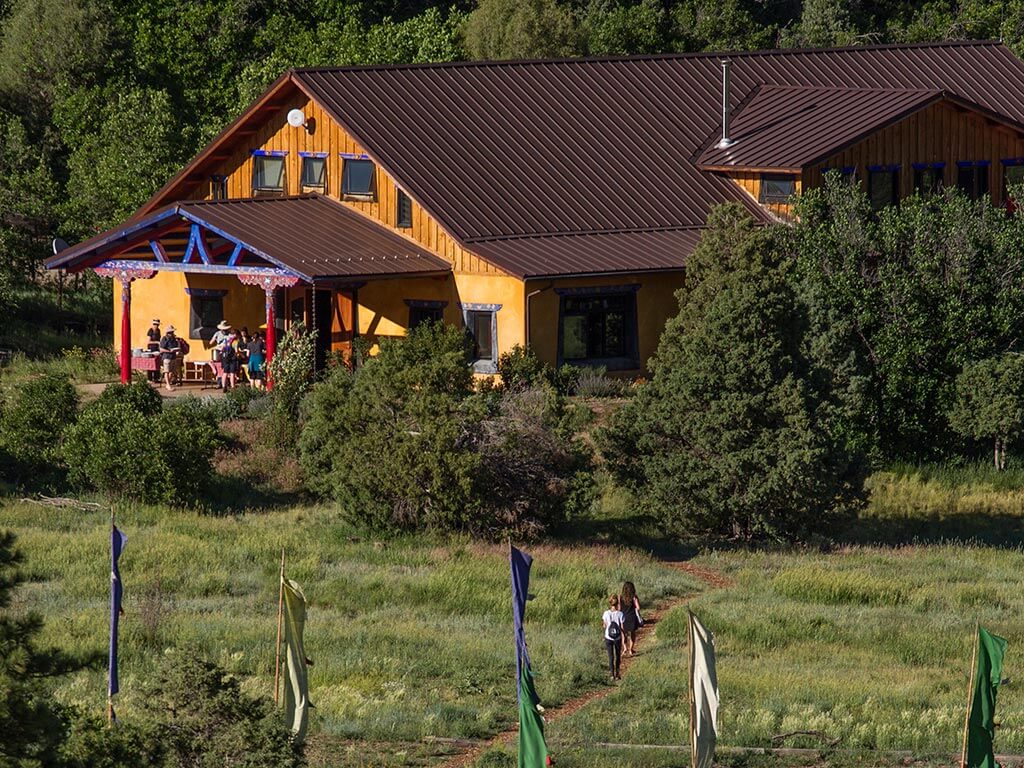
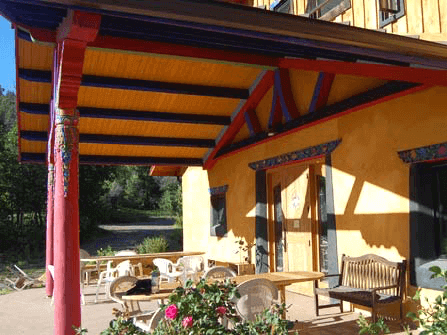
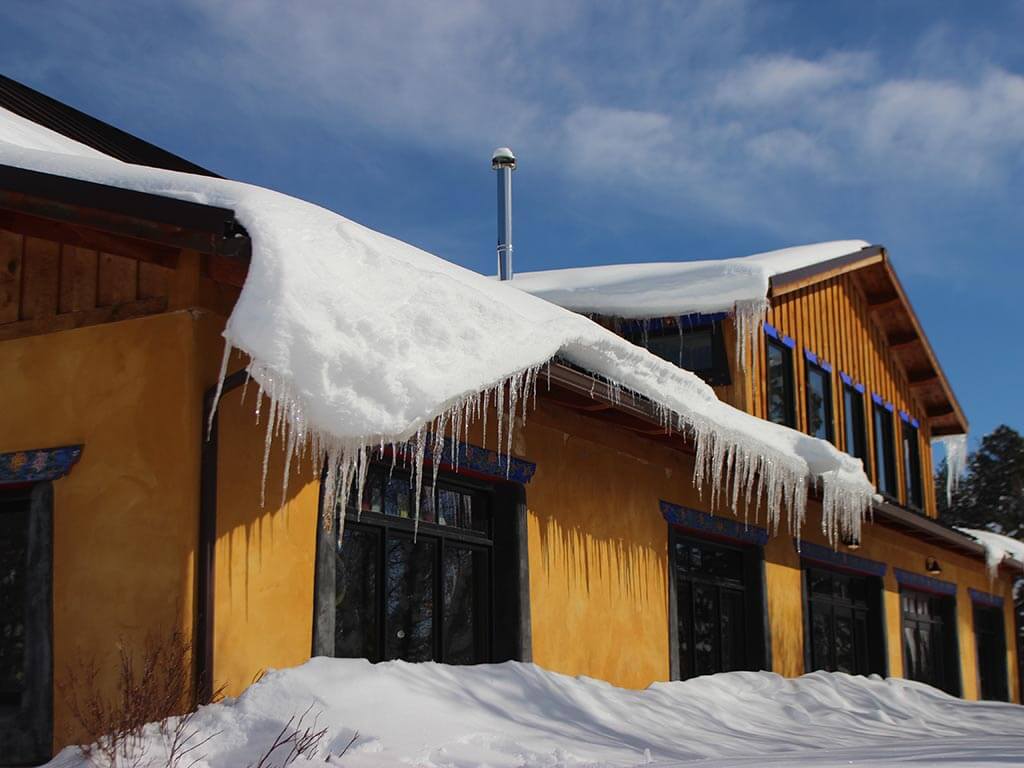
The Community Building was the first structure to be built at Tara Mandala and was completed in 2005. It is a 6,000 sq.ft. double-walled, adobe structure which houses our kitchen, dining hall, store, full bathroom facilities, and offices.
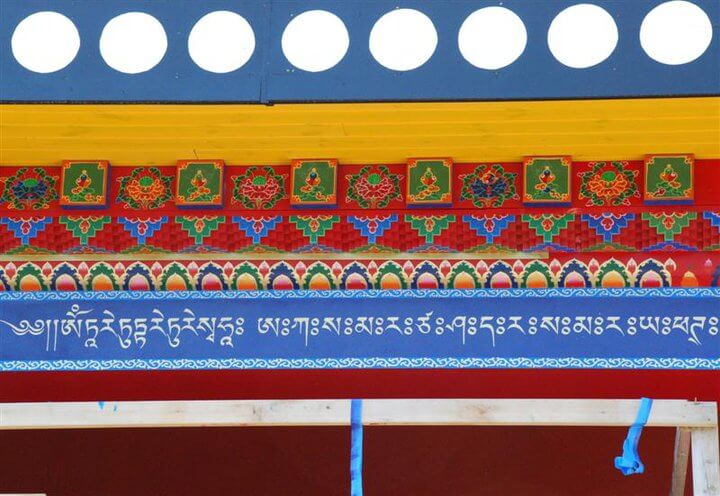
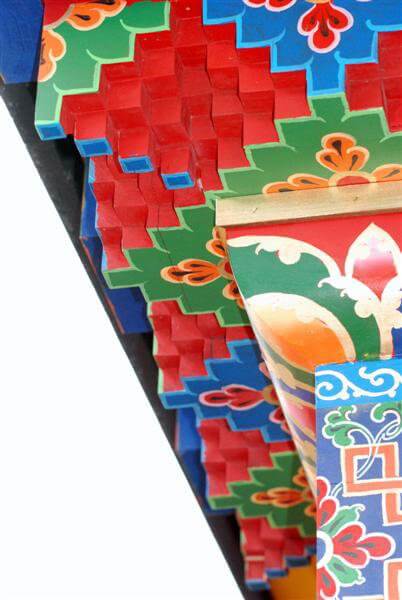
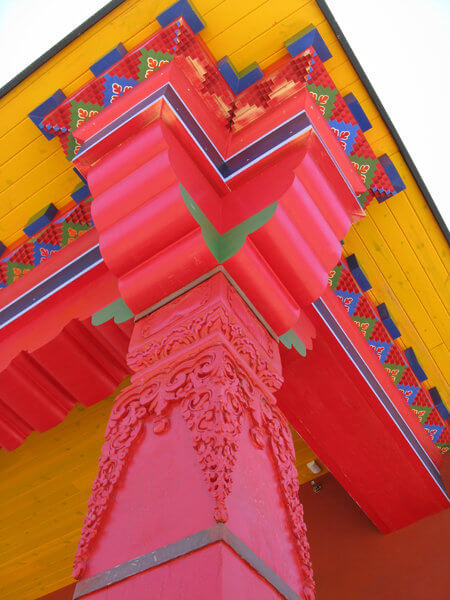
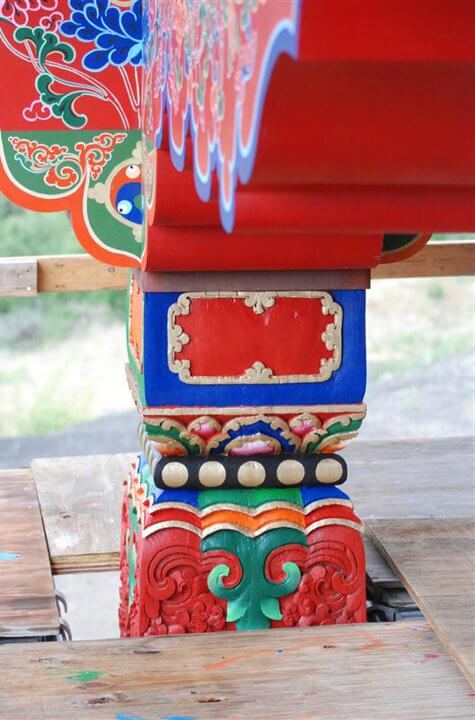
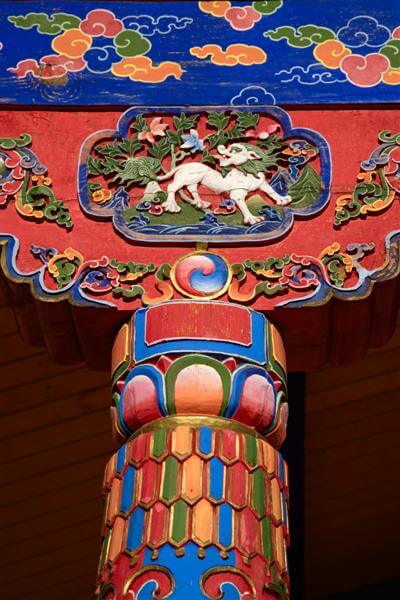
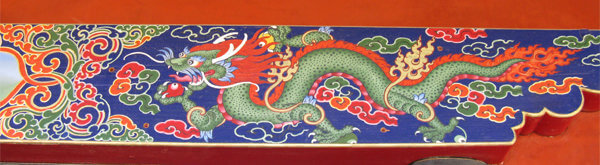
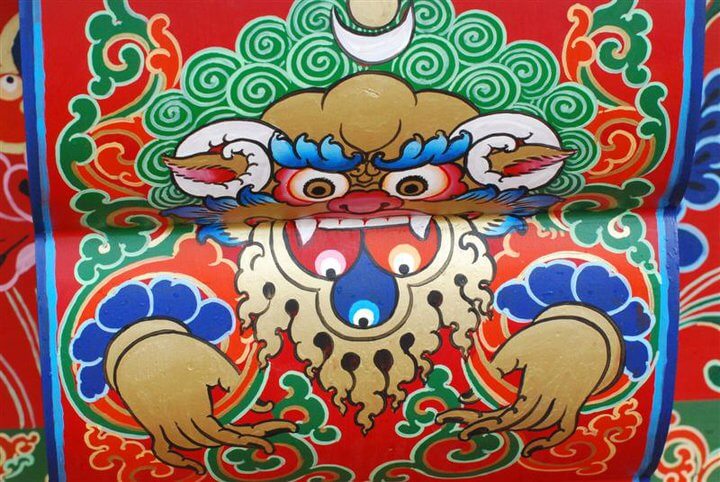
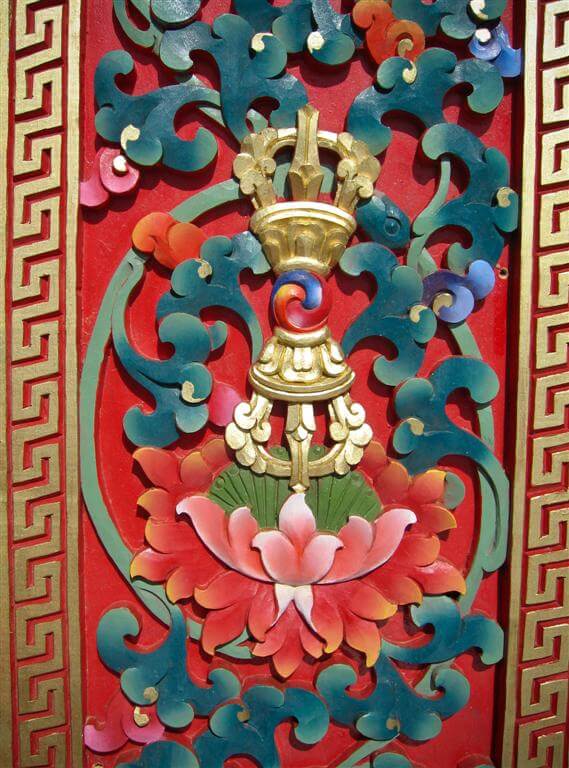
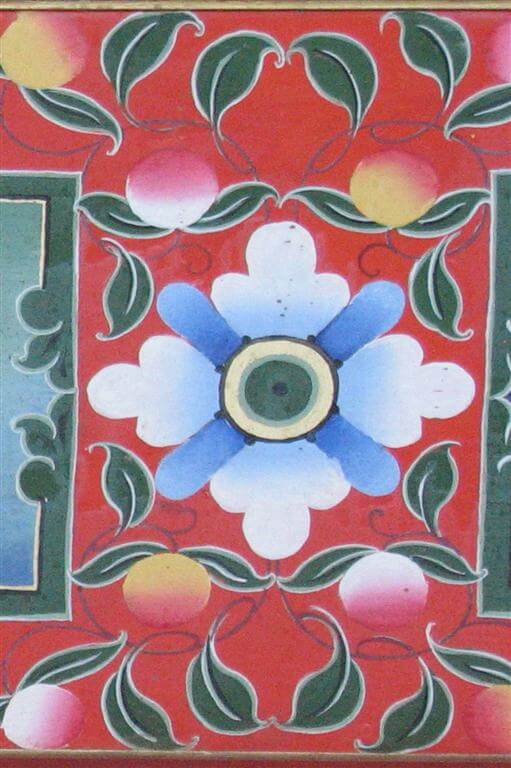
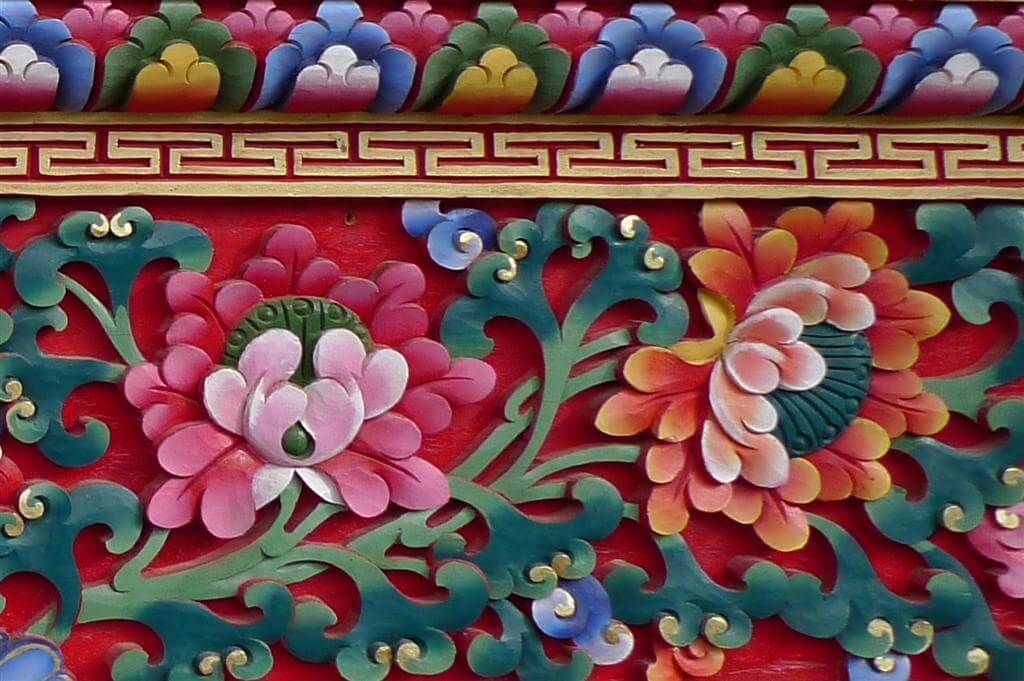
Some of the wood for this building was harvested from the land using horses. Lama Gyurme Rabgye and his brother Palden from Tibet were the artists that individually hand-painted and hand-carved the outside posts and the window and door lintels with ornate, colorful and traditional Tibetan designs using all-natural paint made of mineral pigments. A team of clay and limestone workers and plasterers spent many hours plastering the outer and inner walls with materials and colors gathered from the land. Today it is the space where residents and retreatants connect and support each other while assisting in the preparation of meals, clean up or simply while resting and enjoying the beautiful landscape of the San Juan mountains.
Prajna Residence Hall
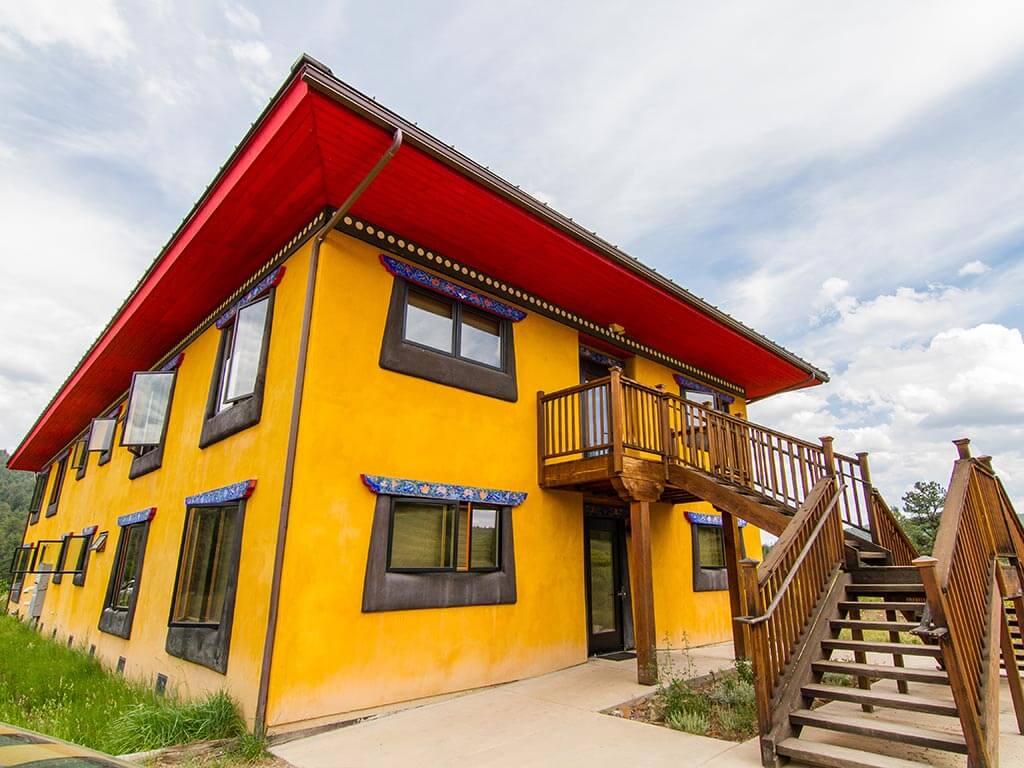
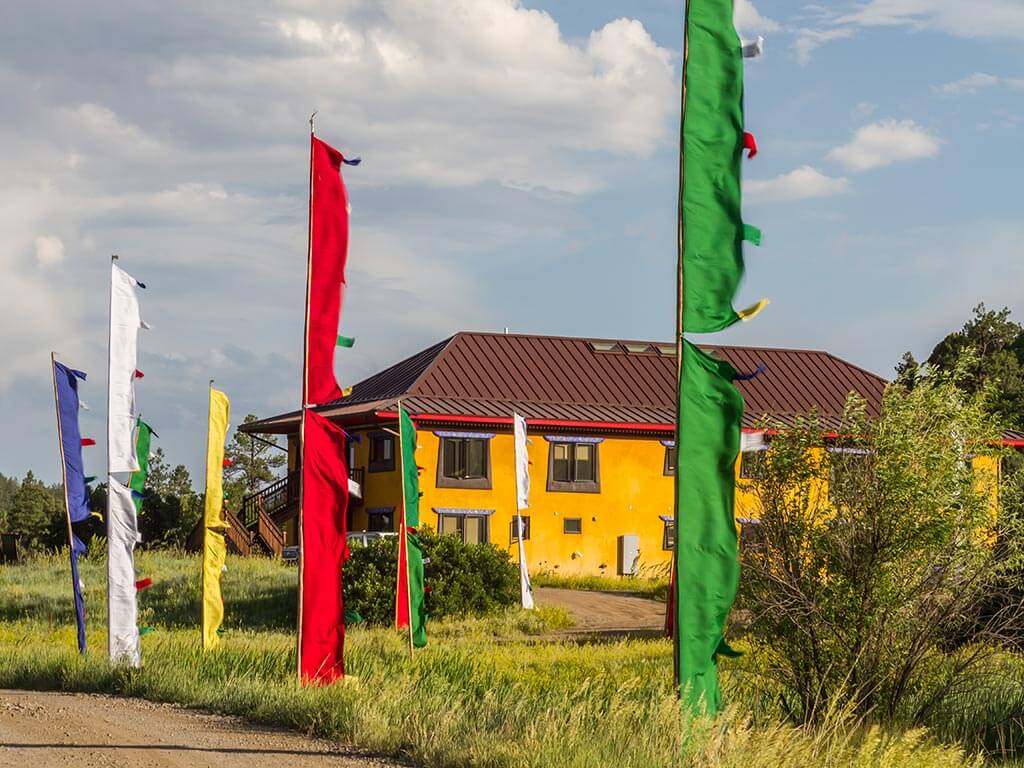
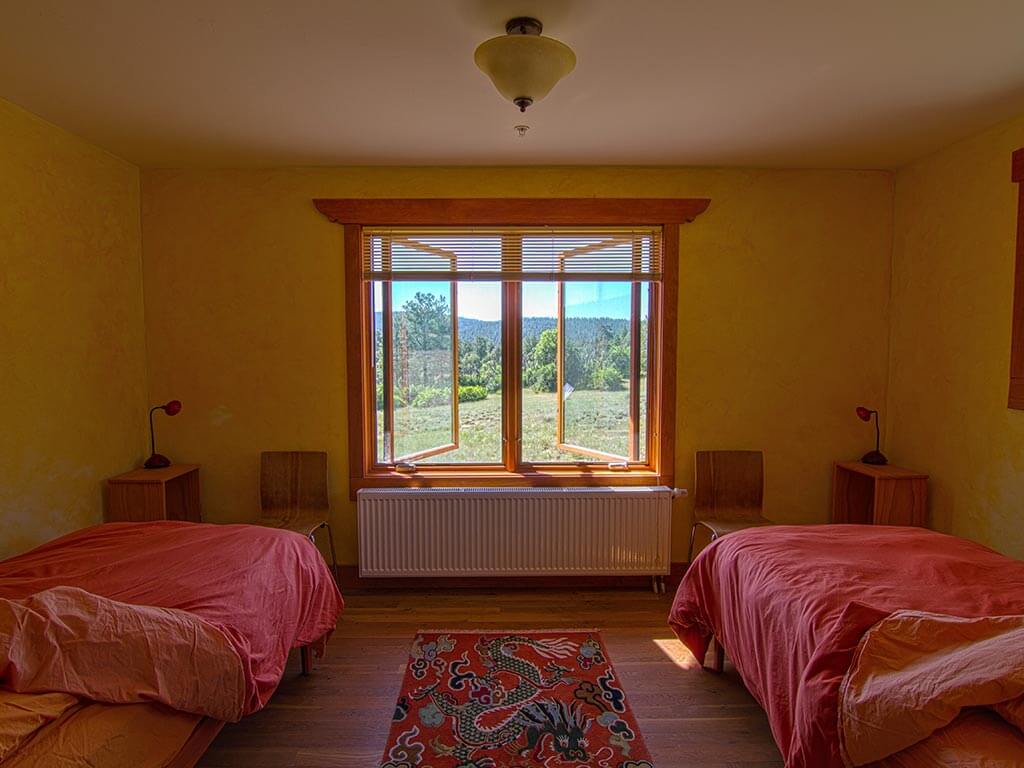
Our residence hall offers 16 rooms on two floors with stunning views of the San Juan Mountains to the east and Ekajati peak to the West. The building is beautifully hand-painted with traditional Tibetan flower imagery on the window lintels. The outer plaster is a brilliant golden yellow ochre limestone that matches the community building. Our rooms offer beautifully decorated and extremely comfortable accommodations. The amenities of the residence hall allow retreatants to take advantage of our retreats year-round.
The Retreat Cabins
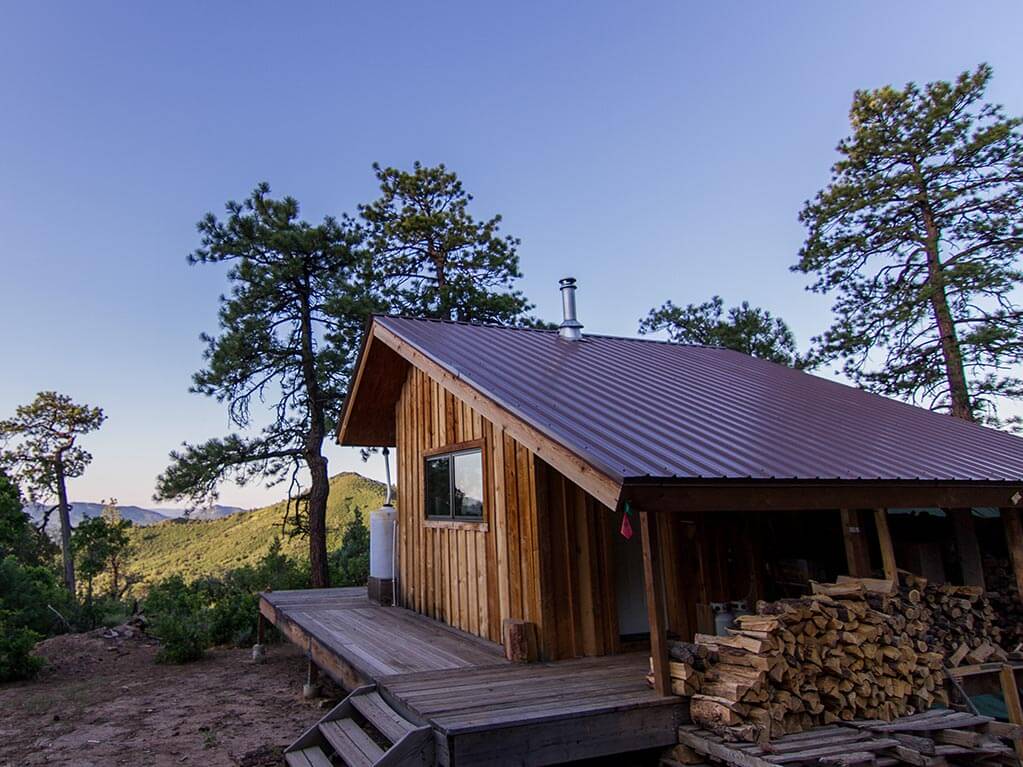
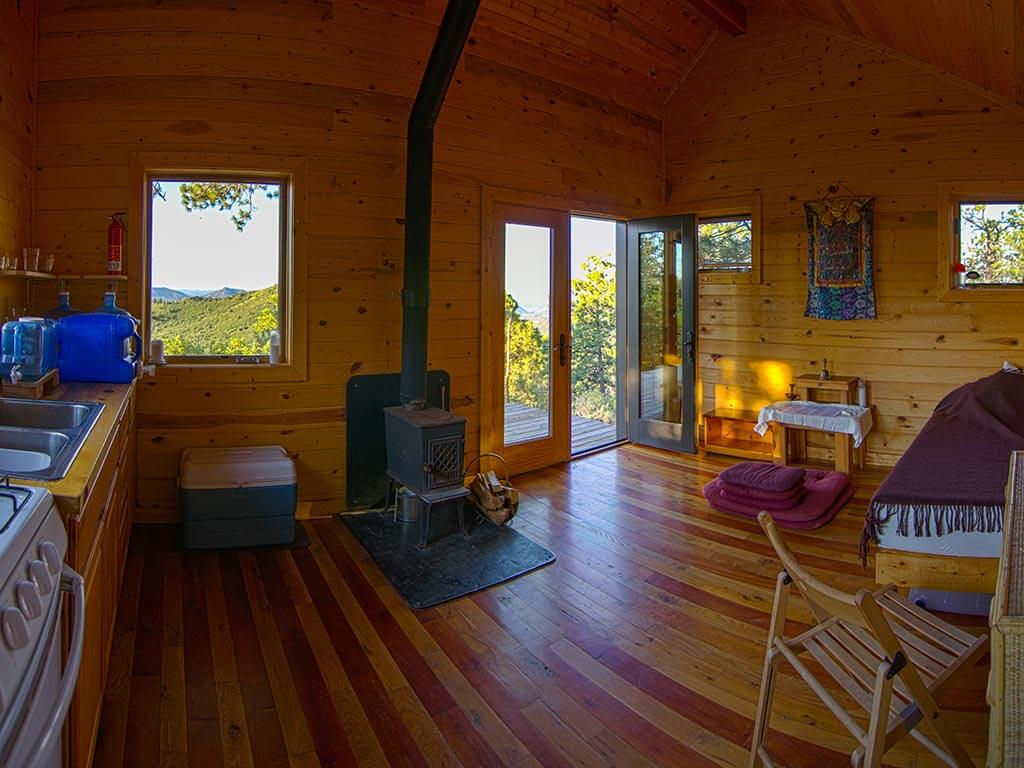
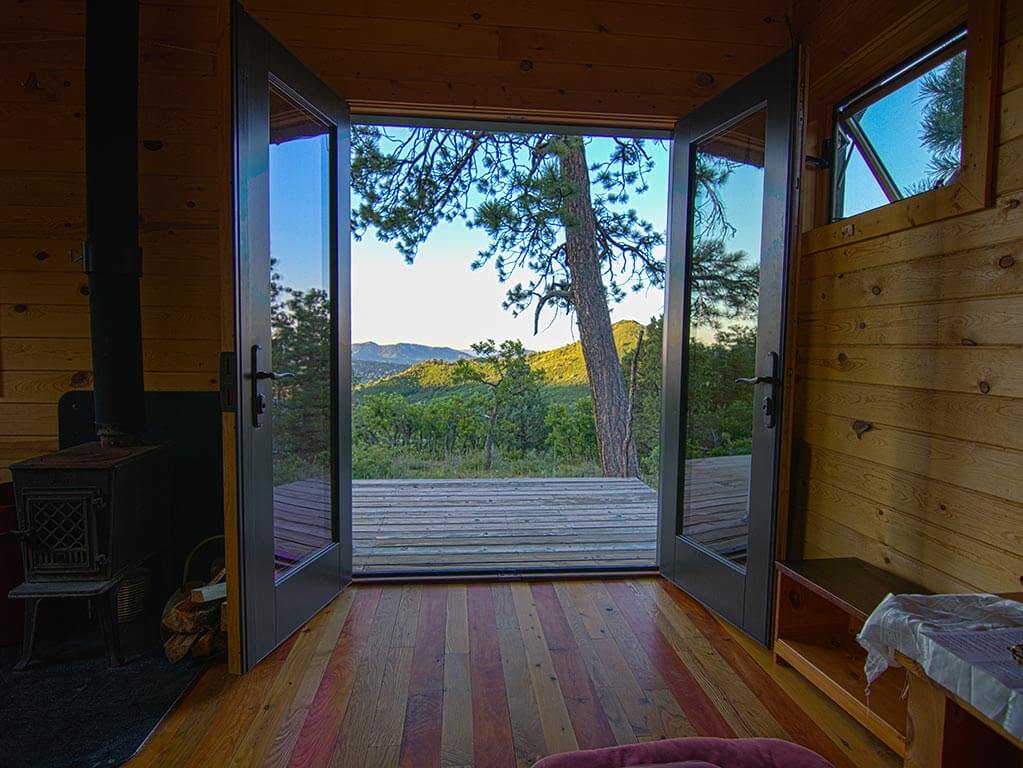
Retreat, or returning back to a place of origin, is an age-old practice in many cultures. The retreat cabins at Tara Mandala offer a rare and precious opportunity for Western practitioners to be completely secluded and alone in a remote mountain setting. In our retreat cabins, practitioners are free to maintain intensive practice while receiving the appropriate support to make an extended solo retreat successful and approachable. They offer vast views and are remotely located for ultimate privacy, encouraging opportunities to unplug while connecting back with the natural landscape and wildlife.
Click here for more information on reserving a retreat cabin for solo-retreat »
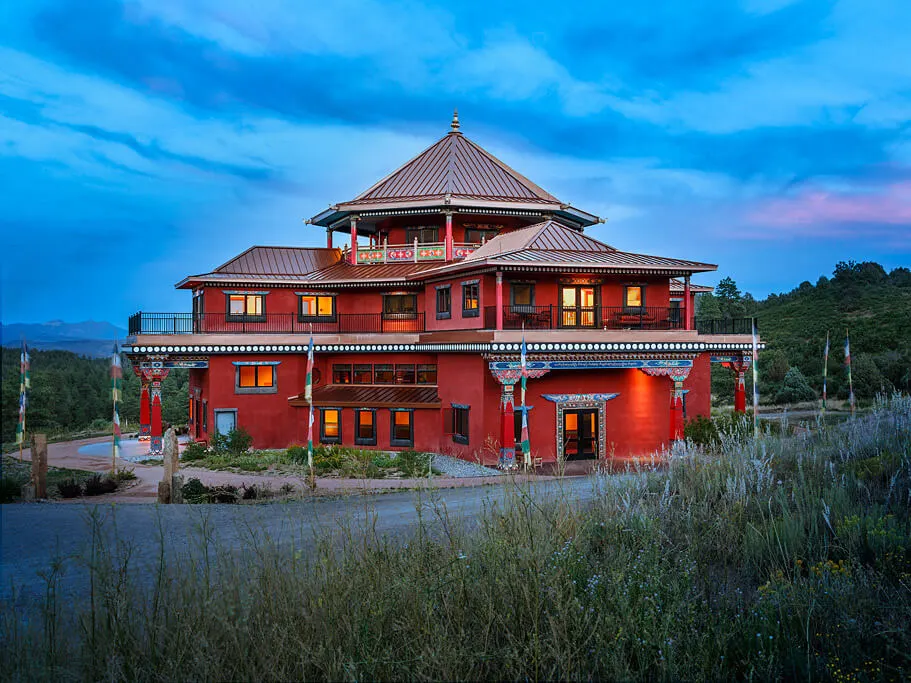
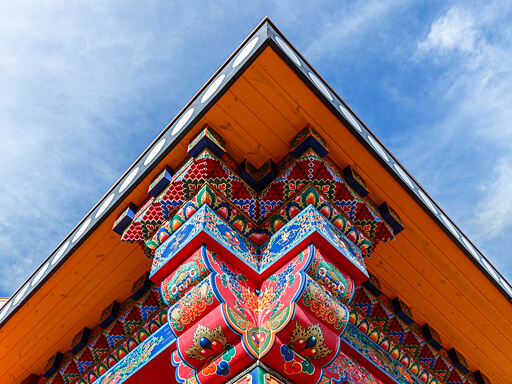
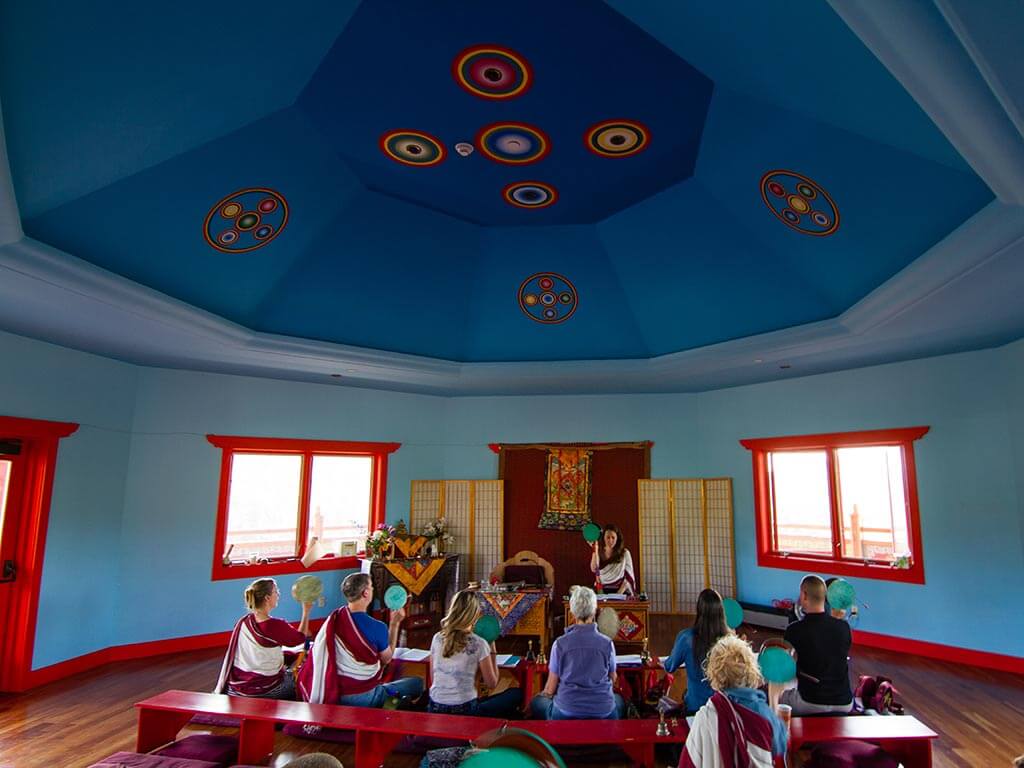
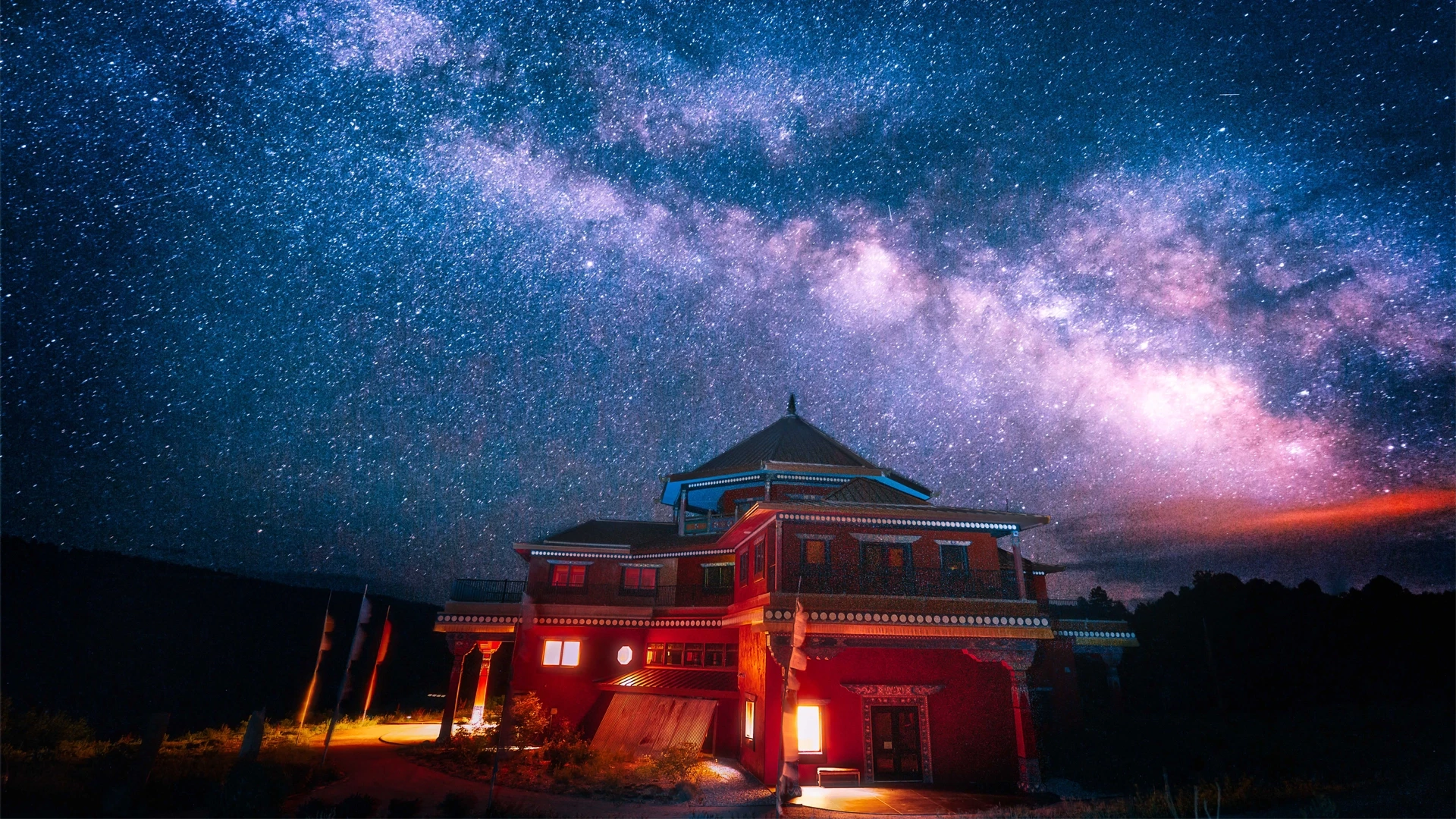
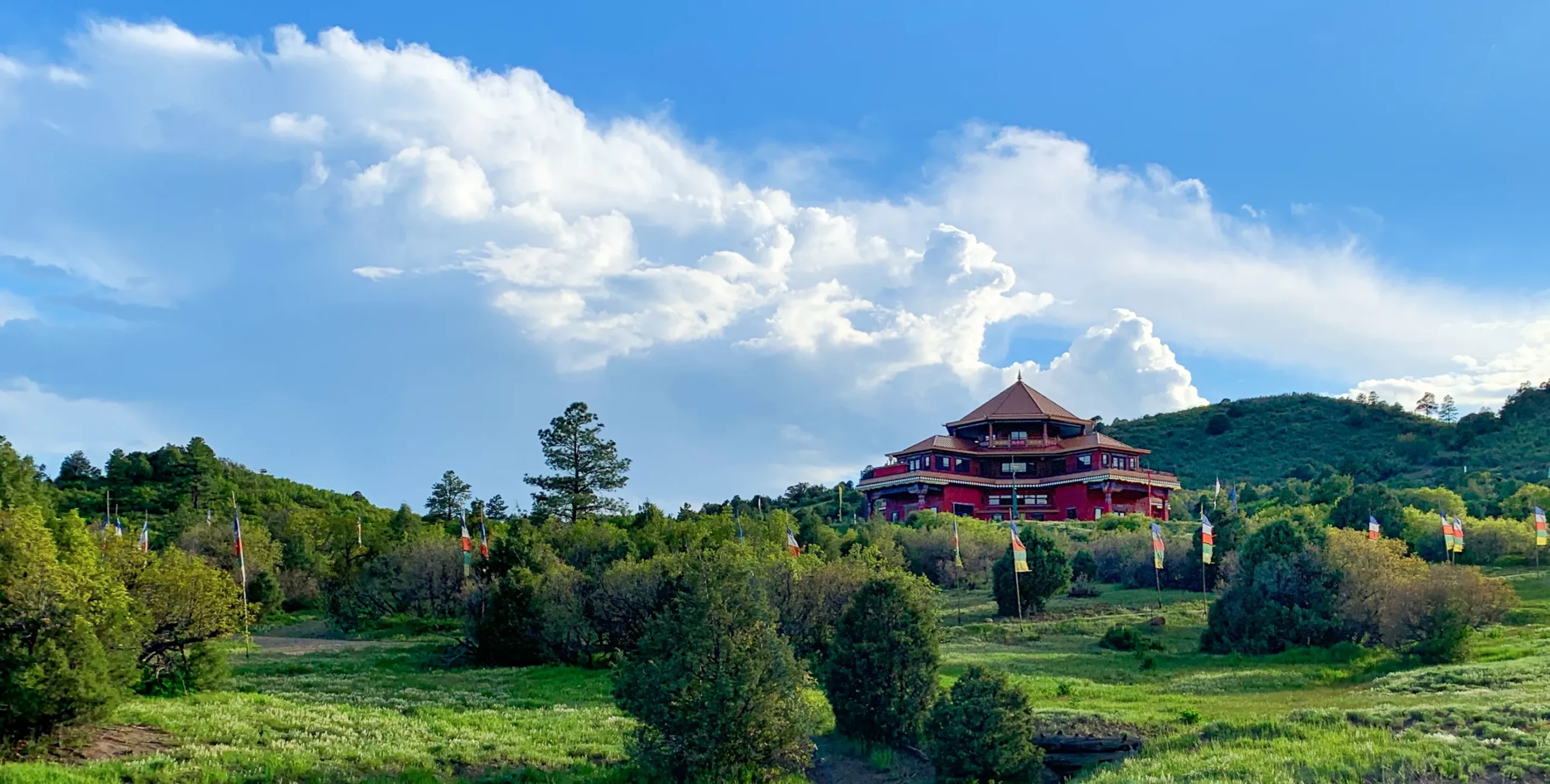
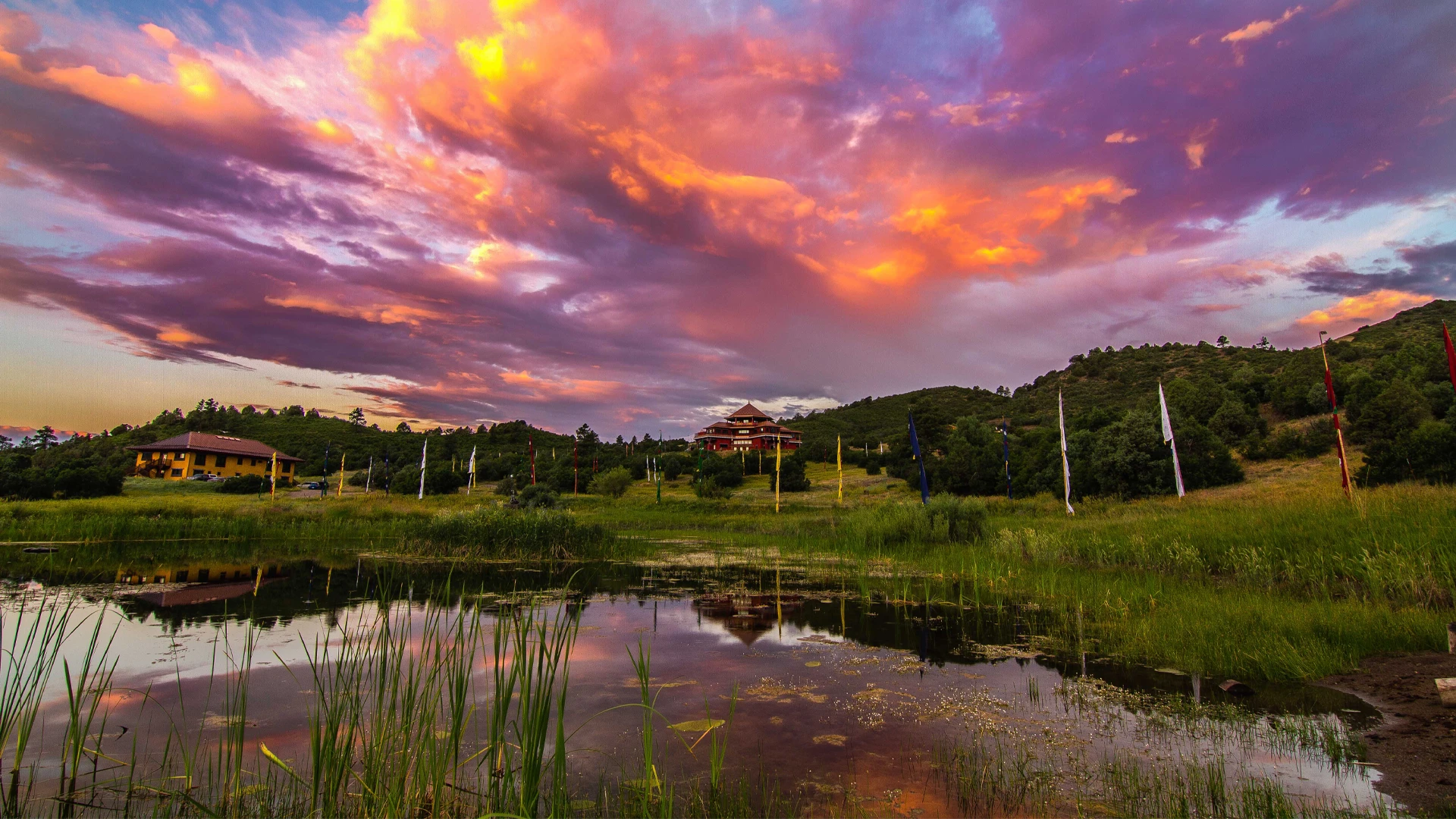
The main temple at Tara Mandala was born from a dream Lama Tsultrim had during a year-long solitary retreat on June 5, 2001 – the night of the Buddha’s birthday. The dream began with depth radiance blue, then the three levels and a mandala formation were revealed to her by the great Dzogchen master from the 8th century, Vimalamitra.
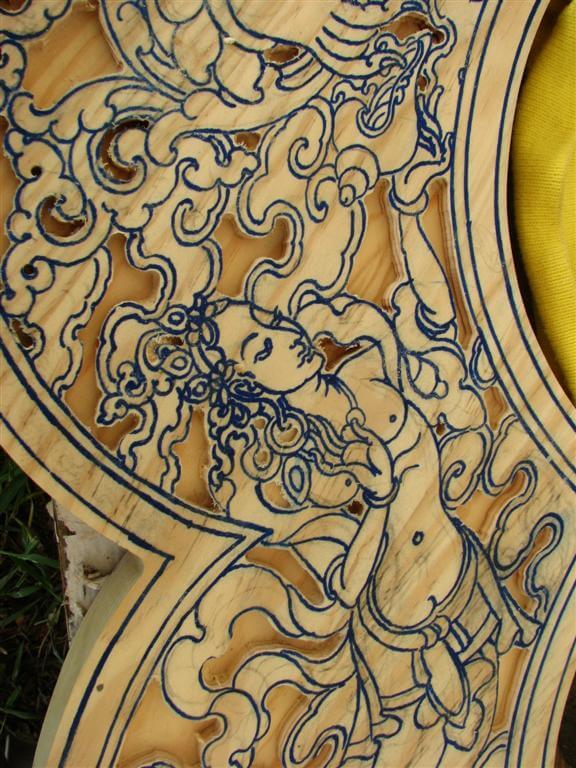
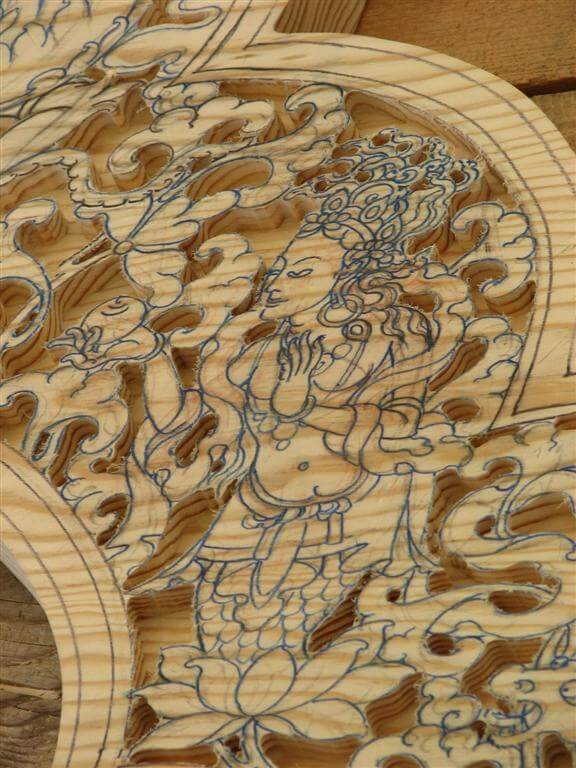
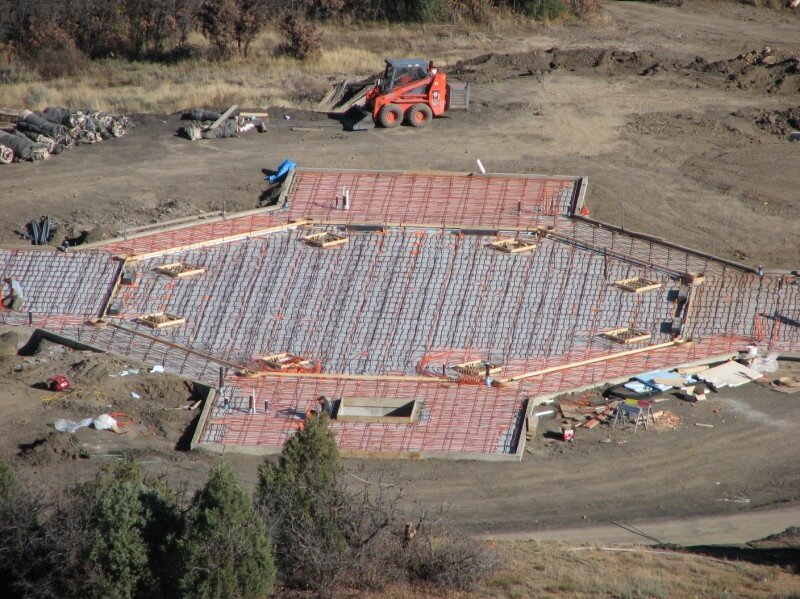
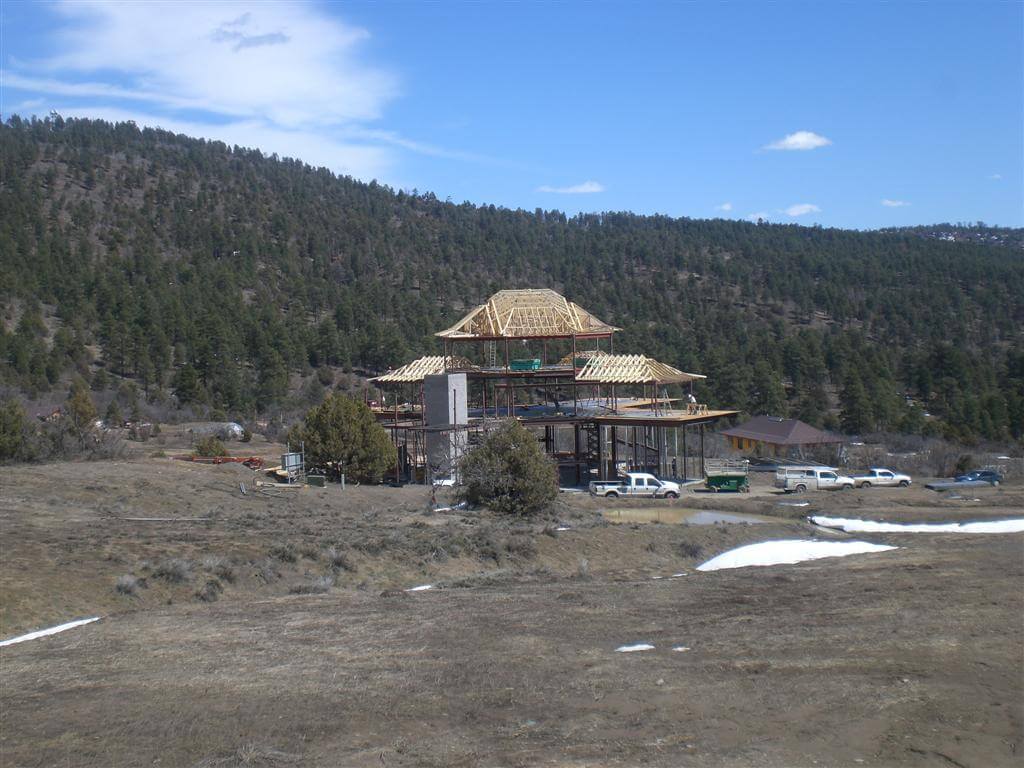
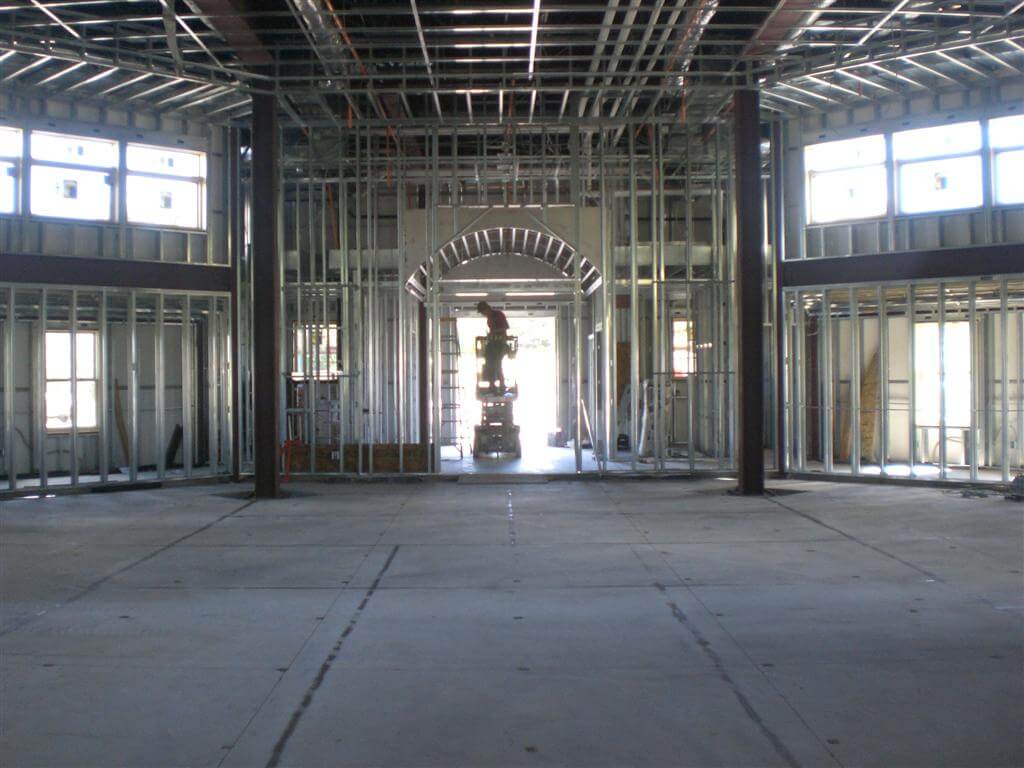
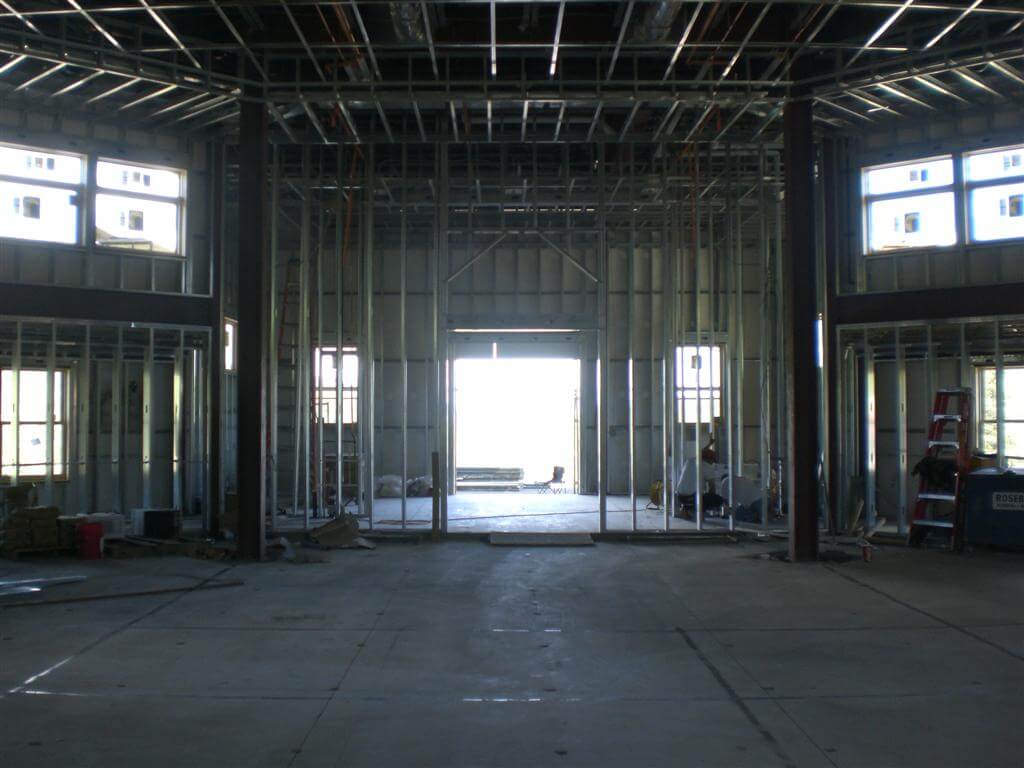
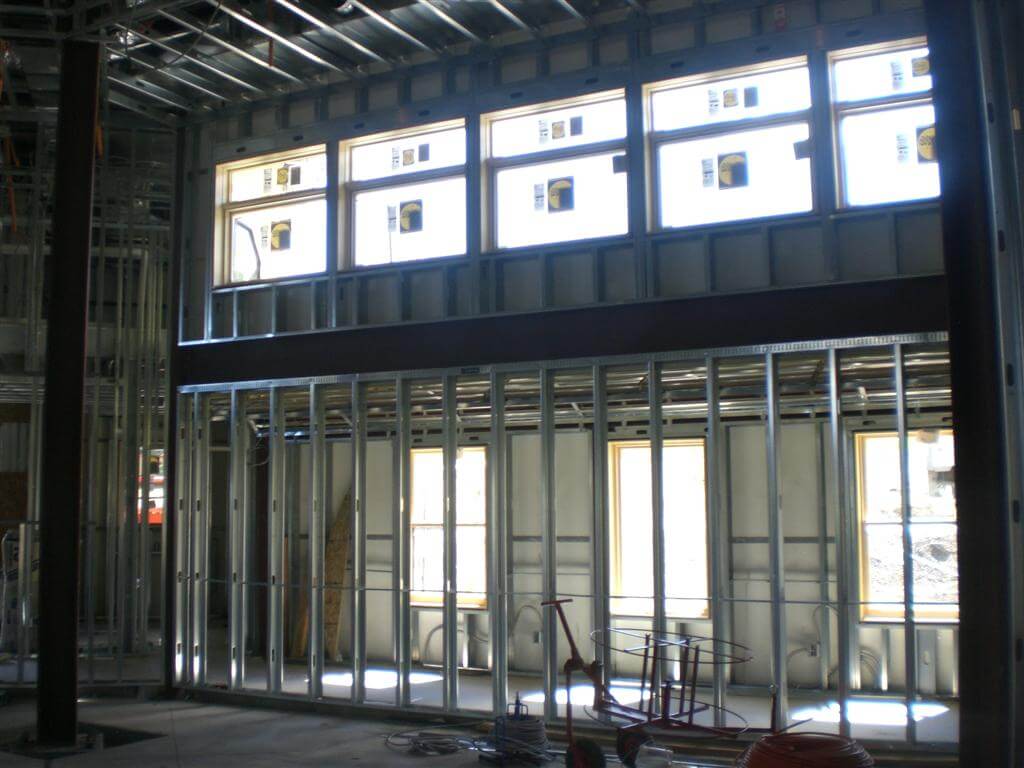
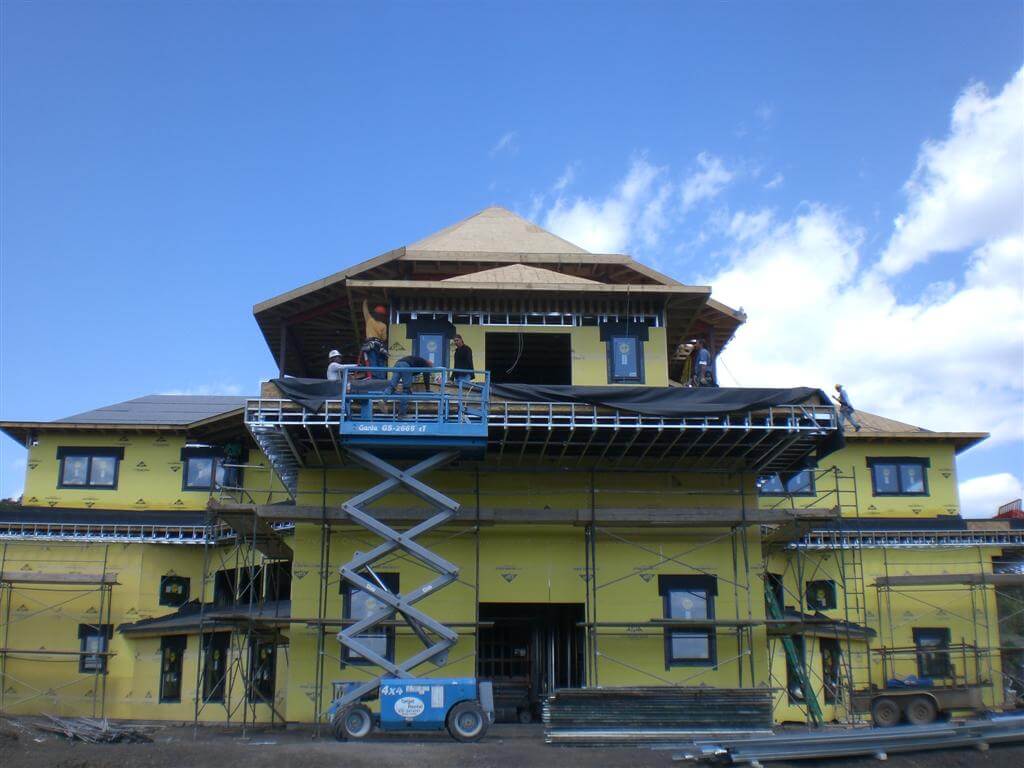
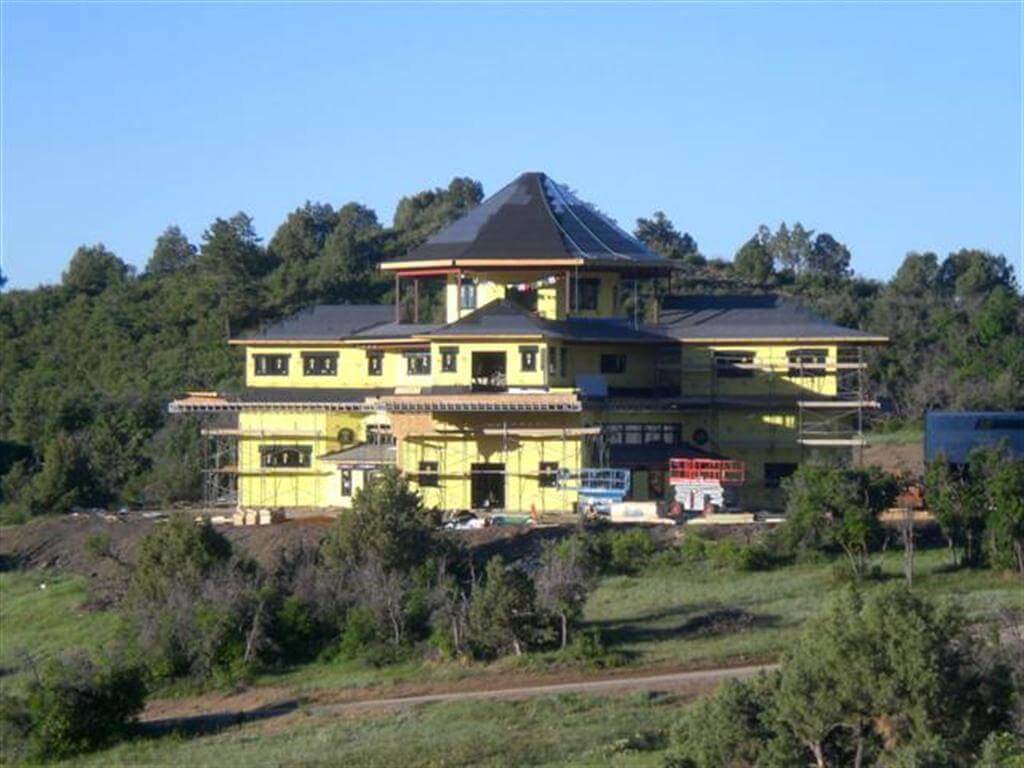
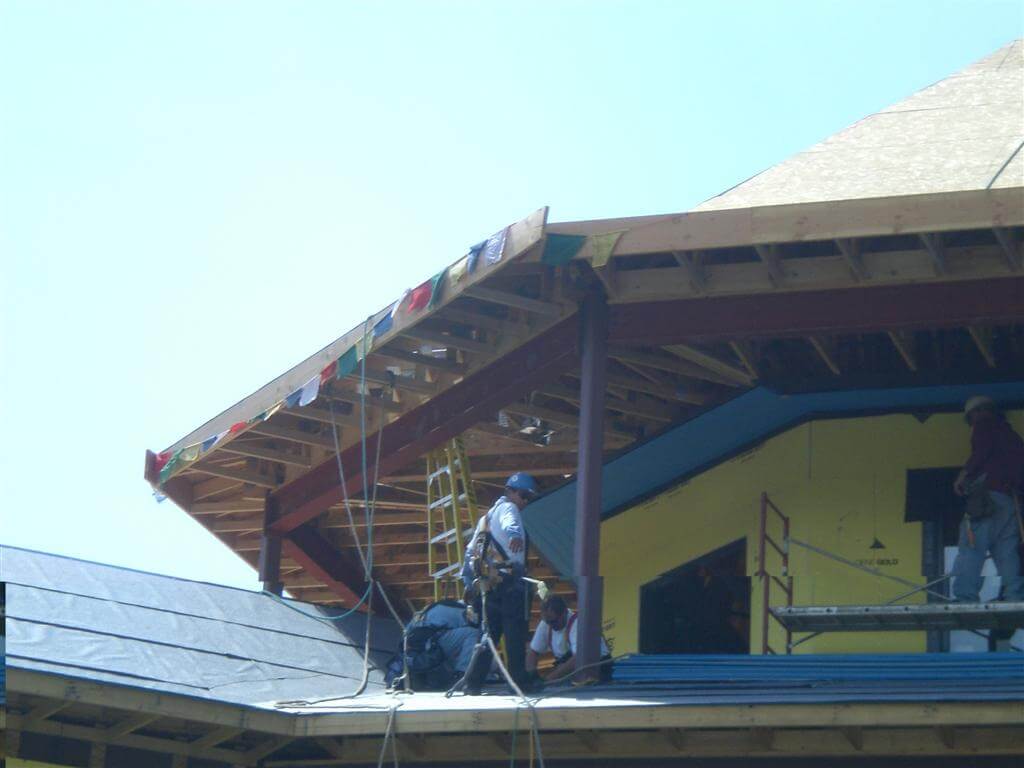
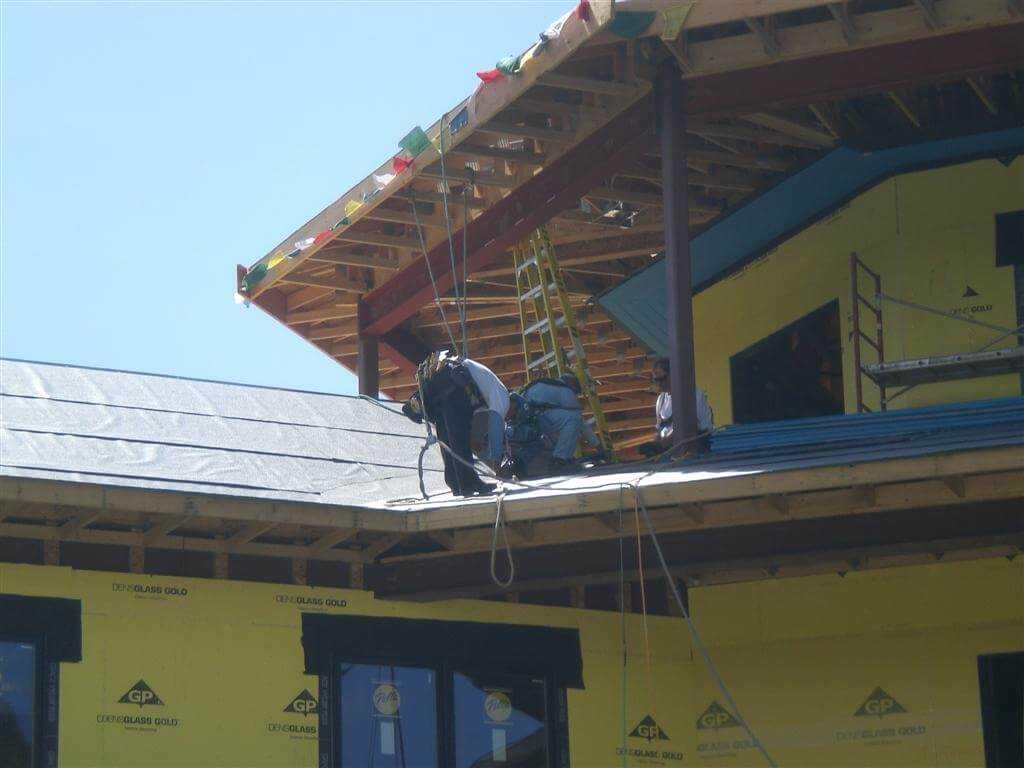
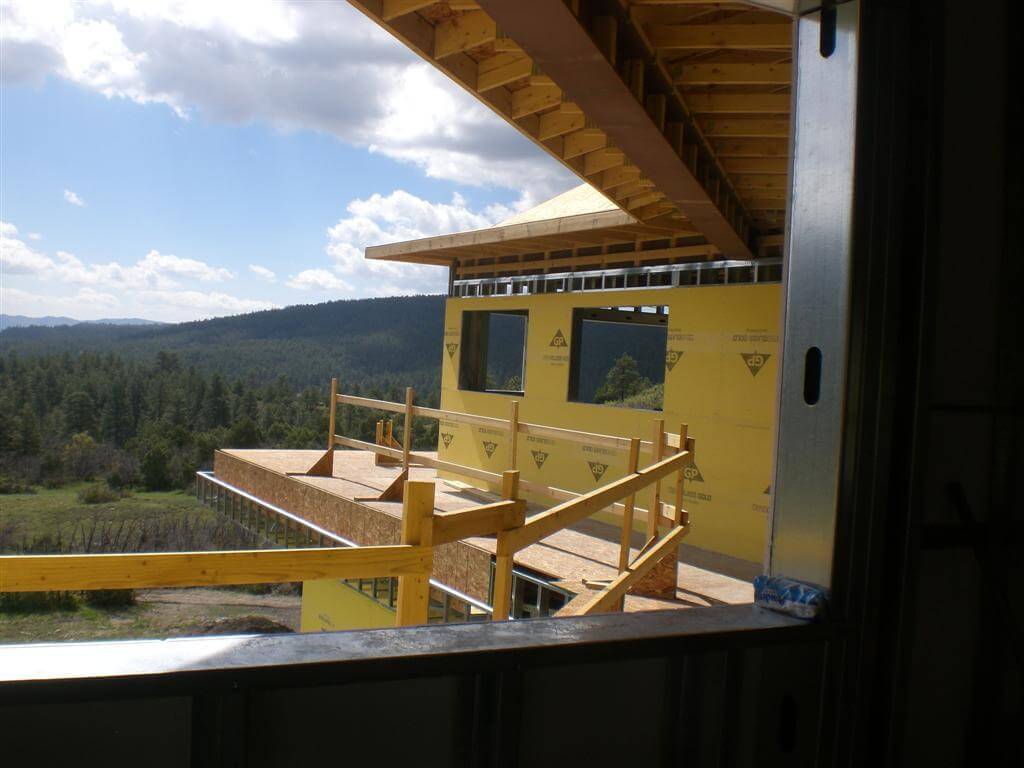
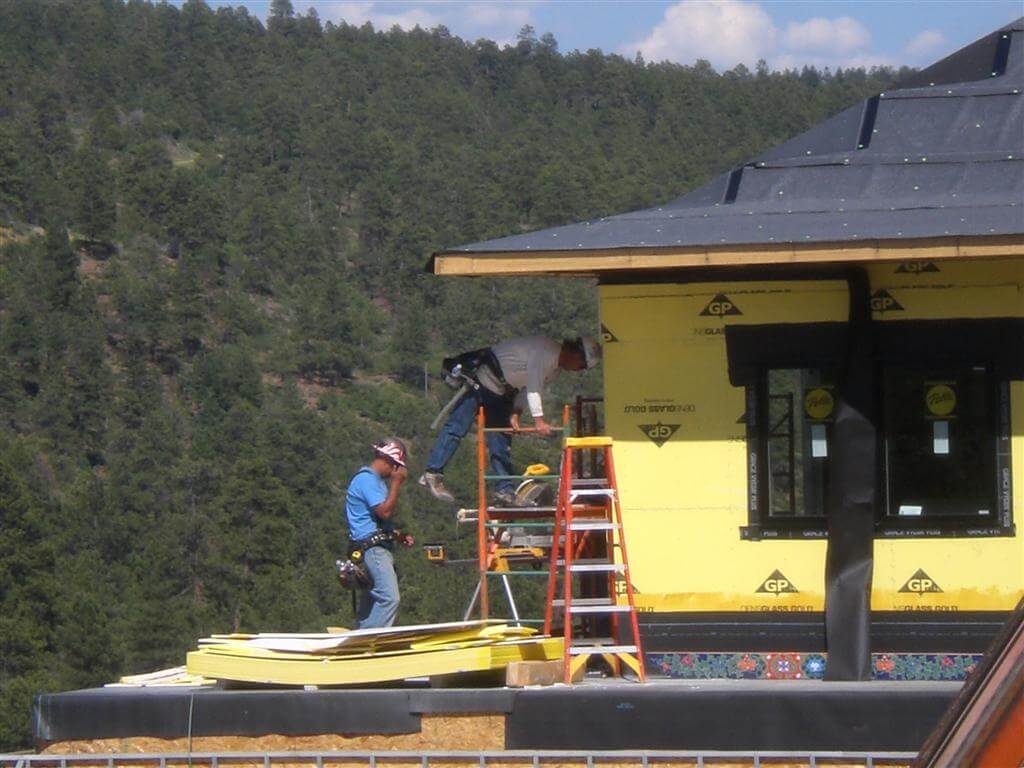
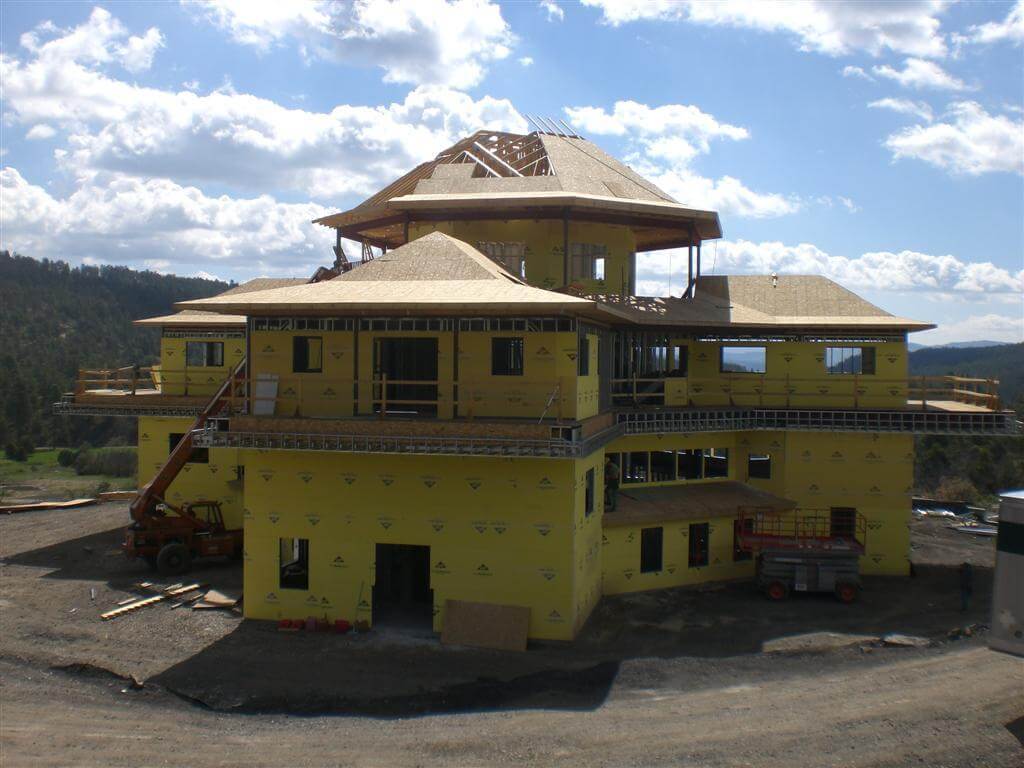
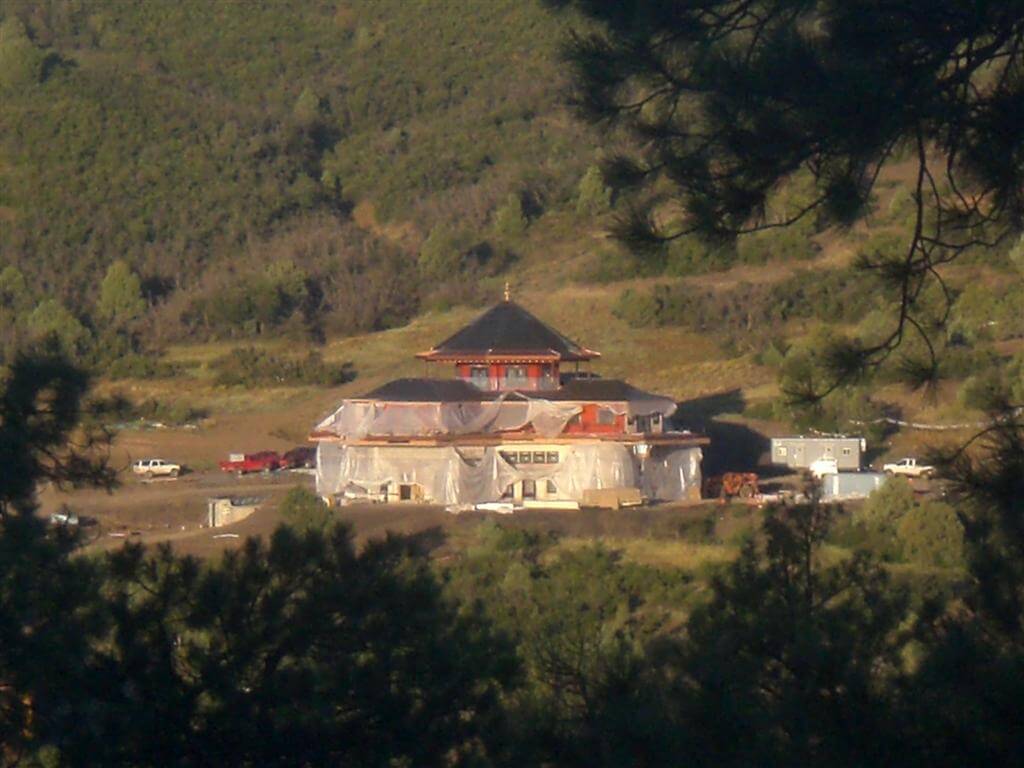
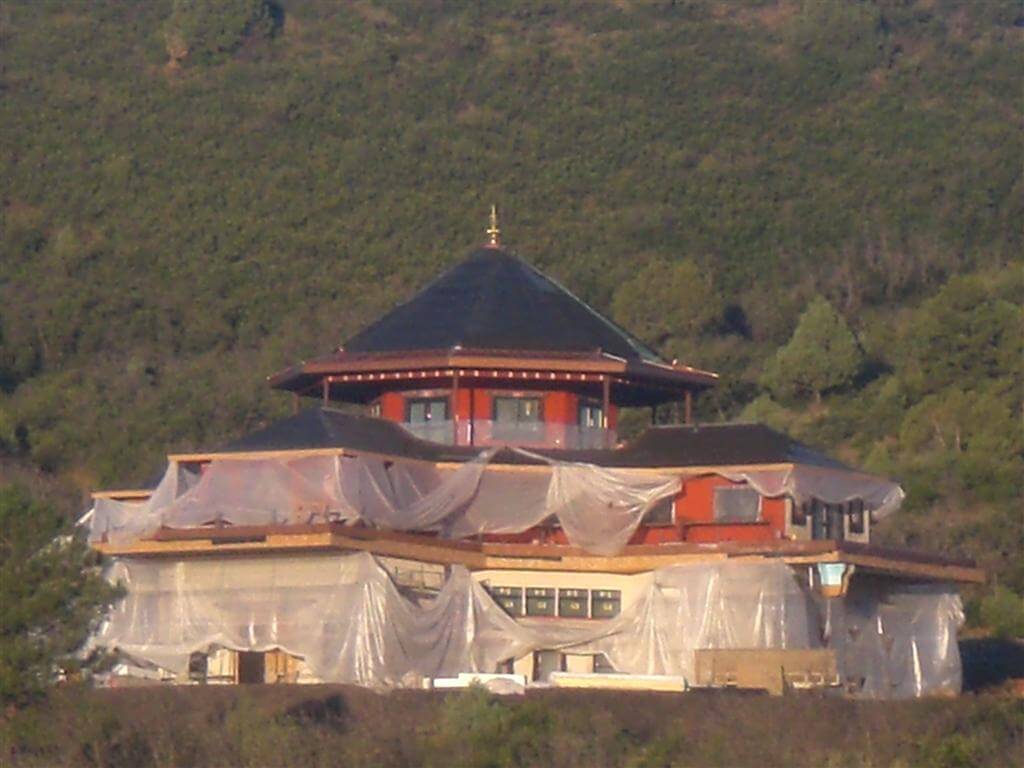
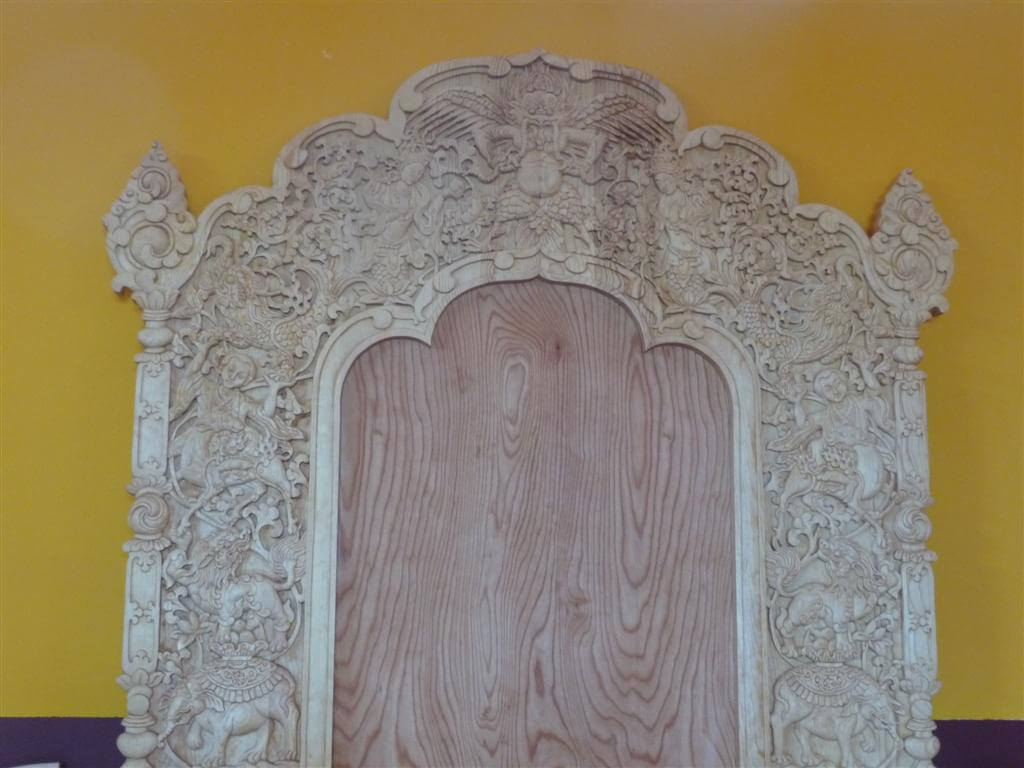
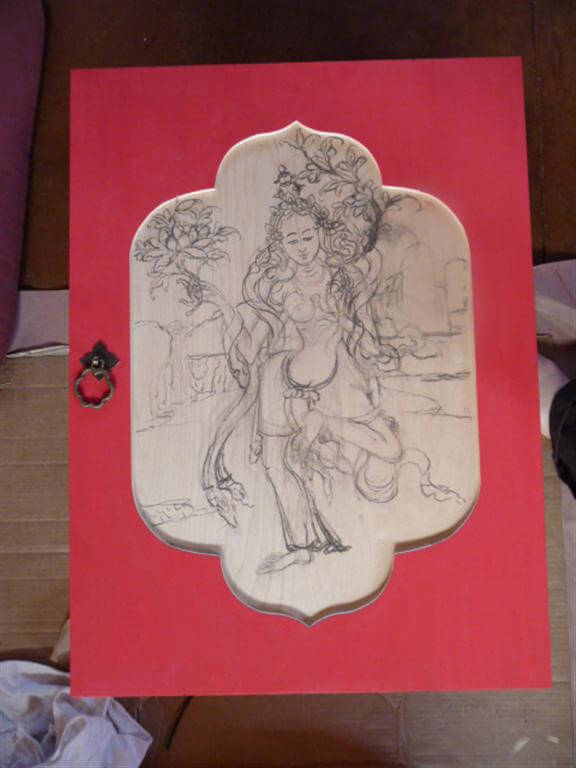
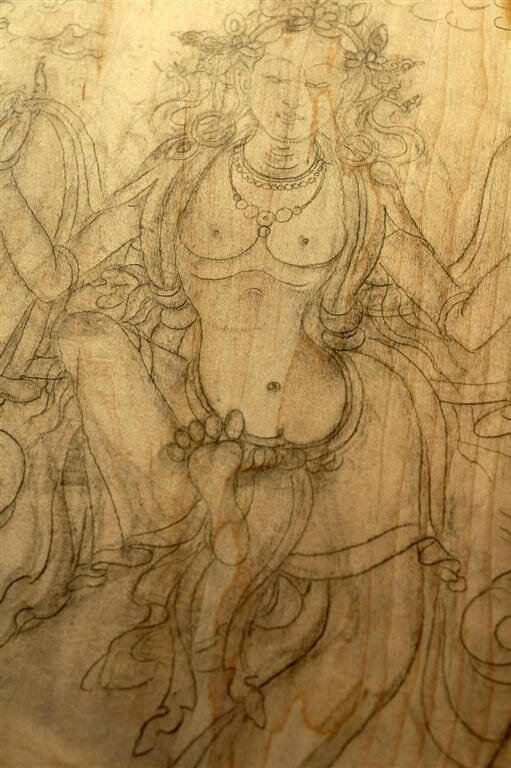
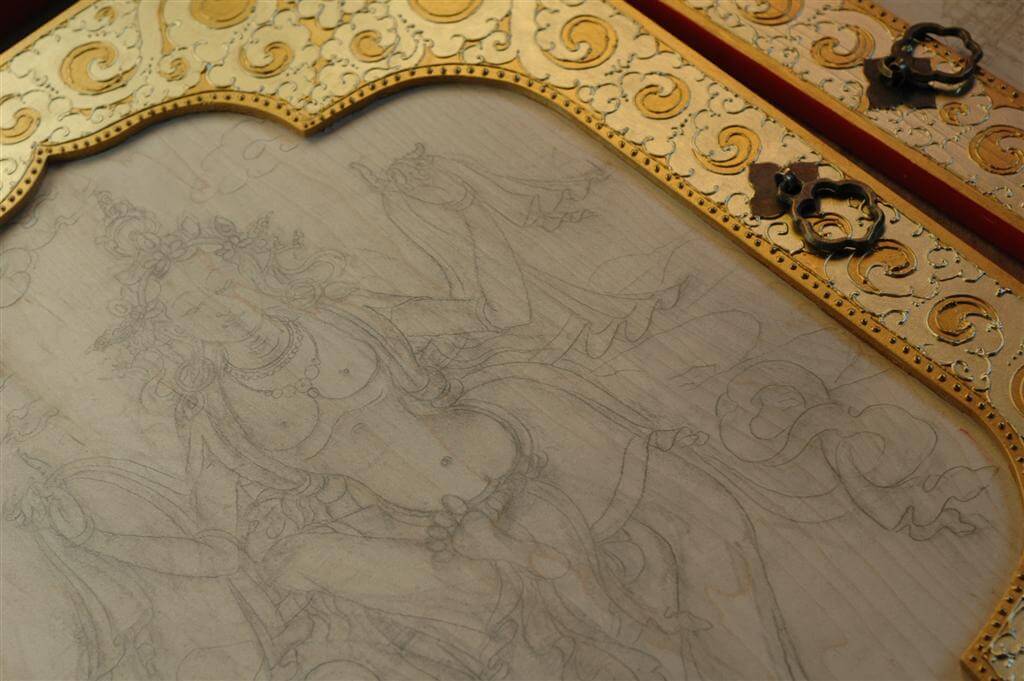
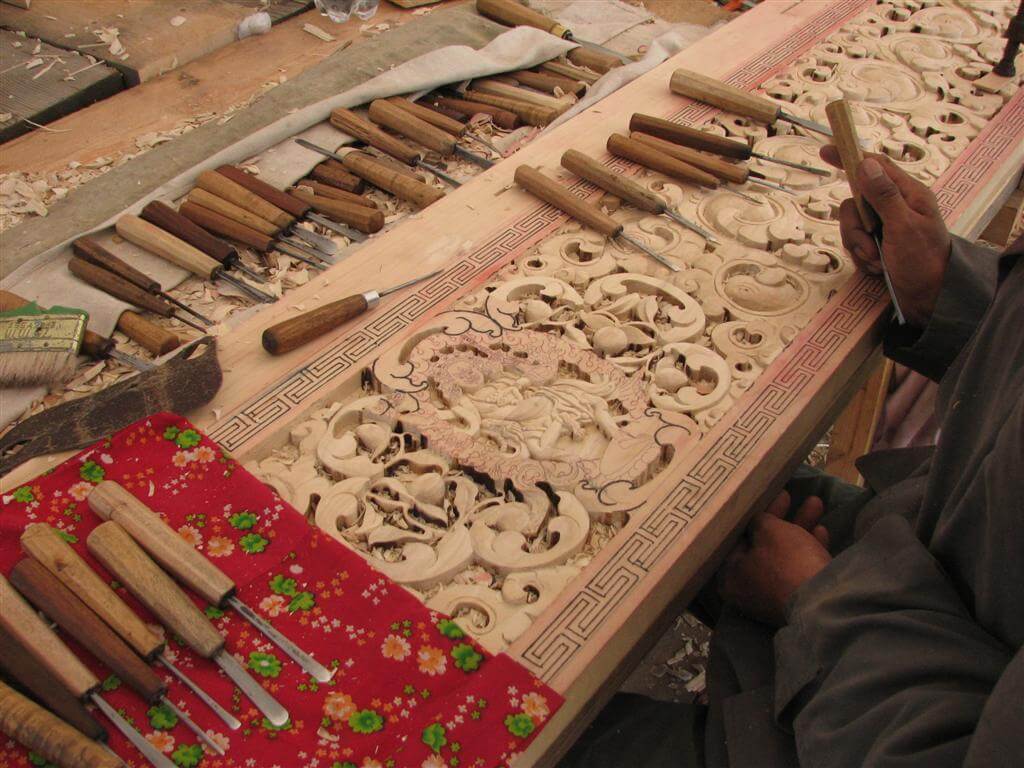
The 12,000 sq. ft. temple was constructed between 2007-2009, using the skills of traditional Bhutanese wood carvers and Tibetan artists.
- The third and top floor represents mind and pure awareness: Dharmakaya. This is an open room with four doors and is painted the same blue from the original dream.
- The second floor represents sacred speech and the luminous radiance of pure form: Sambhogakaya. This floor houses offices, guest quarters for visiting teachers, library, and archives.
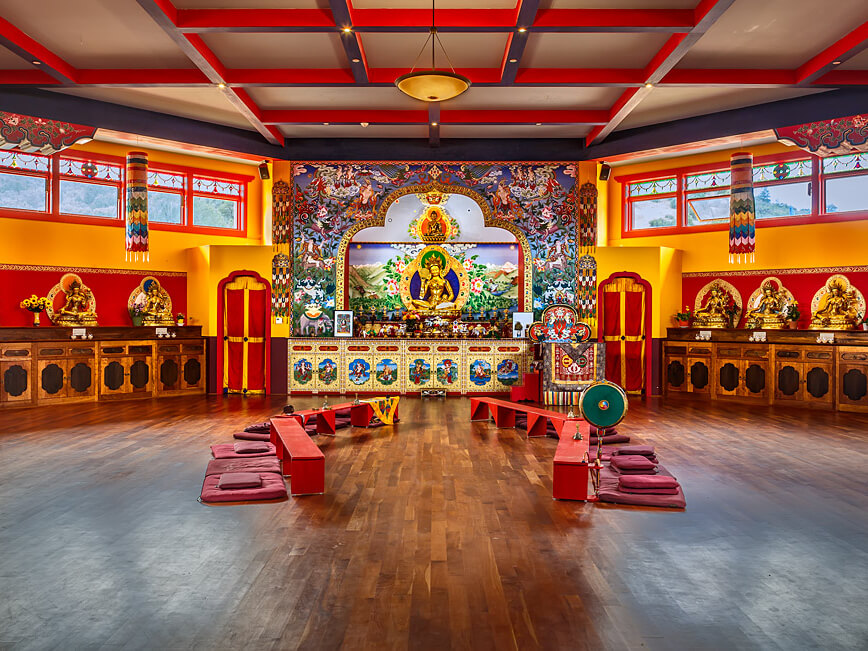
- The ground floor represents the physical embodiment of enlightened energy in our world: Nirmanakaya. This level is the main temple with a circumambulation corridor and four entrances.
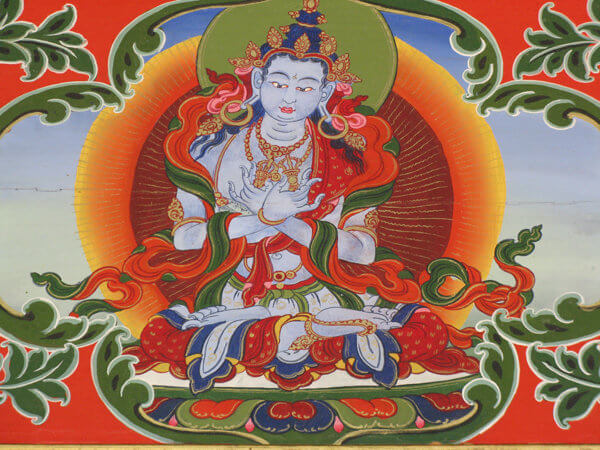
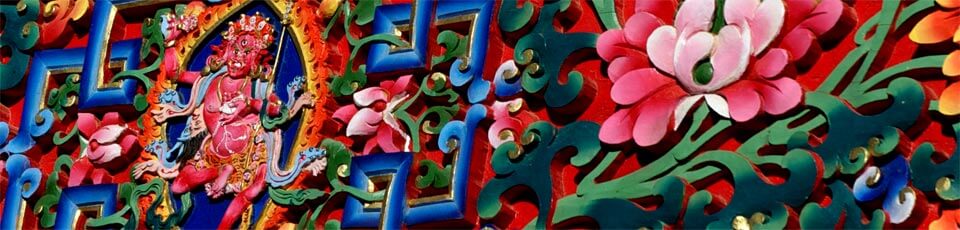
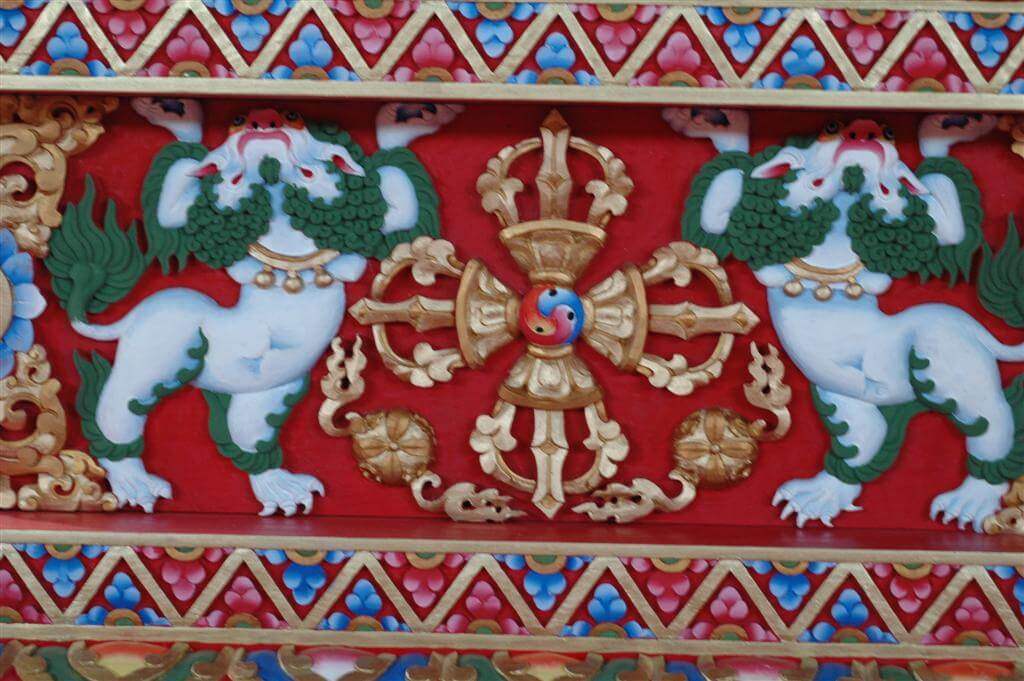
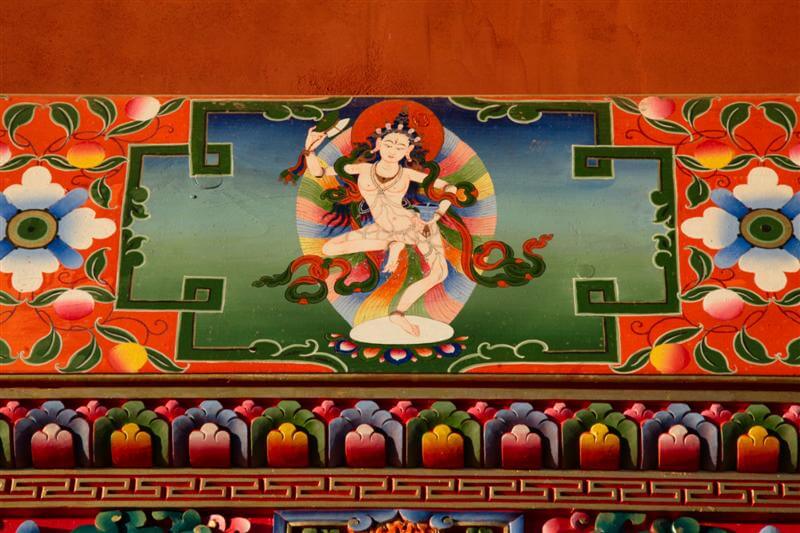
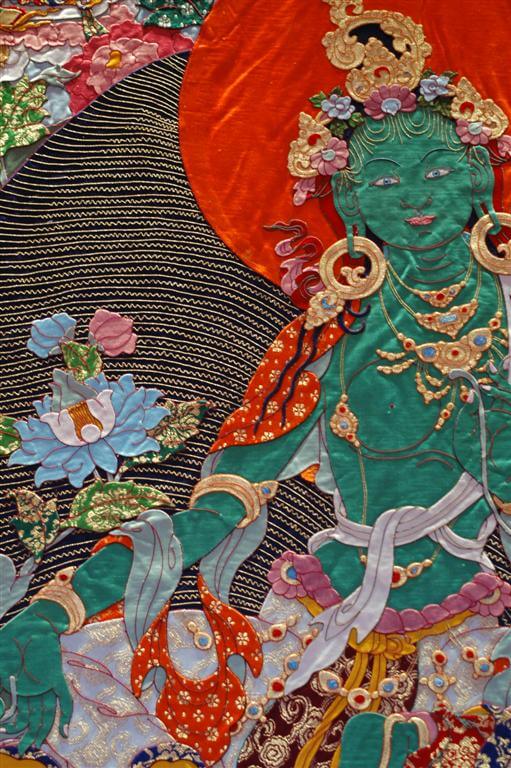
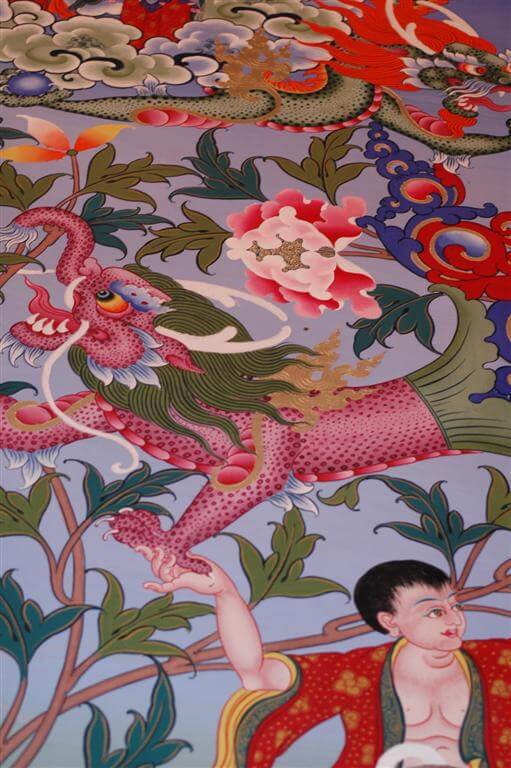
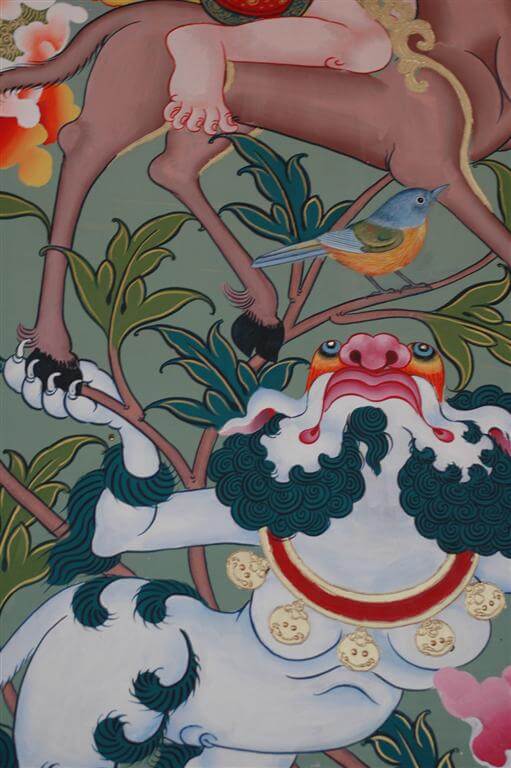
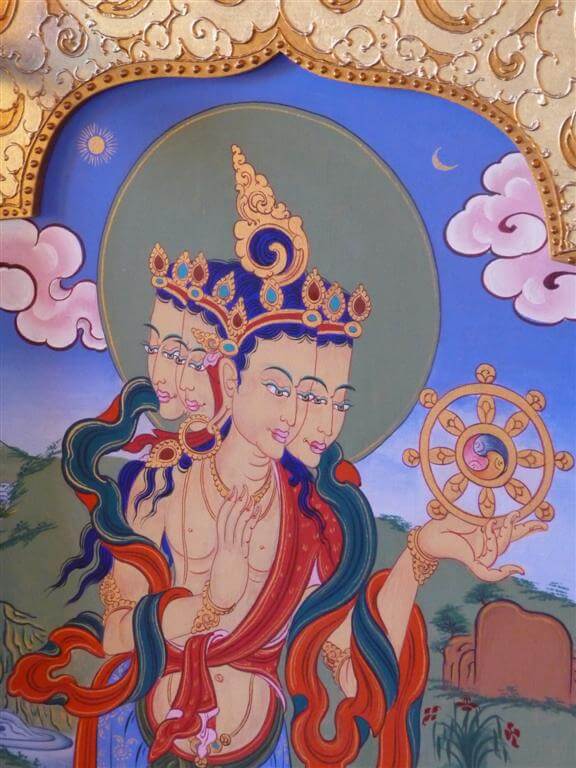
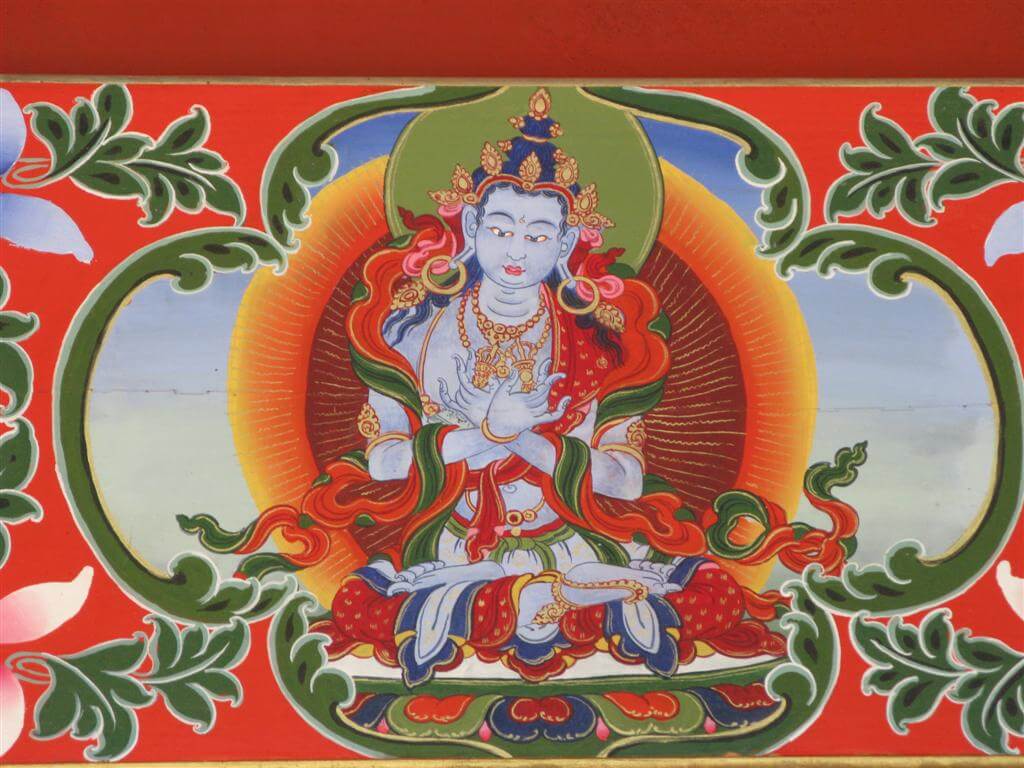
The artist for the entire temple has been Lama Gyurme Rabgye, who worked with David Petit and Lama Tsultrim Allione to create one of the most exquisite representations of Vajrayana Buddhist cosmology in the world.
The main shrine on the first floor of the Temple houses all 21 Tara statues, as well as the central figure in the Shrine – Machig Labdrön, an 11th-century female Tantric Buddhist teacher and realized master. The lineage of practice we hold here at Tara Mandala originates from her teachings. All statues made specifically for Tara Mandala by master statue makers in Nepal, they have all be consecrated in special ceremonies.
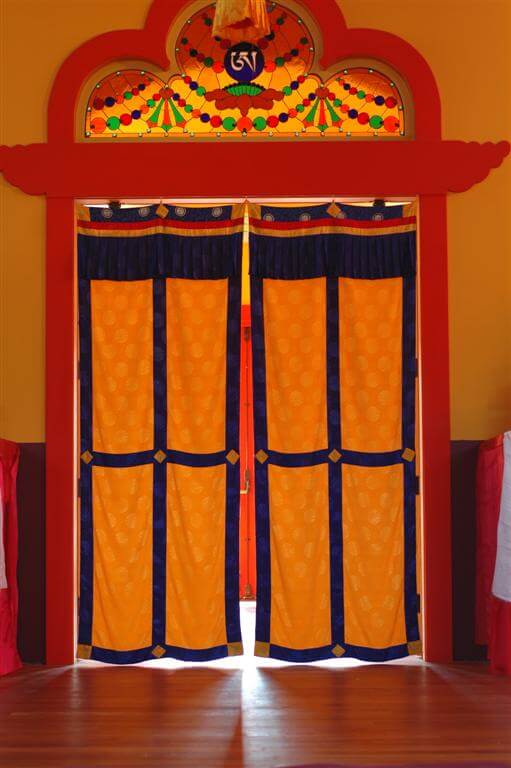
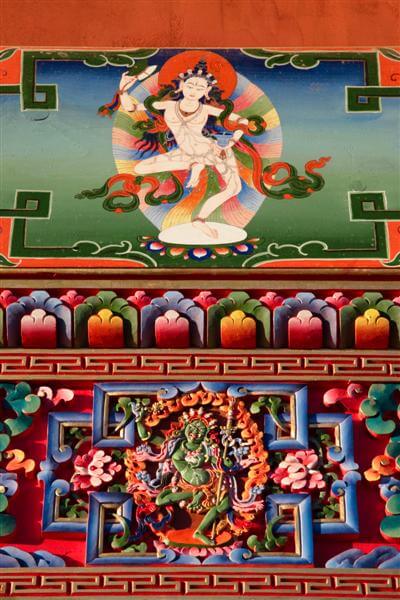
Significance of the Directions and Art of the Temple Doors
Center
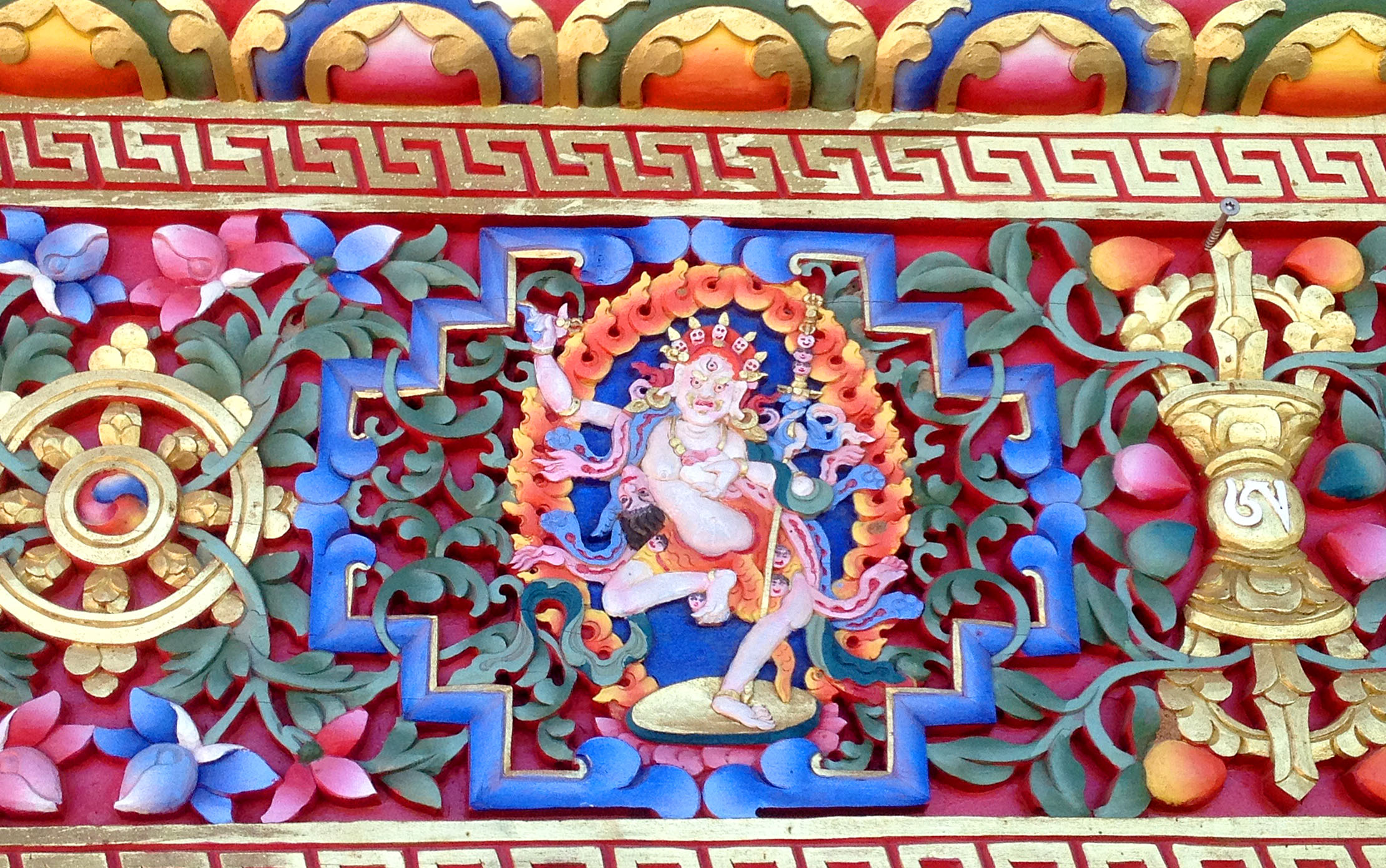
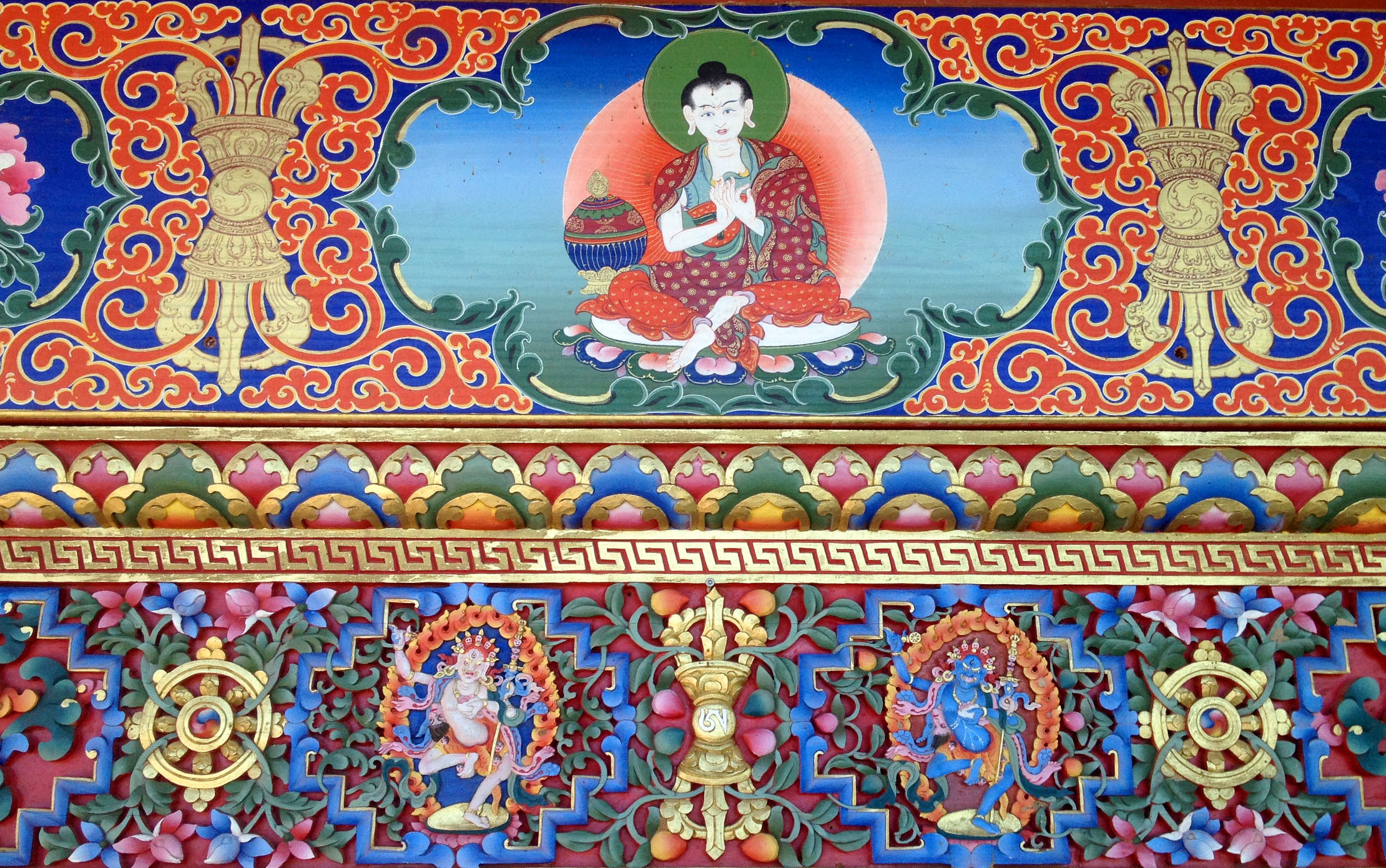
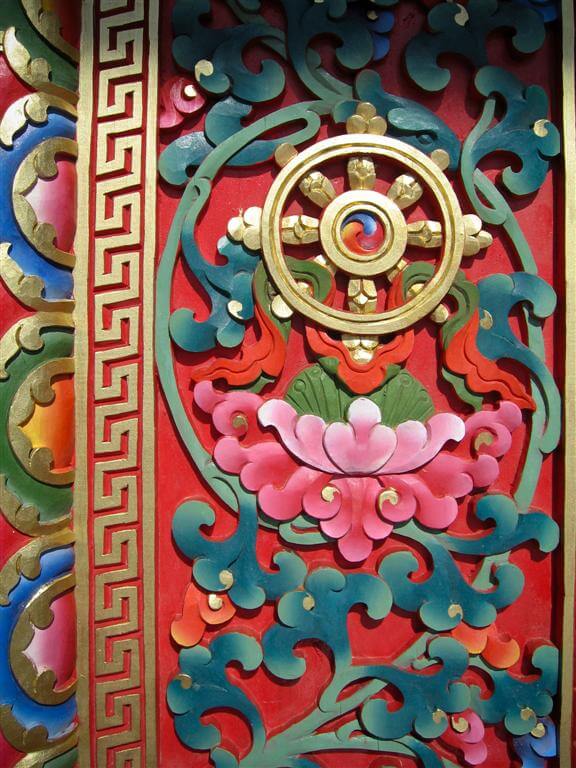
Buddha Family, White, Ether, and symbol is “Wheel”
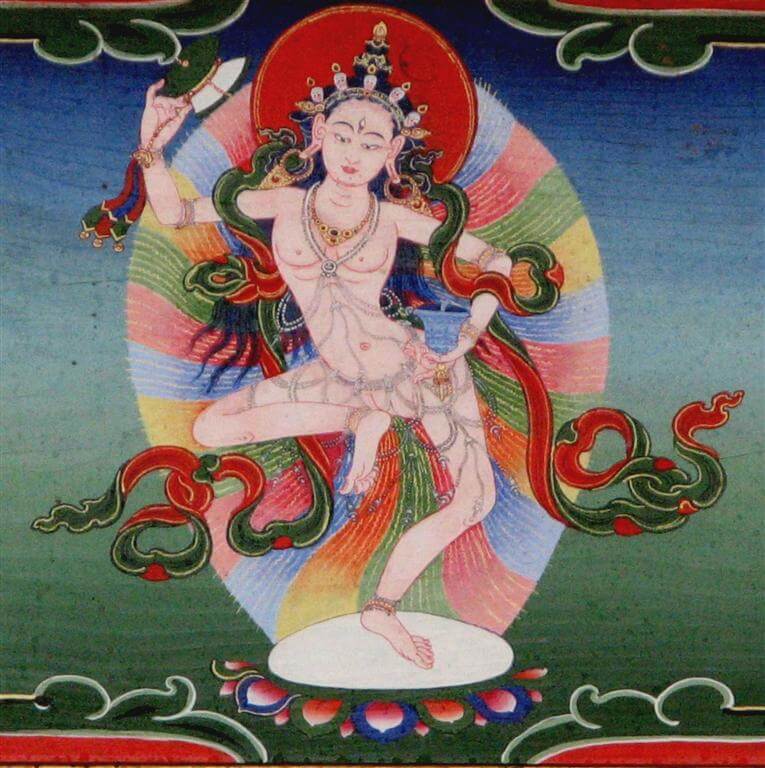
Dakinis represent the feminine wisdom in the Tibetan cosmology.
White Dakini carved above the east door and the wheel carved around the door.
Obstructed Pattern: Ignorance, depression, delusion, spacing out
Transformation/Wisdom: Wisdom of Dharmadatu or Totality
Element: Space
Time: No time, totality of everything
Landscape: White sky in wintertime, big sky
Body Type: Plump, relaxed, round
East
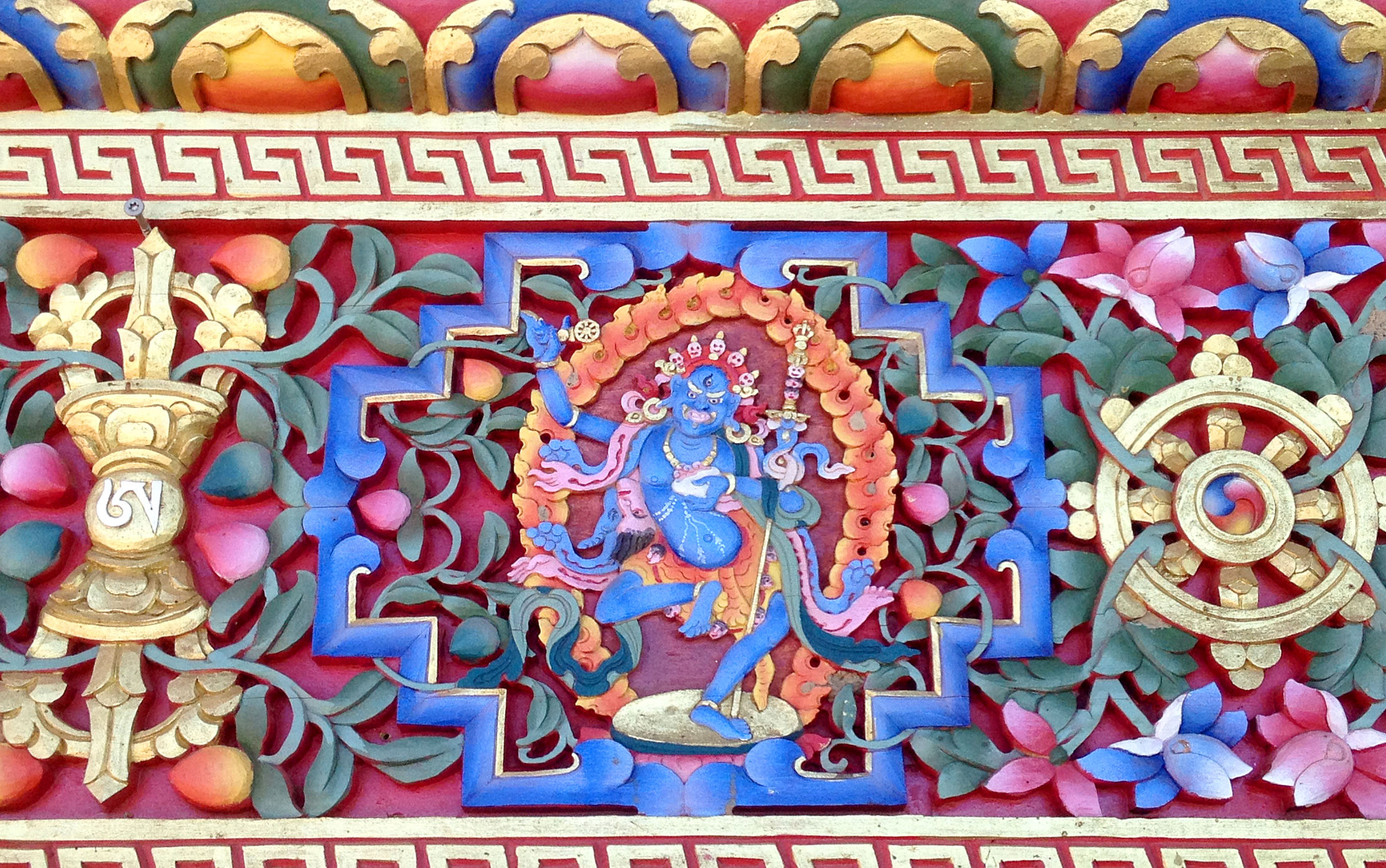
Vajra Family, Blue, Water, symbol is “Vajra or Dorje”
Blue Dakini carved above the east door and the vajra carved around the door.
Obstructed Pattern: Anger
Transformation/Wisdom: Mirror Like Wisdom
Element: Water
Time: Dawn
Landscape: Rugged mountains, icy rivers
Body Type: Thin and hard, clean cut
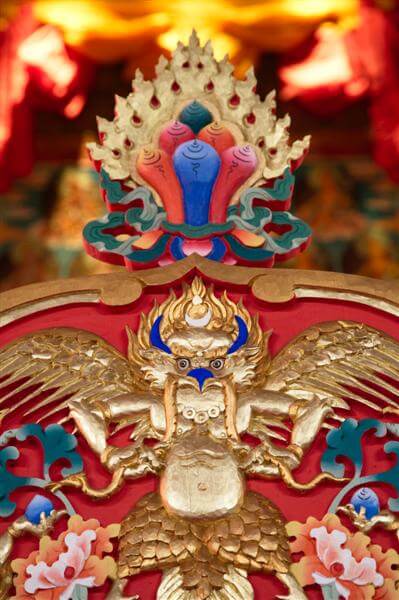
Deity above the door is Garab Dorje – 1stmaster and human teacher of Dzogchen.
South
Ratna Family, Gold/Yellow, Earth, symbol is the “Jewel”.
See Yellow Dakini carved above the door and the Tibetan style jewels carved around the door.
Obstructed Pattern: Pride, Inadequacy
Transformation/Wisdom: Wisdom of Equinimity
Element: Earth
Time: High Noon
Landscape: Jungle, Fertile Valleys
Body Type: Generous, Large, Statuesque
Deity above the door is Longchenpa (12th century) Dzogchen Master and great teacher in the Nyingma School of Tibetan Buddhism.
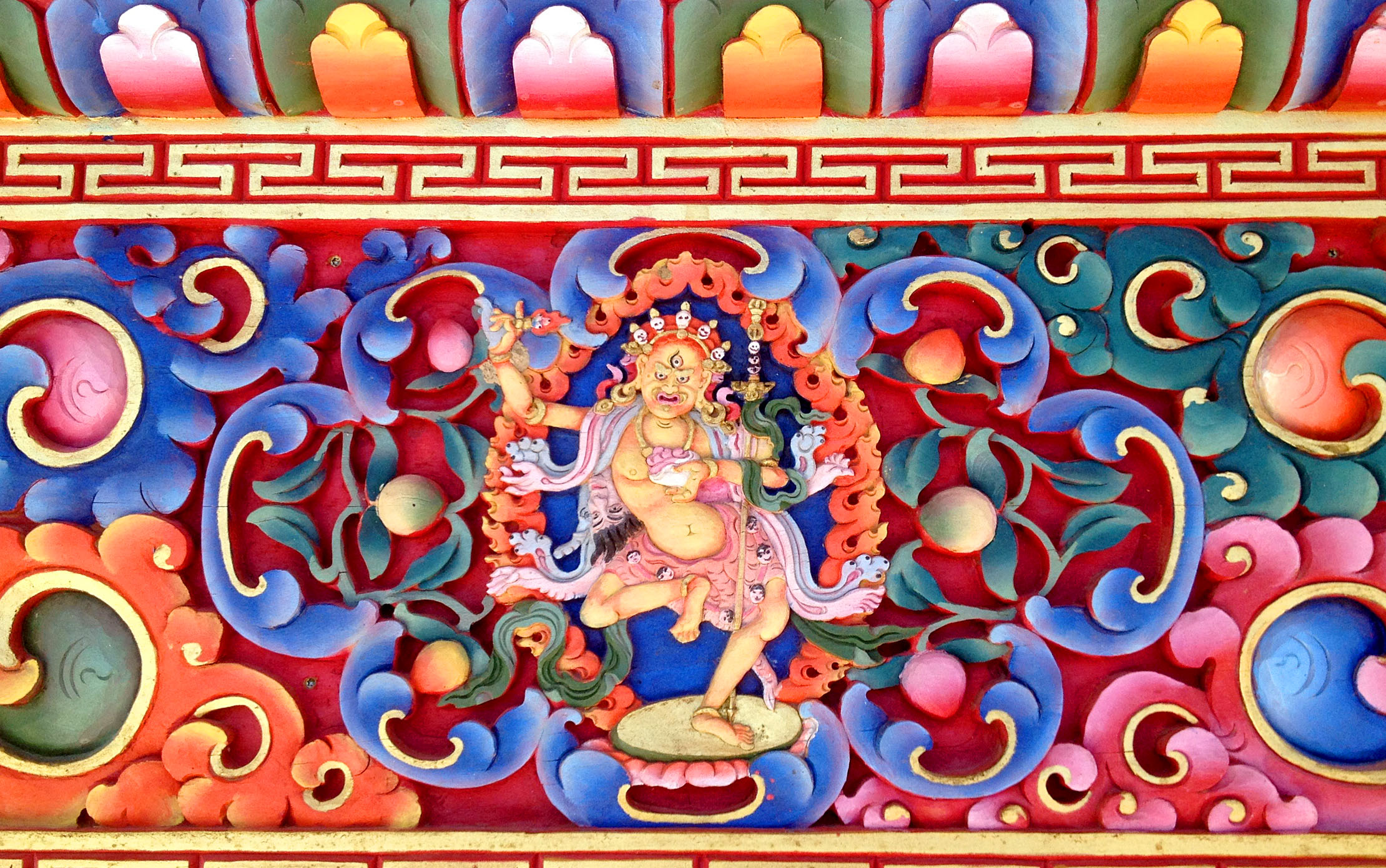
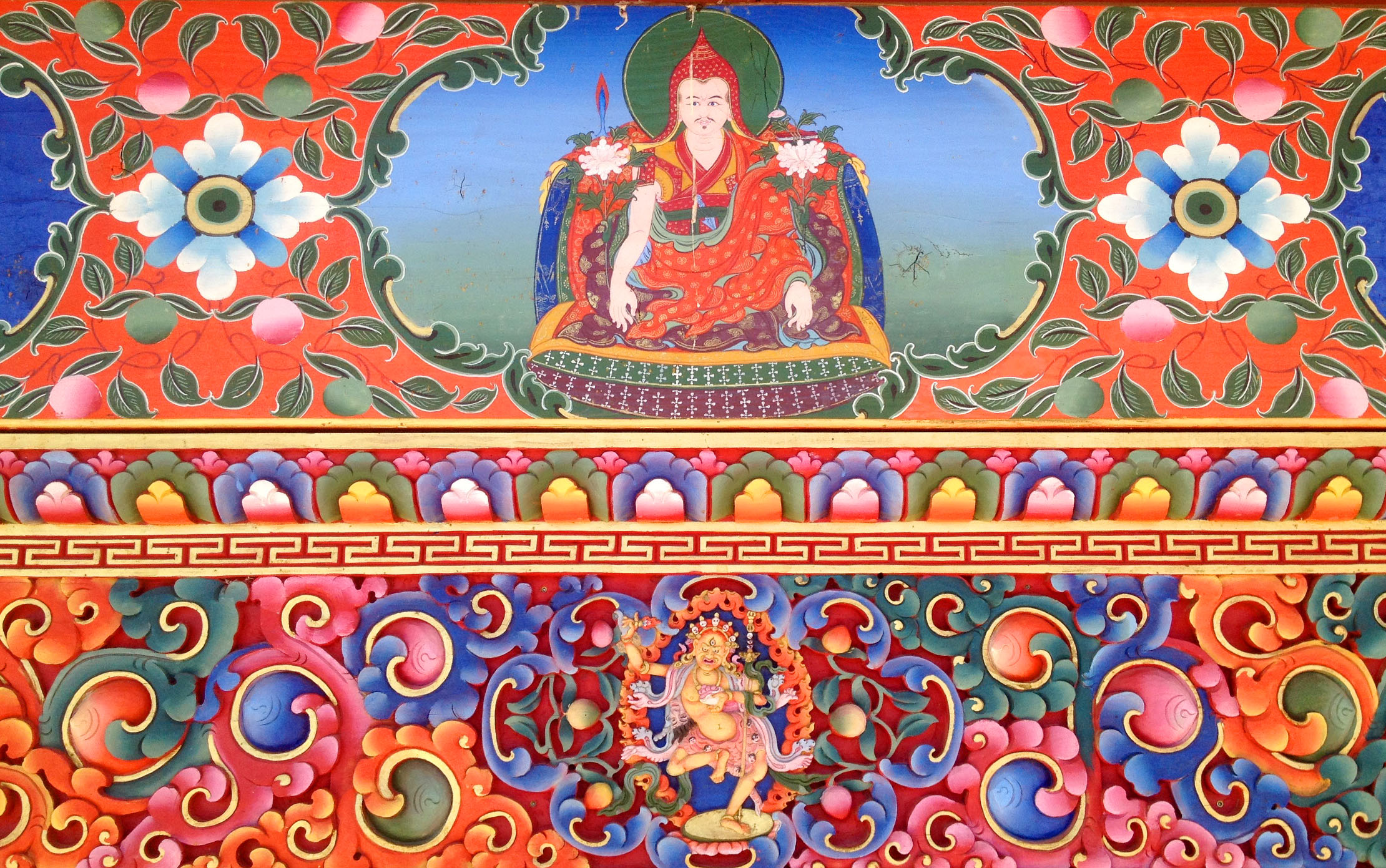
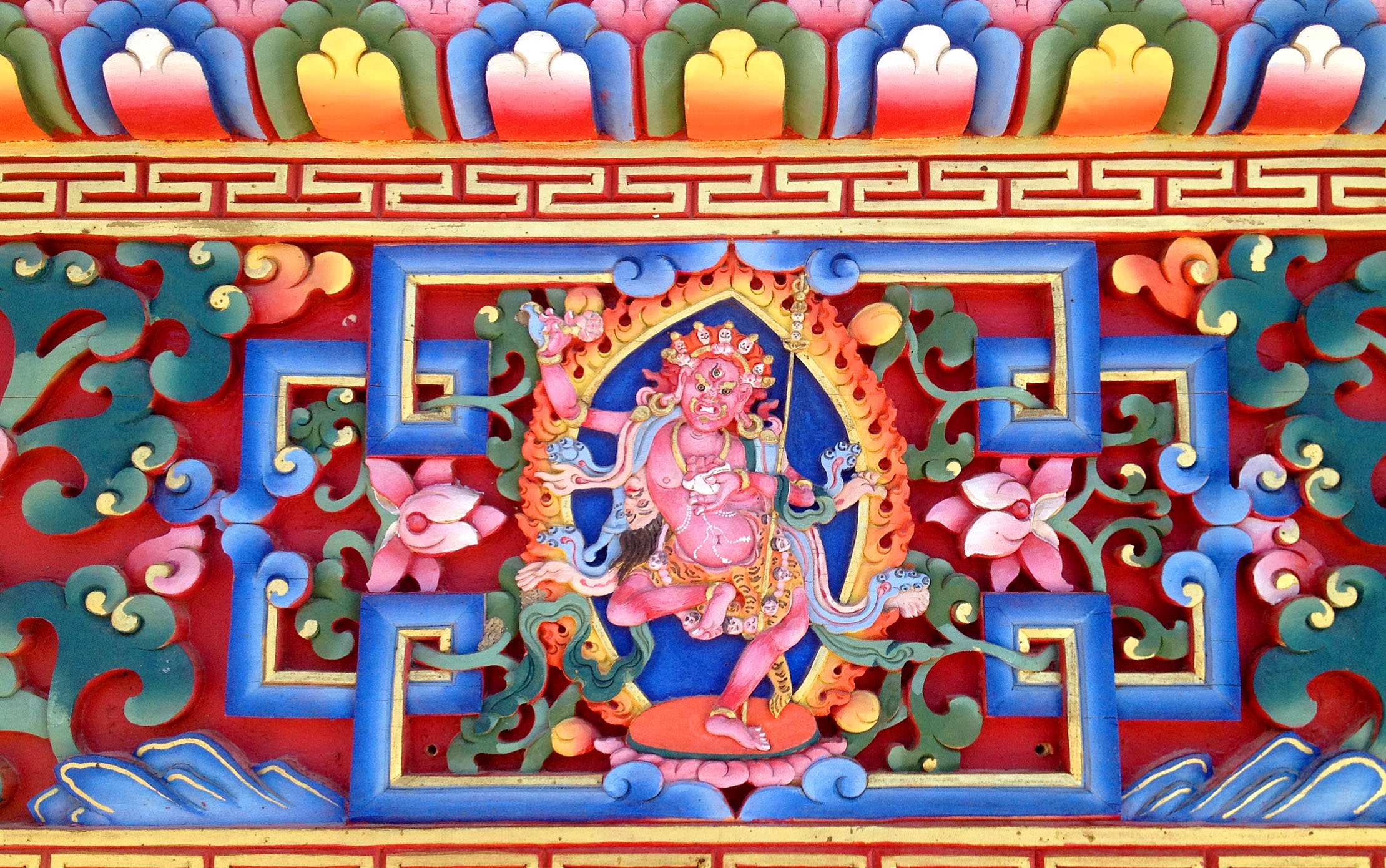
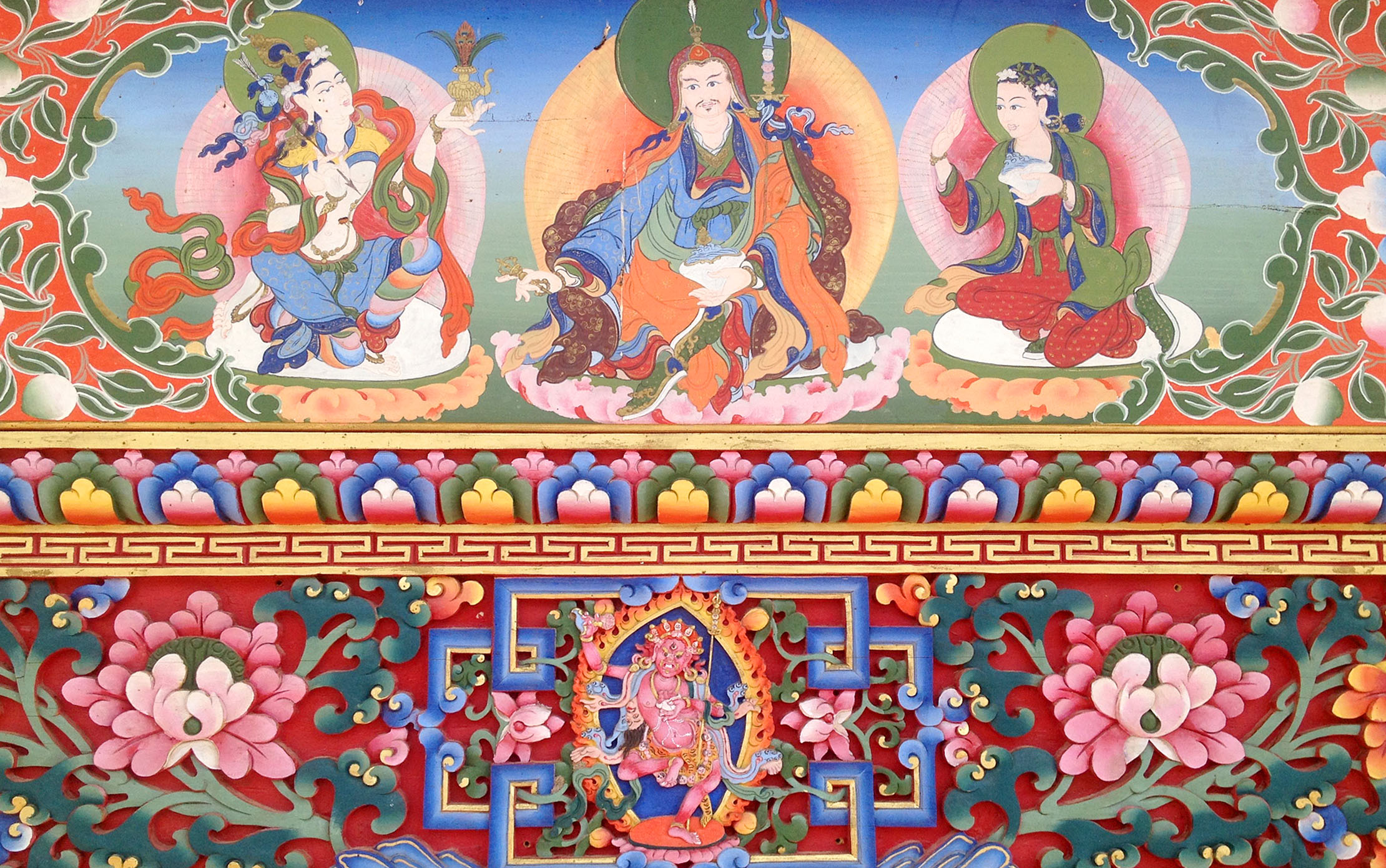
West
Padma Family, Red, Fire, symbol is “Lotus”
See Red Dakini carved above the door and the lotuses carved around the door
Obstructed Pattern: Craving, compulsive seduction, lust, longing, desire
Transformation/Wisdom: Discriminating awareness wisdom
Element: Fire
Time: Sunset
Landscape: Soft, rolling hills, mossy glens
Body Type: Perfectly proportioned, well-toned, very seductive
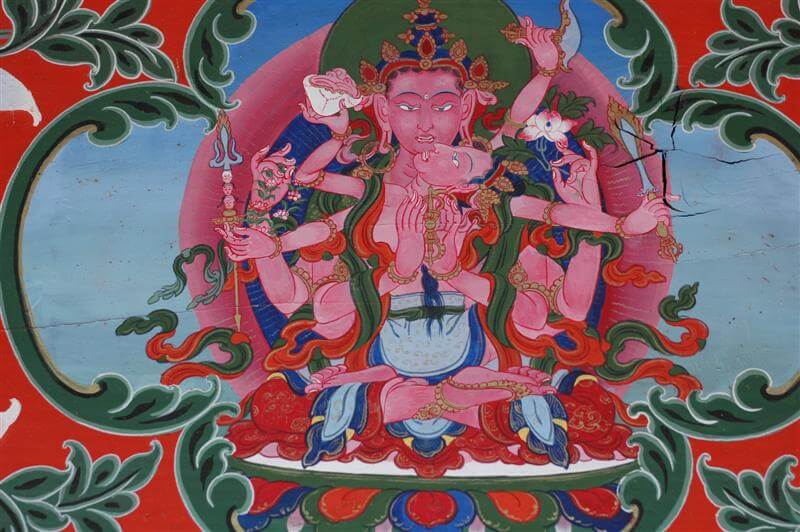
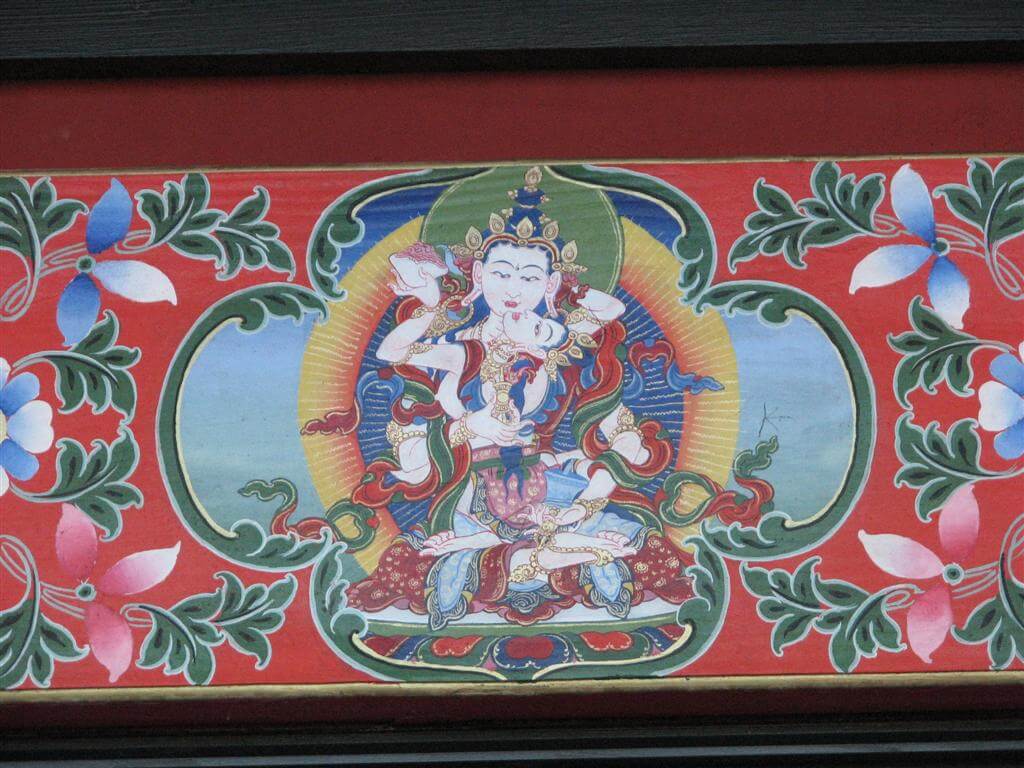
Deities above the door are: Guru Rinpoche and his consorts, Yeshe Tsogyal and Mandarava.
North
Karma Family, Green, Air, Symbol is “Sword and a Double Vajra”
See Green Dakini carved above door and the carved sword around the door.
Obstructed Pattern: Envy, ambition, speediness
Transformation/Wisdom: All-accomplishing wisdom
Element: Air
Time: Midnight
Landscape: Complicated, windy place
Body Type: Thin, wispy, see in in profile, always moving
Deity above the door is Machig Labdrön.
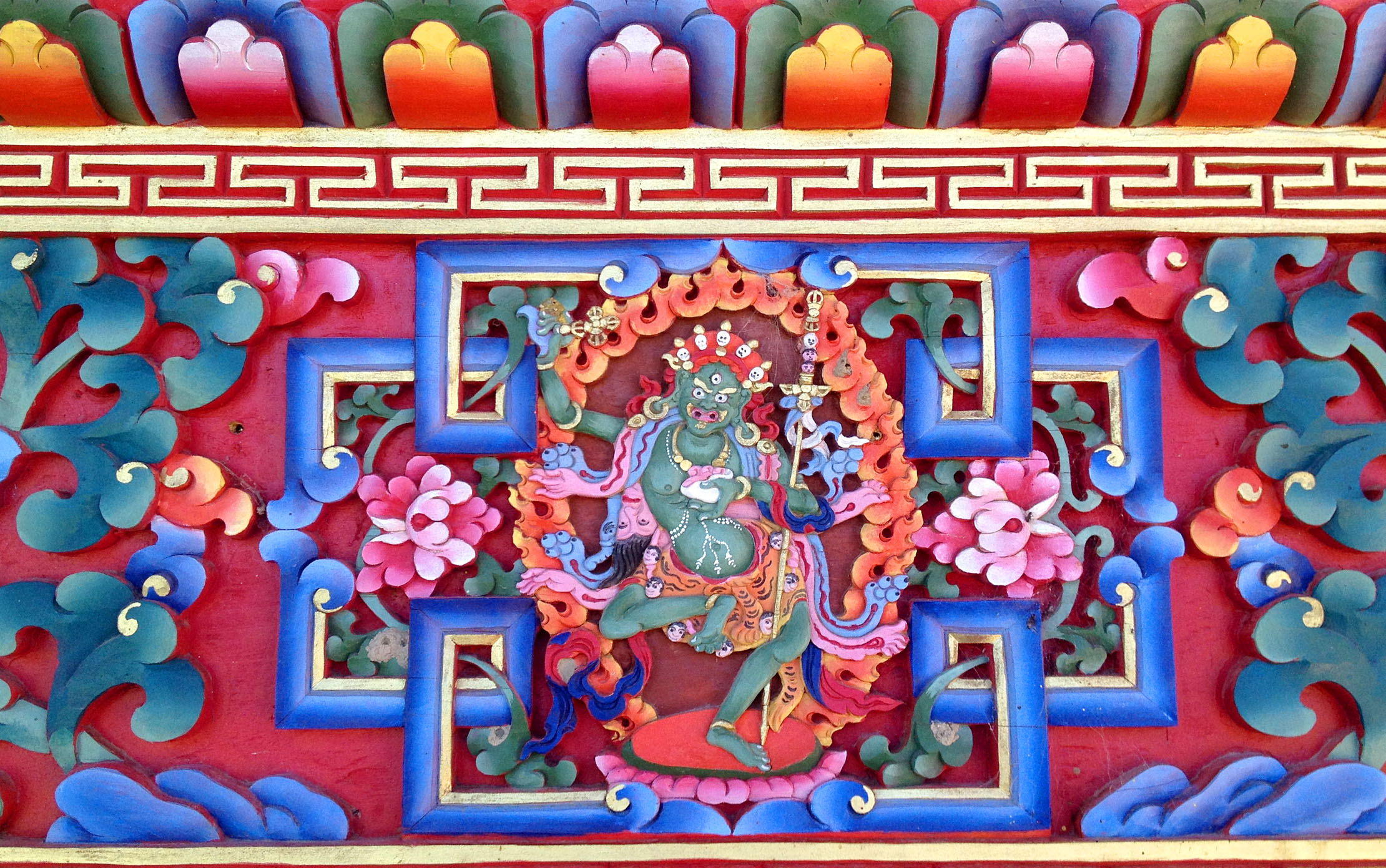
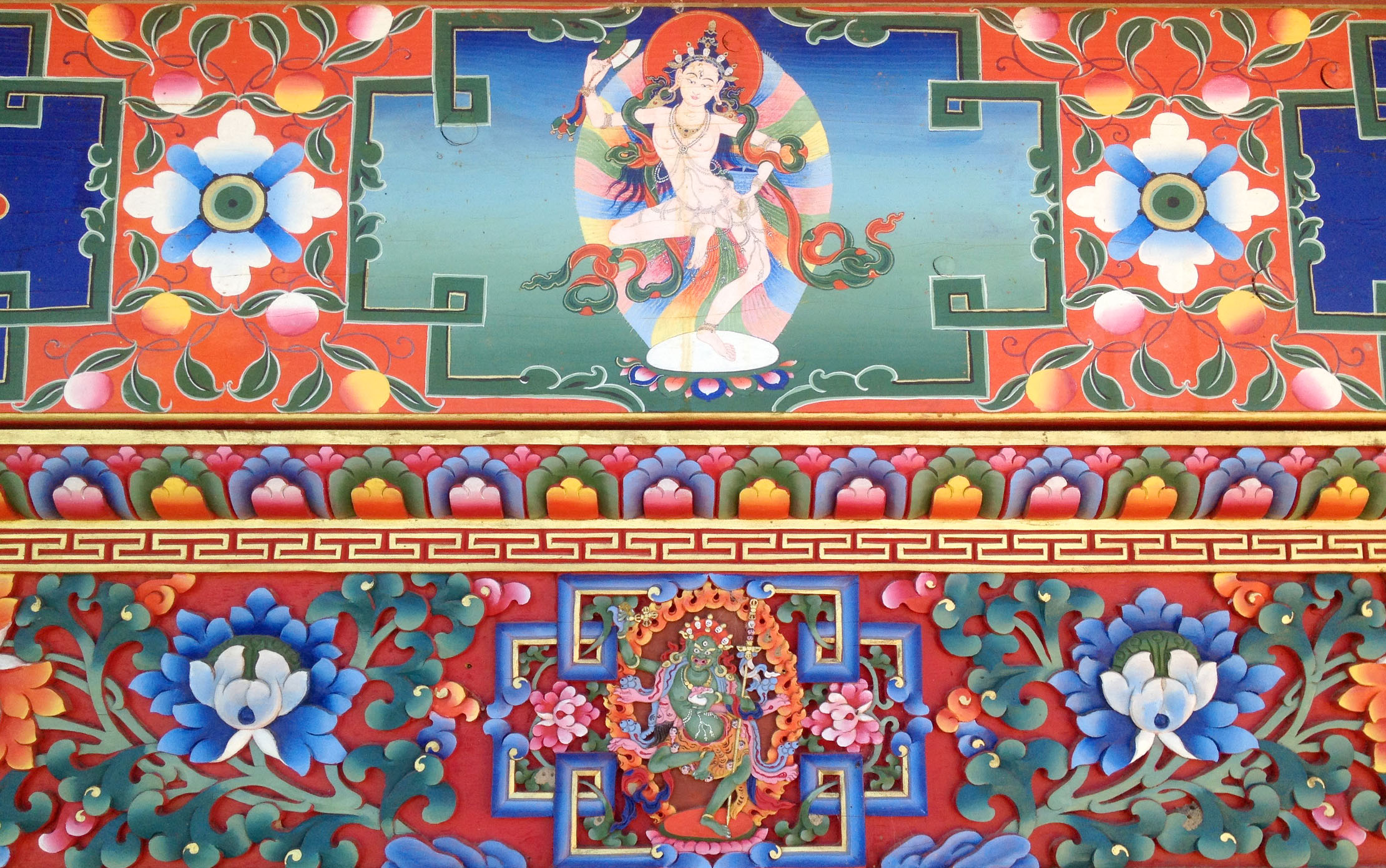
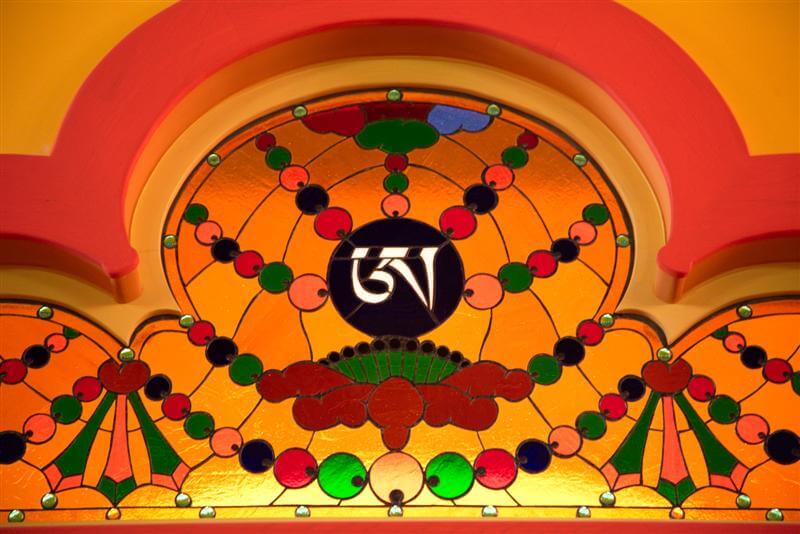
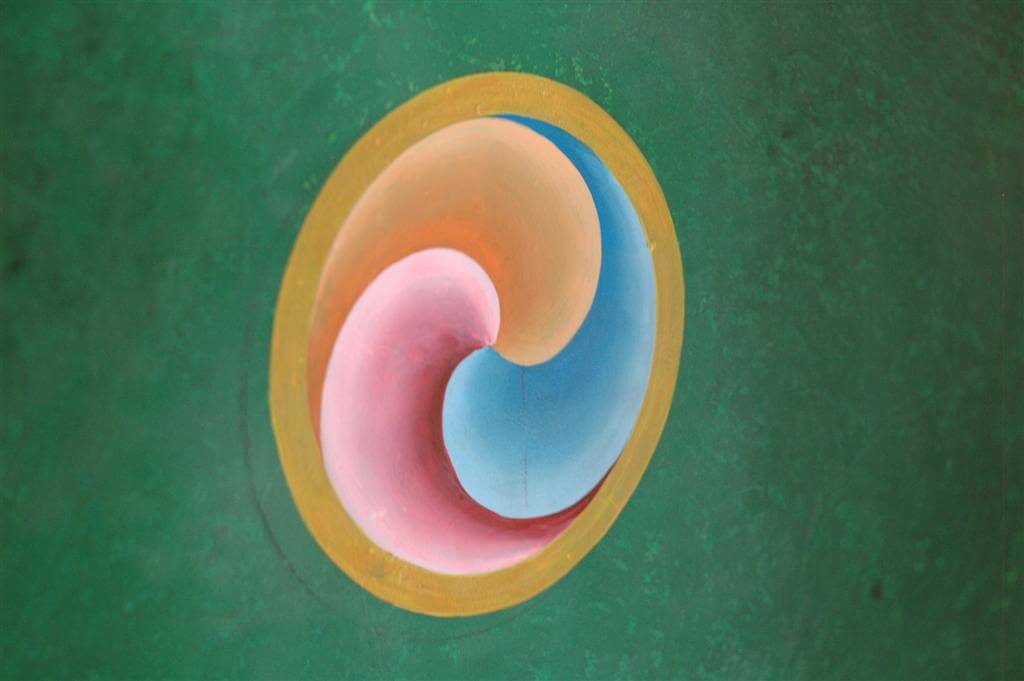
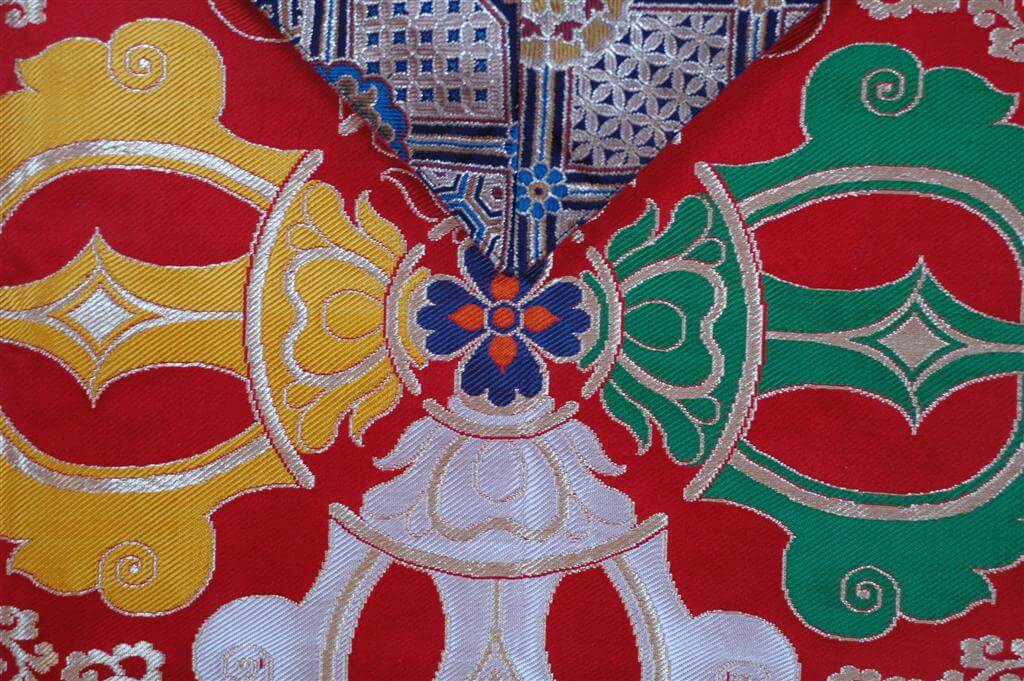
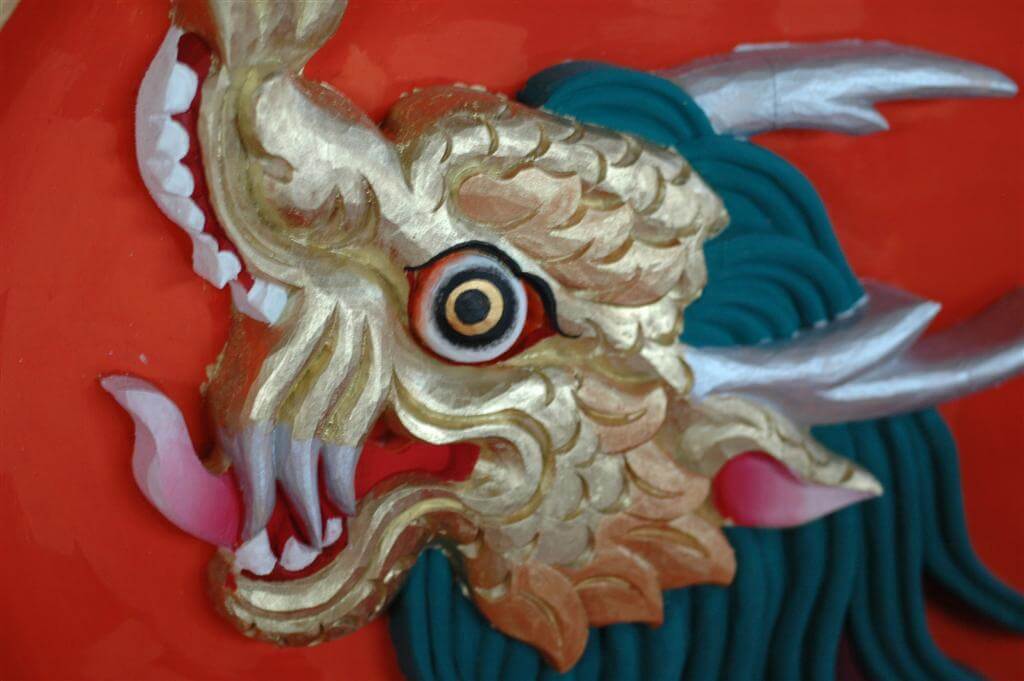
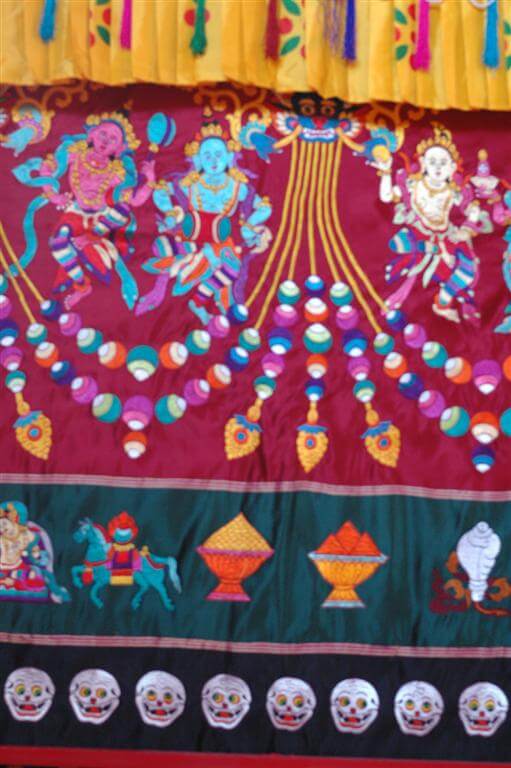
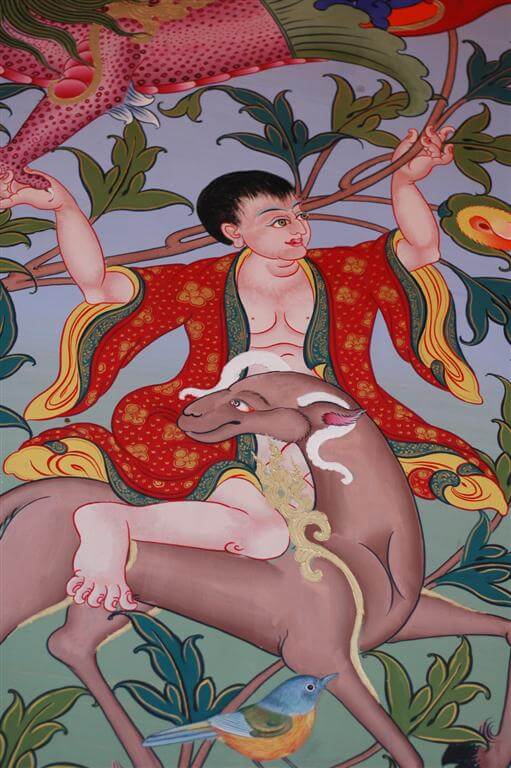
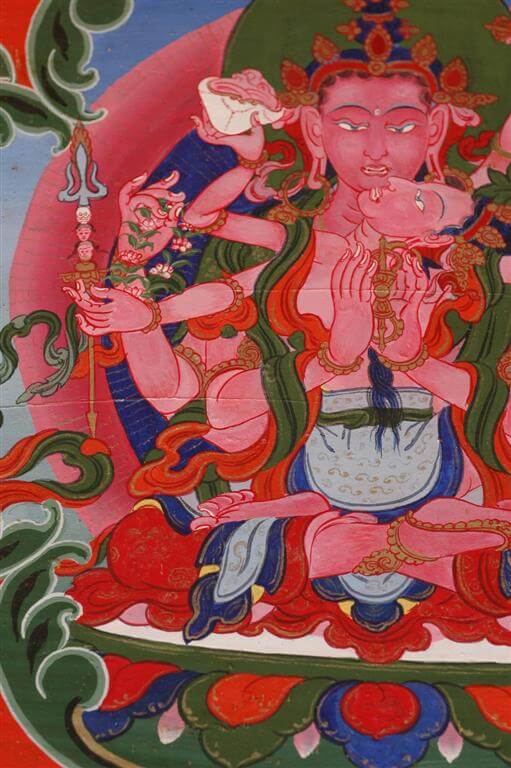
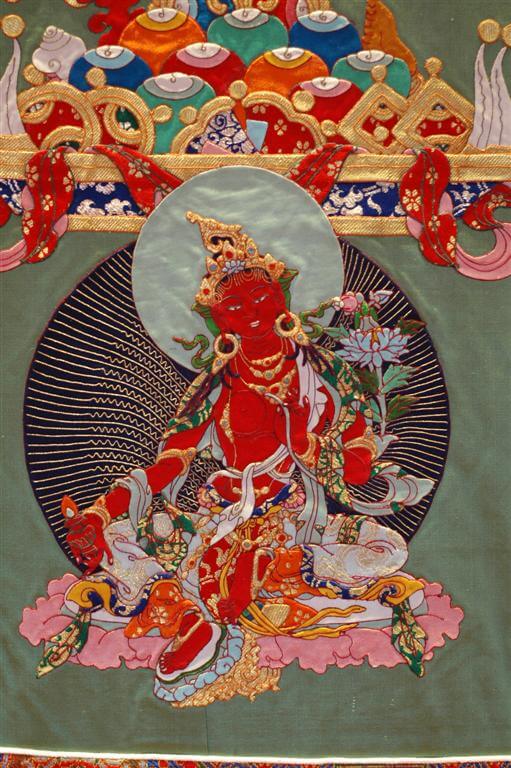
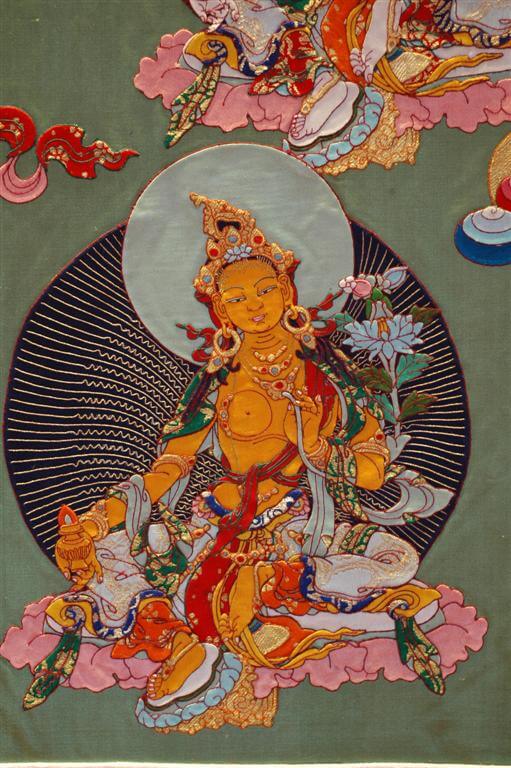
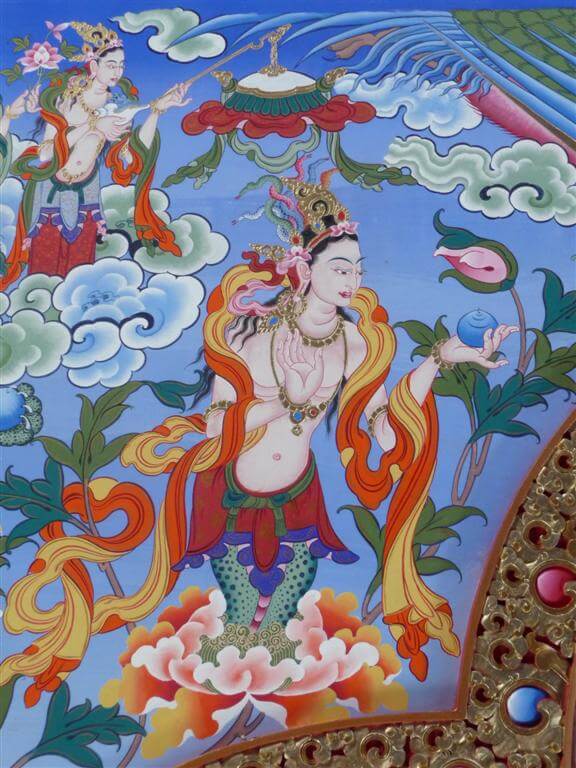
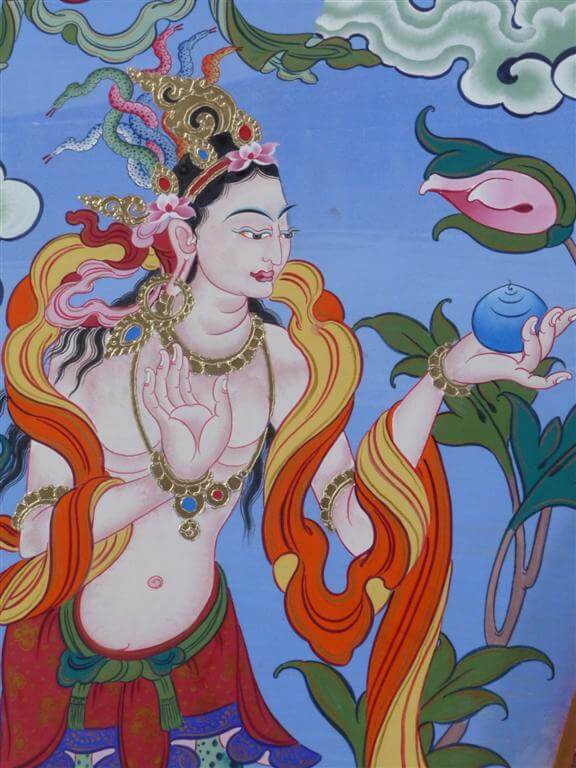
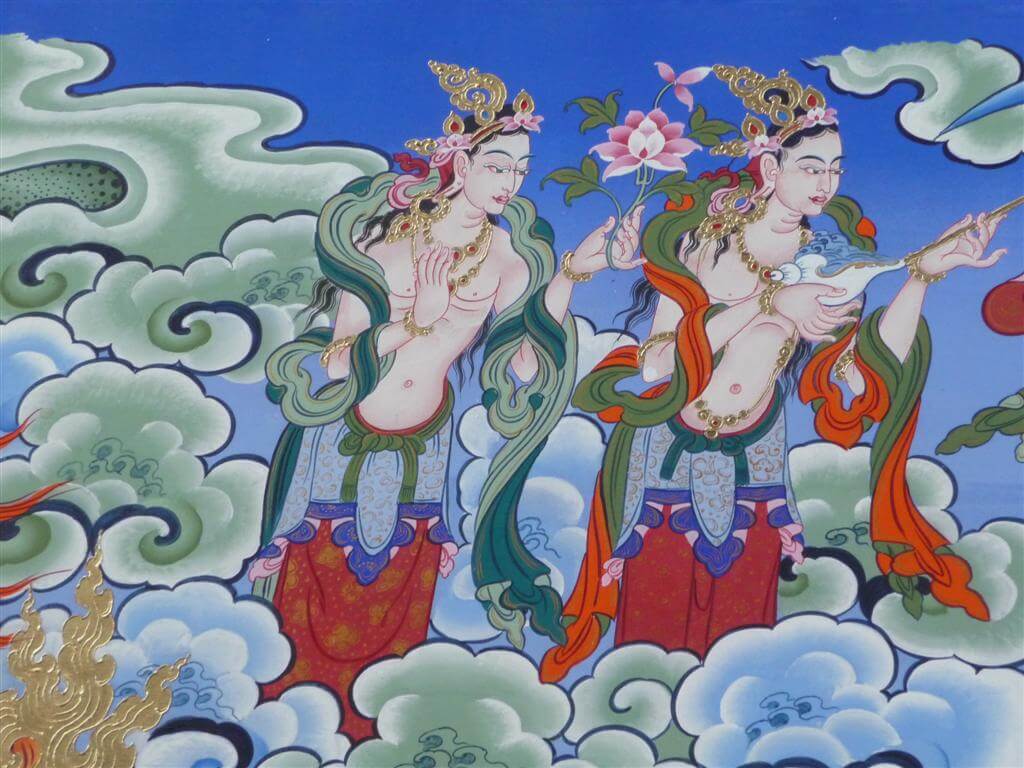
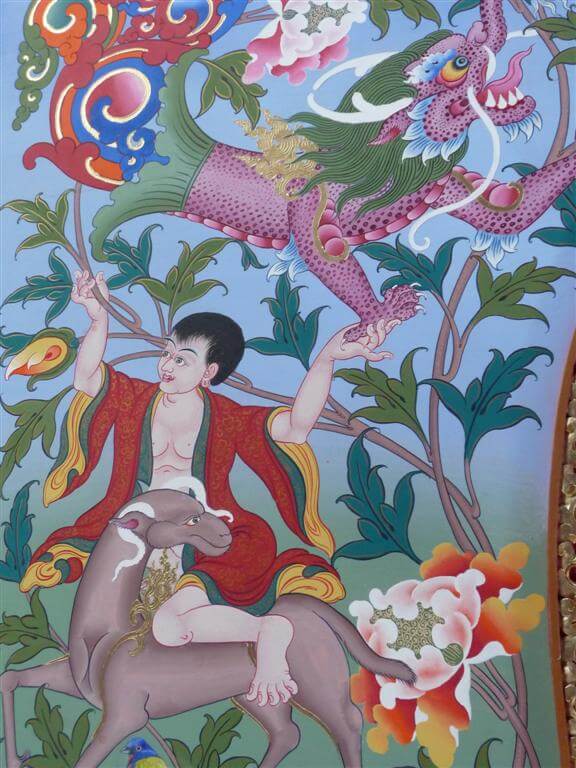
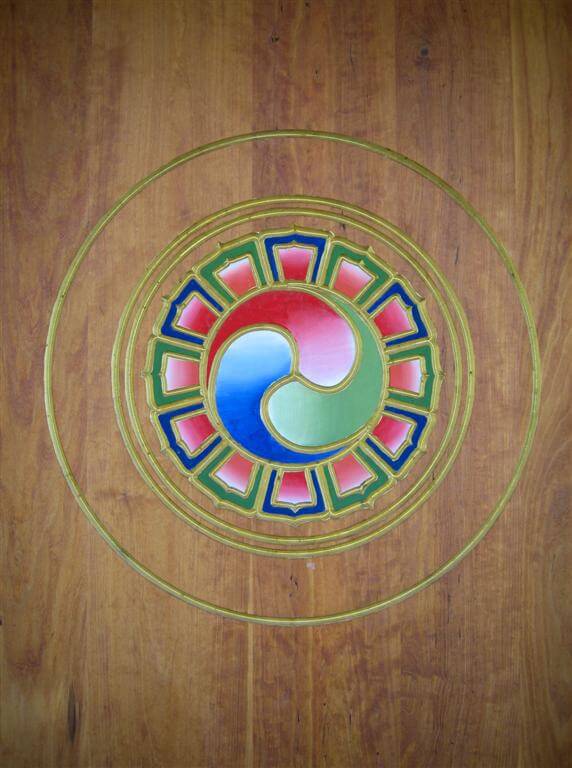
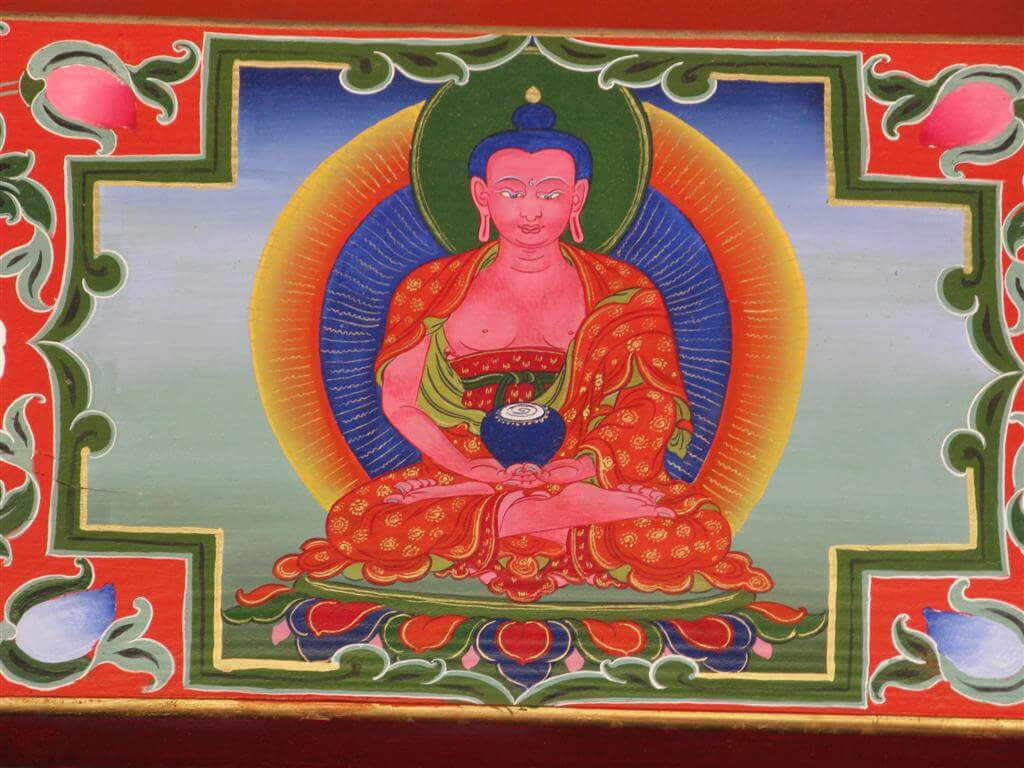
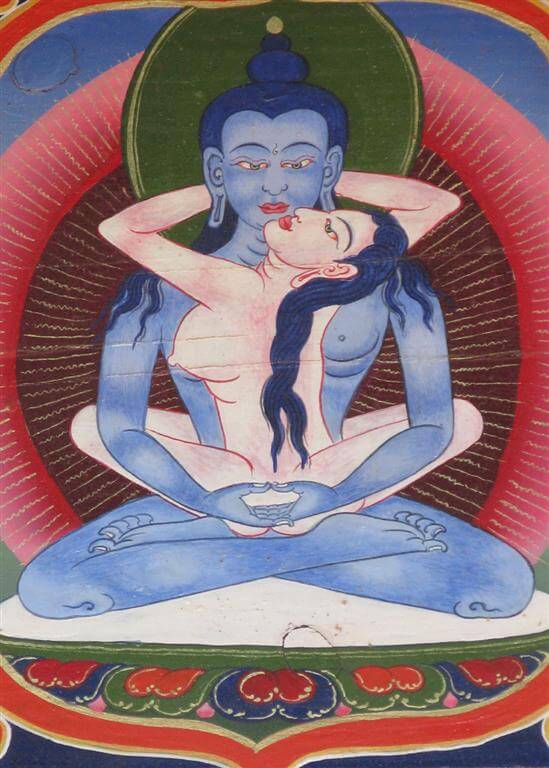
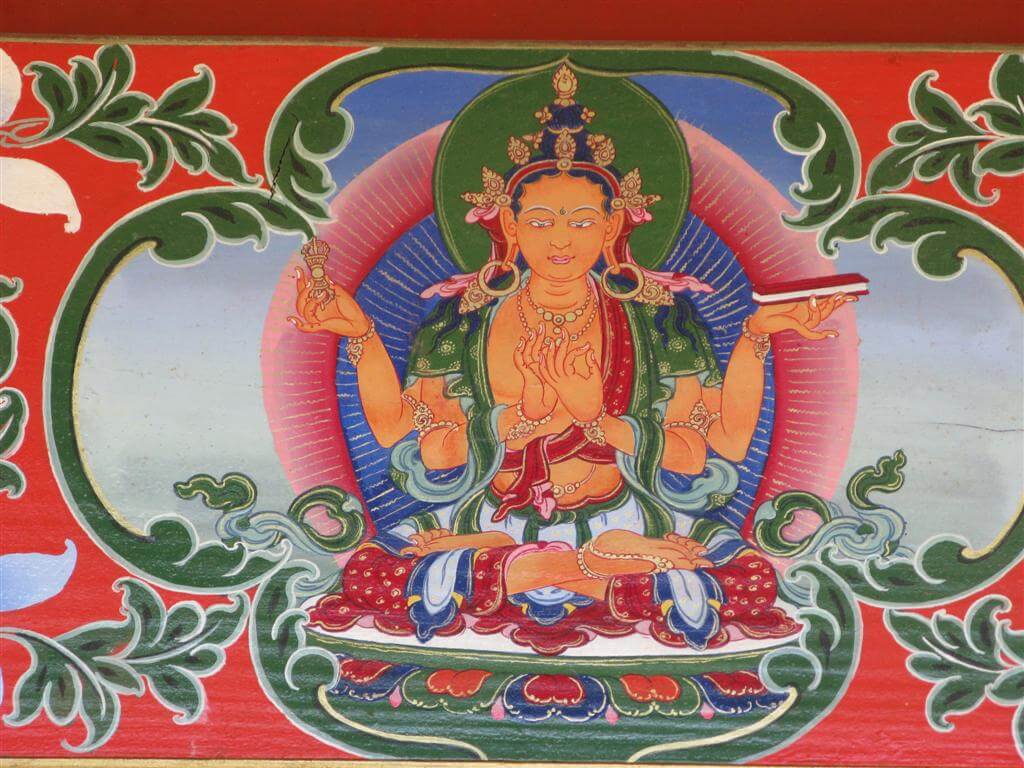
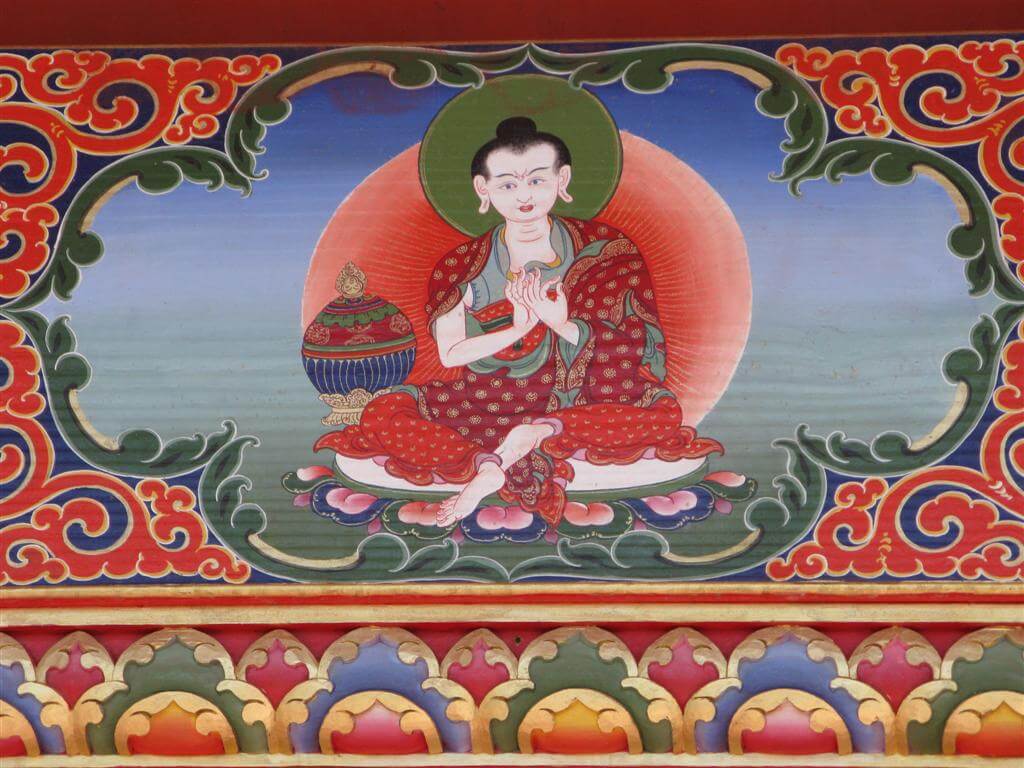
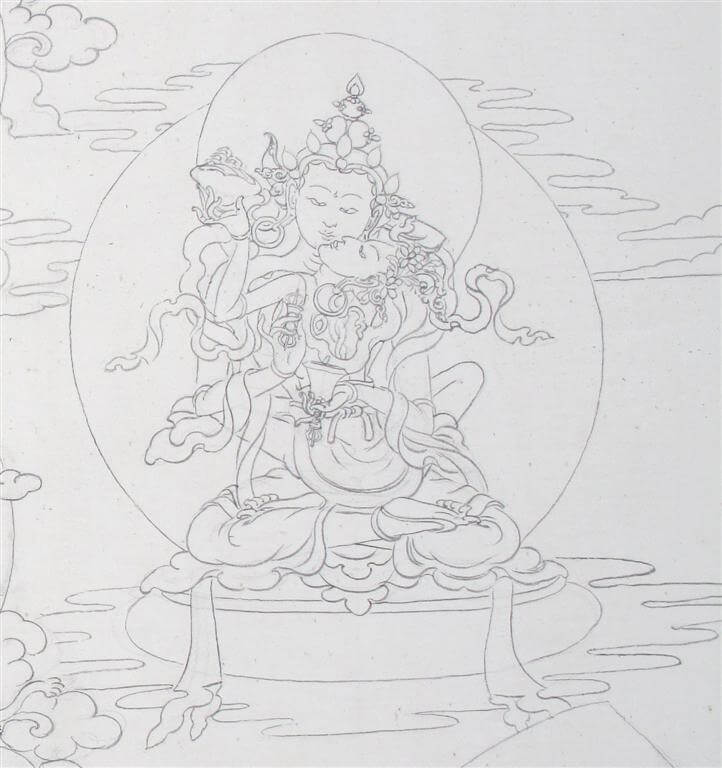
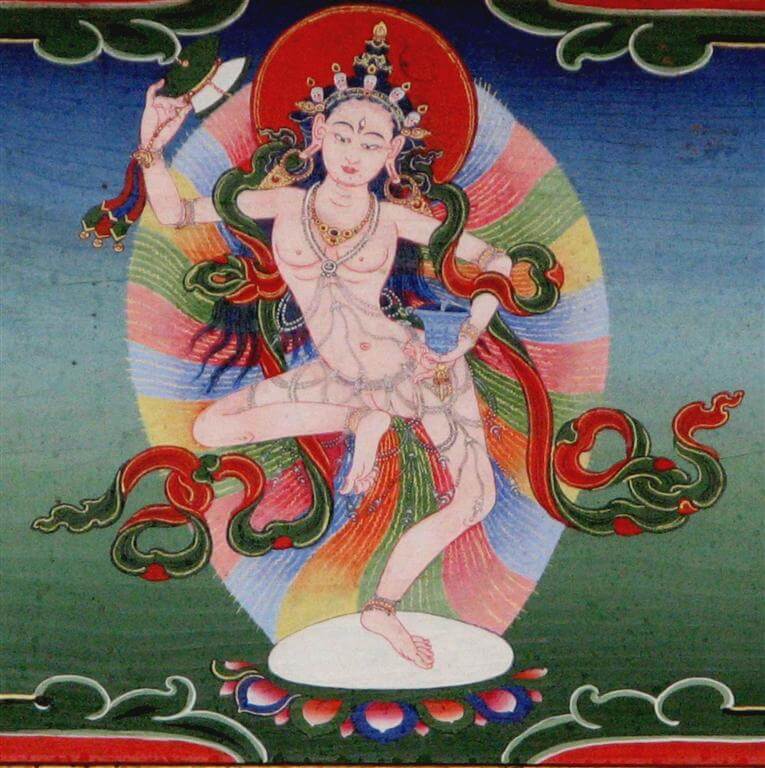
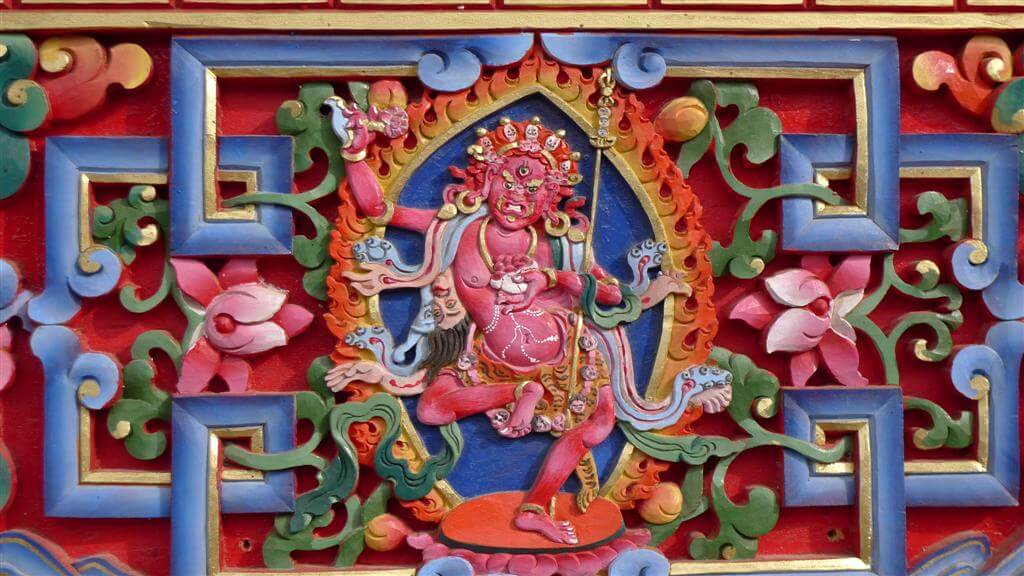
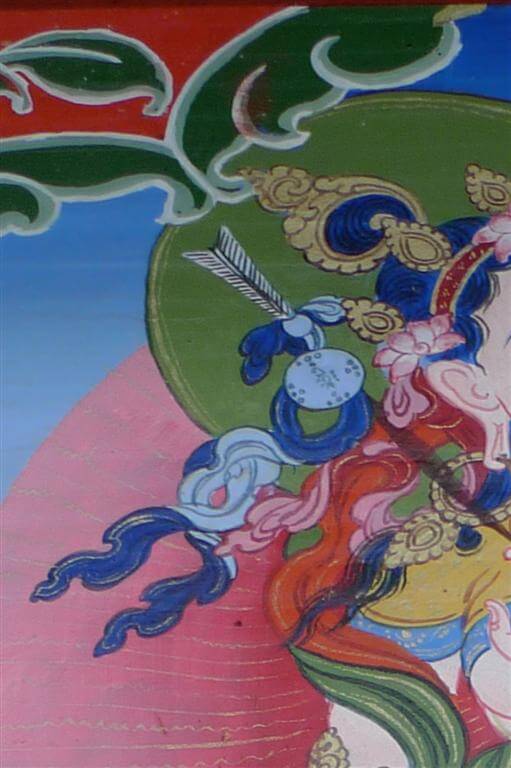
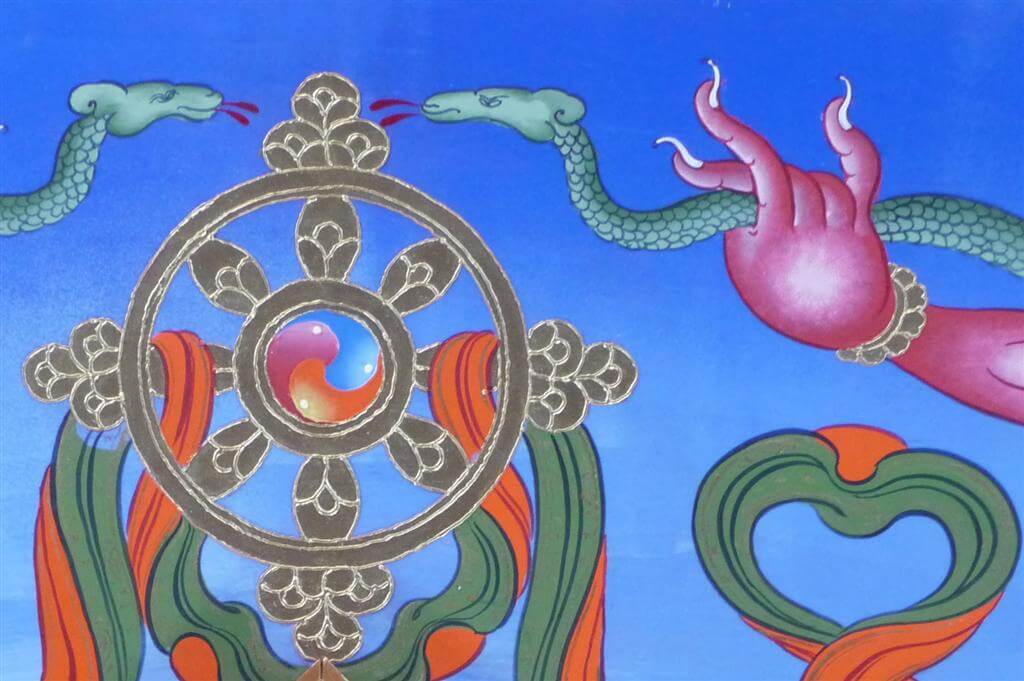
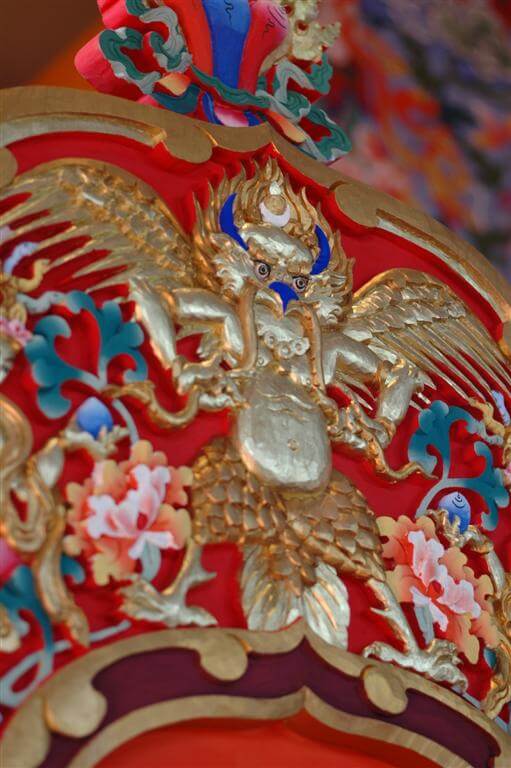
Temple Art and Symbolism
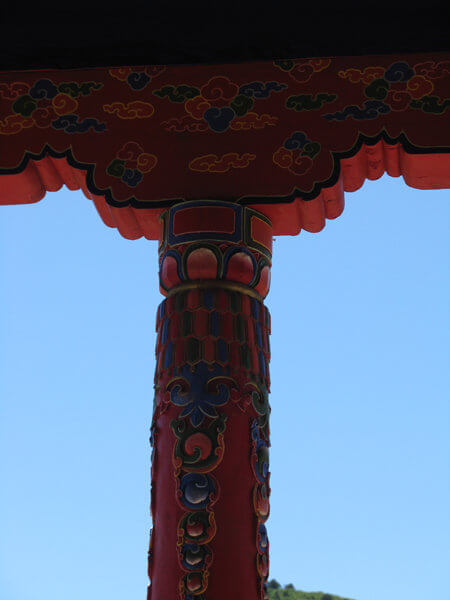
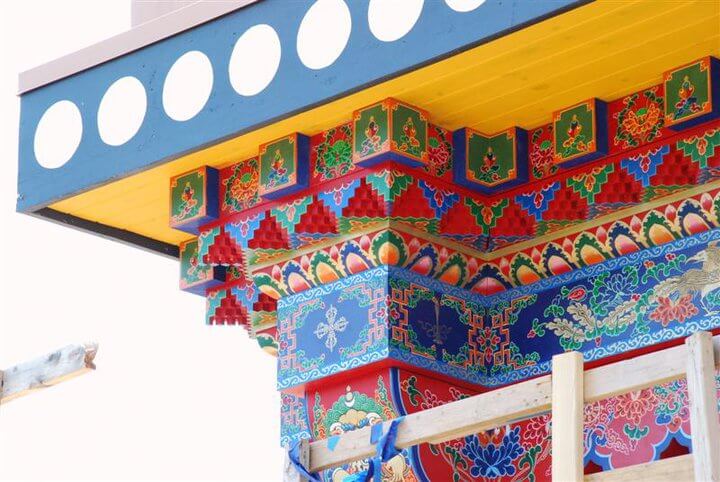
The Making of the Temple
The Temple Throughout the Seasons

The Stupa – The Mind of the Buddha
by Lama Tsultrim Allione
In 1999, the stupa on the land was consecrated by Chögyal Namkhai Norbu Rinpoche, dedicated to Nyala Pema Duddul, great Dzogchen master, who took rainbow body in 1872. The stupa was designed according to traditional instructions from Tulku Sang-ngag Rinpoche.
A Stupa is something like a spiritual generator. If the relics contained within it arepowerful and the intention expressed during its creation are pure, the impact of a Stupa can be important for the entire surrounding country, promoting harmony, prosperity, longevity, good health, and peace. It also helps to subdue fear, corruption and pollution. When we see a Stupa in the West it is often viewed as a beautiful form of altar or shrine from the East, but a Stupa, or Choten in Tibetan, exists on many different levels, and most are not perceived by the five senses. The outer form is a symbol for the real energy of the Stupa.
The real Stupa demonstrates the mind of the Buddha, and the path to enlightenment. The Stupa brings together absolute and relative truth. In its absolute reality the Stupa symbolizes the indestructible, the unconditioned; what is beyond words and concepts, what is Buddha mind.
Shortly before his paranirvana, the Buddha instructed his students to cremate his body and place his ashes and the remains of his bones in a Stupa. People could visit the Stupa, venerate it, and renew their connection to his teachings. Since that time, hundreds of thousands of Stupas have been built, enshrining the relics of the Buddha and of many other enlightened teachers. “Stupa” is a Sanskrit word which means “to heap” or “to pile up,” and refers to the mound-like shape of the earliest Stupas. The Tibetan word for Stupa is Choten or “receptacle for offerings.”
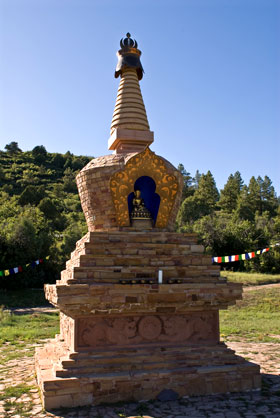 The building of a Stupa will ground and sustain the spiritual energy of the Tibetan masters on the Tara Mandala land. It is like inviting a Buddha to dwell on the land. “Building a Stupa,” said the Dzogchen master, Tulku Urgyen, “is cause for the greatest accumulation of merit (positive energy) possible.”
From the beginning we planned to build several Stupas on the land. Then the night before the Mandarava retreat began, early on the morning of May 5, 1995, I had a dream. In the dream I heard a voice saying, “You must build a Stupa dedicated to Nyala Padma Duddul.” When I started to go back to deep sleep, the command was repeated, “Don’t forget: Build a Stupa dedicated to Nyala Padma Duddul.” This jerked me out of my sleep momentarily and I made a note of my dream in my mind and started to fall asleep again. The instructions were repeated again several times each time more insistently, until finally I was unable to sleep any longer.
I woke up with the instructions and the placement of the Stupa, along with the size and the shape. The place was in a field just before you go up the hill to a yurt.
I felt the dream had to be followed by action due to its strange insistent quality and the fact that the placement was not where my logic had placed it, but in a place I had never even considered. I didn’t know a great deal about Nyala Padma Duddul. So I decided to ask Namkhai Norbu Rinpoche and to look up Nyala Padma Duddul.
Researching Nyala Padma Duddul, I discovered he was the root master of Ayu Khandro, Chang Chub Dorje, and Adzom Drukpa, all root teachers of Namkhai Norbu Rinpoche; in other words, the root lineage for Tara Mandala. It made perfect sense. He was especially known for the terma of Amitayus yabyum, which he discovered. It was the practice that Guru Padma Sambhava and Mandarava were doing when they achieved the siddhi of long life at the cave of Maratika in Nepal. It was also the practice that Namkhai Norbu Rinpoche was doing at Maratika when he revealed the terma of Mandarava, “The Sphere of the Vital Essence of the Vajra.”
In the morning at the retreat I told the group the dream and decided it would be auspicious to start that day. So during the lunch break, we moved some stones to the place indicated in the dream. As the activity to move the stones began, a circular rainbow formed around the sun with a light red glow extending from the rainbow to the sun (called a sun dog). A late snow squall created beautiful flakes in the pinkish light from the sun.
 At the end of the retreat, I spoke to Namkhai Norbu Rinpoche about the Stupa, and he said that it would act as a support for the lineage of Nyala Padma Duddul and the Dzogchen teachings. In the meantime, Dugu Choegyal Rinpoche had written him a letter expressing the necessity for his students to build a Stupa for his long life. With this and other indications put together, I contacted Choegyal Rinpoche and he very kindly agreed to be at Tara Mandala from May 15 to June 13 helping with the Stupa and teachings as well. He will be teaching a retreat on “Mahamudra Dohas of the Dakinis” from May 24 to June 2. Dohas are poems of realization; spontaneous, logic-busting songs of layered meaning, something similar to haiku, koan’s and Rumi’s poetry.
In October 1995, Namkhai Norbu Rinpoche gave me some very special relics for the Stupa along with his blessings for the work. We have also been given the tooth Drukpa Kagyu master, Apho Rinpoche, offered by Paul Kloppenburg, Tsultrim’s first husband.
Originally Published in the Tara Mandala Newsletter; Spring, 1996
Relics Installed in the Tara Mandala Stupa
18 Buddha Relics including a relic from Baudha Stupa recovered by Shakya Shri
Fingernails: Fingernails of Nyala Pema Duddul after he took rainbow body.
Bones: Bones of Jigme Lingpa, Dodrub Chen Rinpoche.
Hair: Hair of Jigme Lingpa, Guru Rinpoche, Le gi Wongmo Khadro (female guru of Guru Rinpoche), Khabje Tulku Orgyen Rinpoche (Urgyen Tsewan Chokdrup, 1920-1996).
Teeth: Large molar of Apho Rinpoche.
Robes: Cotton cloth that covered the body of Nyala Pema Duddul when he took rainbow body, Chan Chub Dorje, silk that covered the body of Adzom Drukpa when he died, clothes of Herka Lingpa (Khentse Chokyi Wangchuk), cloth from the body of Ayu Khadro, cloth from the body of Apho Rinpoche when he died.
Tsa Tsas: Adzom Drukpa’s tsa tsa of Guru Rinpoche made of Mendrub by himself, Chang tsa of Guru Rinpoche made by Apho Rinpoche.
Medicine: Medicine from the water that washed Apho Rinpoche’s body after death, from Vairocana, Udra Nyingpo, salt from the body of the 16th Karmapa, longlife pill from Ayu Khadro, mani rilbu from Tso Pema.
Sacred Pills: The flesh of Jigme Lingpa, mixed pill of many relics from Gangteng Tulku, mixed relics from Apho Rinpoche, 7th born brahmin pill, mendrub of Dudjom Rinpoche, 16th Karmapa mendrub, Dzogchen Dungwa Kunga Palden made when his body was washed at death, pill made from clay and the water that washed the Kangyur when completed, pills from 10 important masters including Chang Chub Dorje.
Sacred Places: Seed from the bodhi tree, Sindura from Mt. Kailash, Longchenpa’s Rahula Practice Soil, sand from Bodhgaya, sand from Lumbini (Buddha’s birthplace), sand from main shrine room Sarnath (where the Buddha first turned the wheel of the Dharma), sand from Kushinagar (paranirbana of the Buddha), sand from Guru Rinpoche’s cave, Parping, stone from Yeshe Tsogyal’s cave in Drigung Shoto Terdrom, earth from Lhalung Palden’s birthplace, pine nuts from Powo, stone from the sacred hot springs at Terdrom, earth from cave at Maratika where Namkhai Norbu Rinpoche revealed the Mandarava terma, rock from Maratika, relics from Mt. Kailash, Varjra Togini’s red soil: Terdrom, earth from Lotrsawa Marpa’s holy place, earth from Machig Lapdron’s cave, earth from the secret cave of Guru Rinpoche at Tso Pema.
Tara Mandala Library
Overview
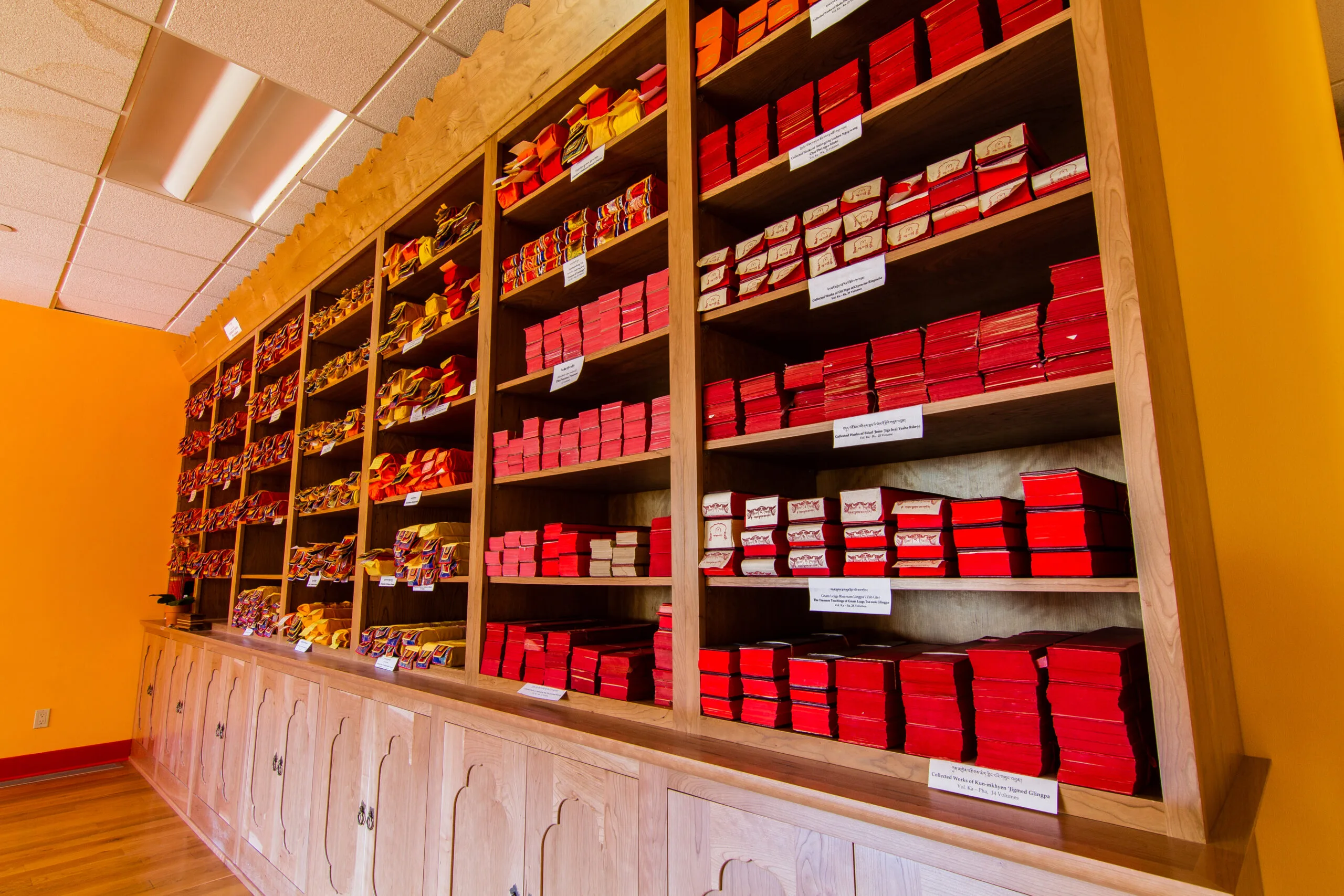
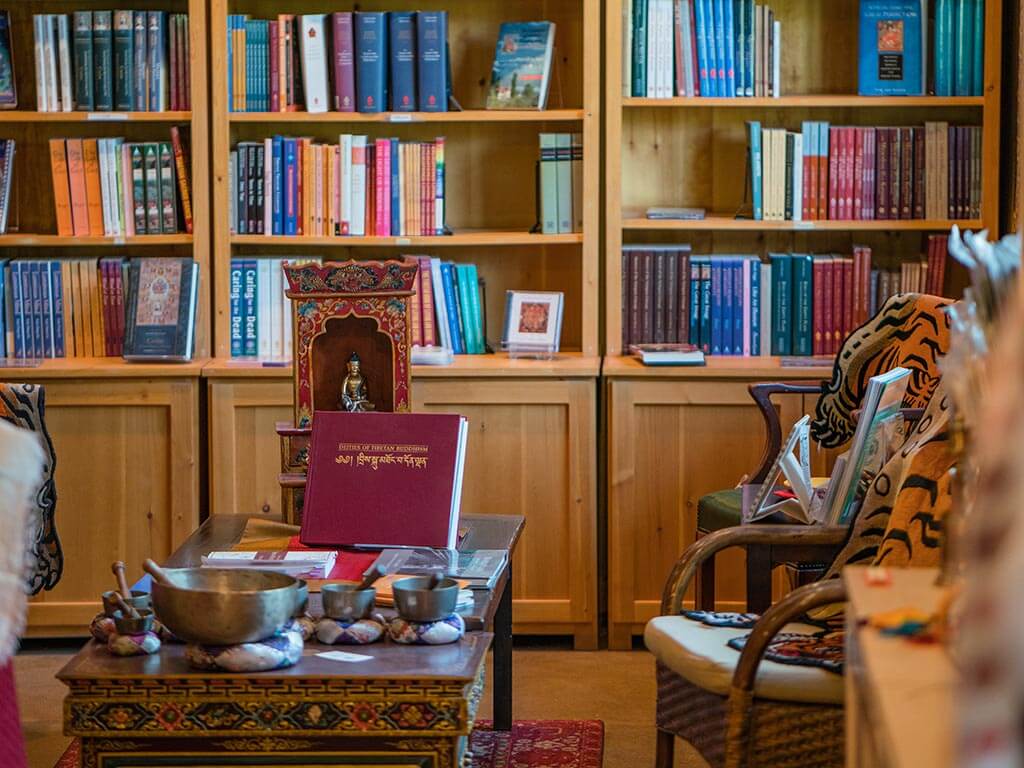
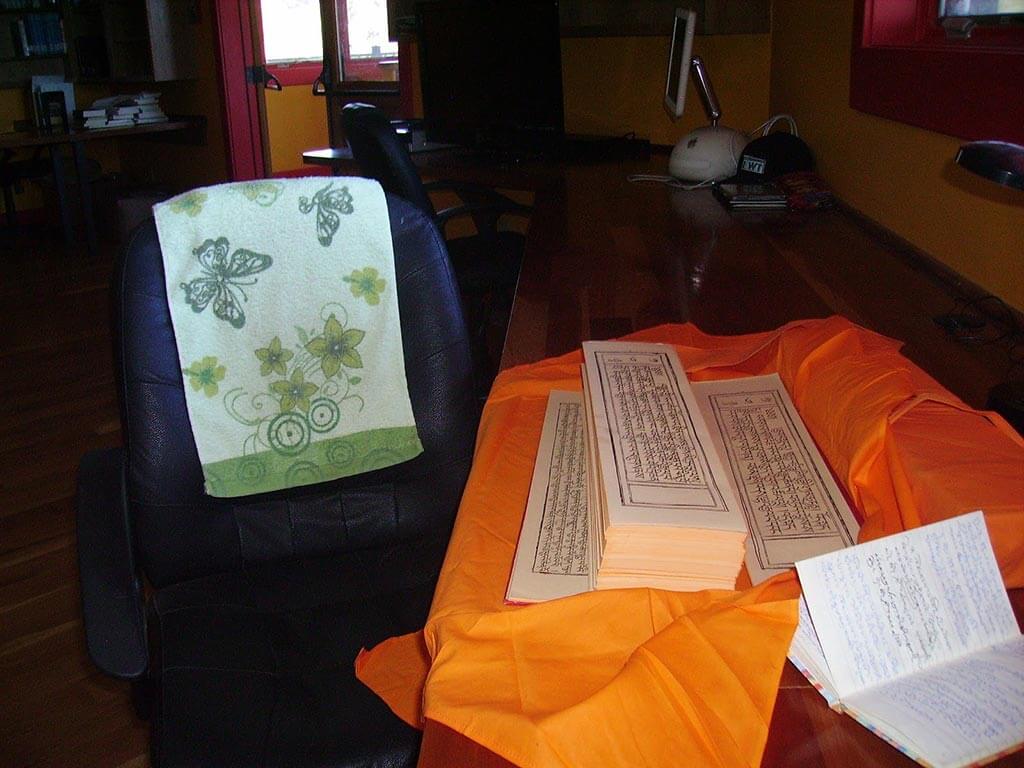
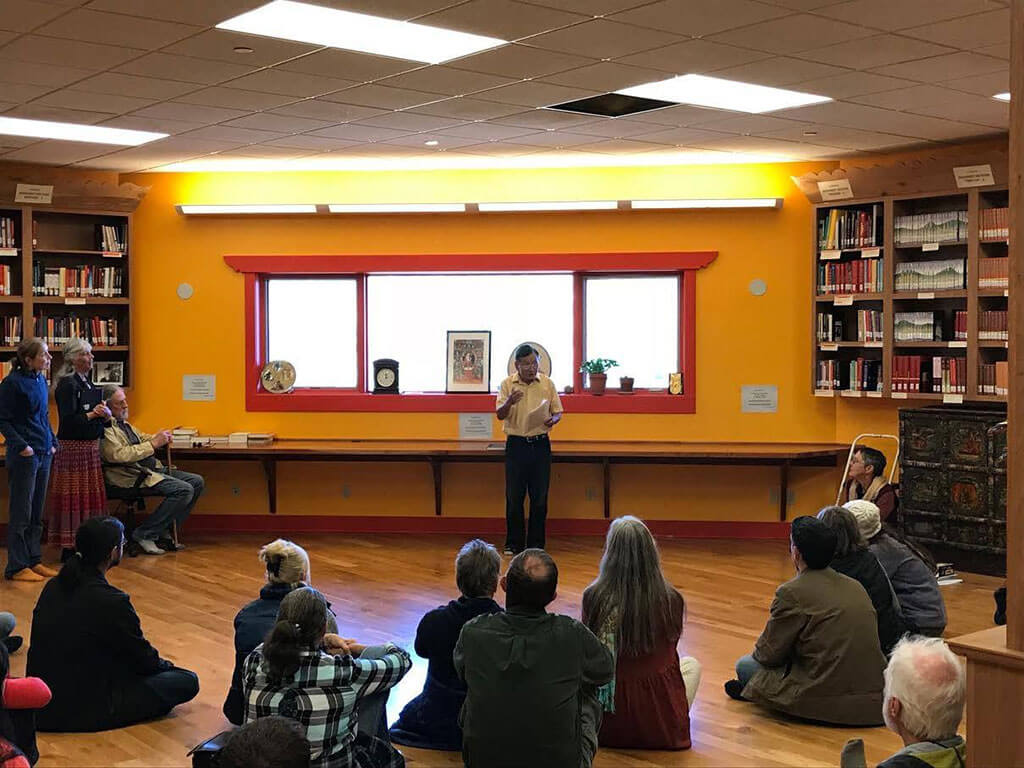
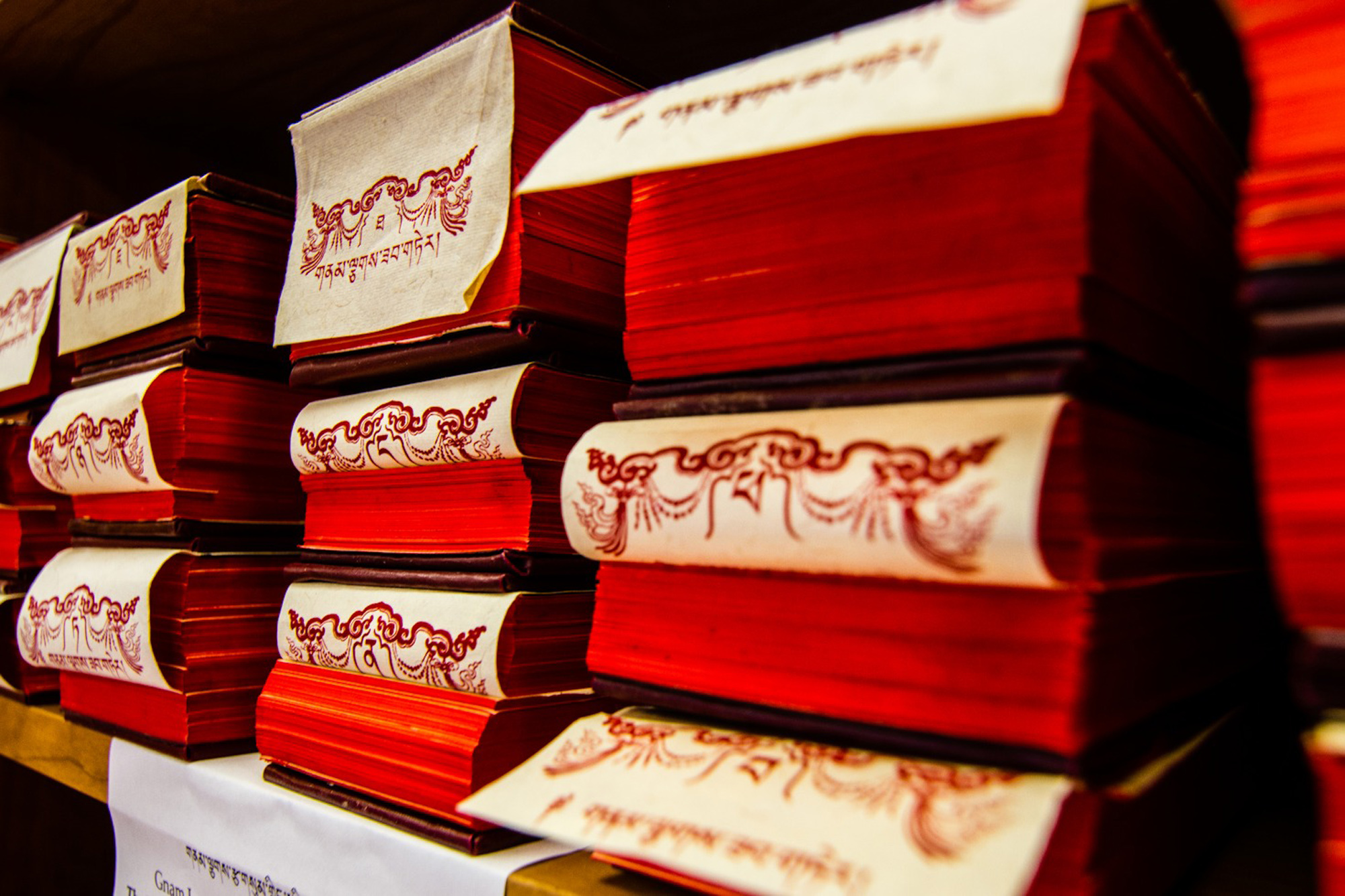
A library and translation center was part of Lama Tsultrim’s vision for the three-level Tara Temple at Tara Mandala Retreat Center. The Retreat Center opened its library in January of 2016 due to the generosity of Marco Spinner and the hard work of Jampa Dhadak, our librarian at Tara Mandala for 5 years. The Tara Mandala Library gives our community access to a wealth of literature and houses traditional Tibetan Buddhist texts. Tenzin Sangpo is our current librarian as well as Tibetan translator.
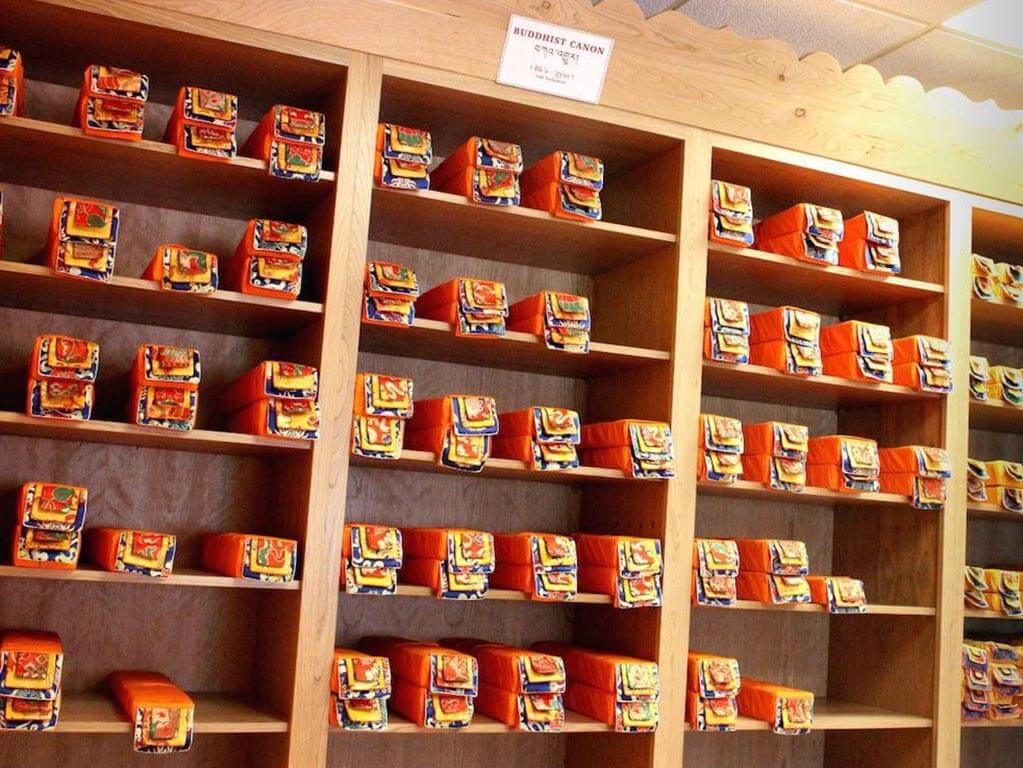
The library currently holds 798 Tibetan titles and 1712 English books. Overall we have a collection of roughly 2,510 books and texts in the collection.
The purpose of Tara Mandala’s Buddhist library is to specialize in texts and books written on the teachings of the Chöd lineage and within the Nyingma school of Tibetan Buddhism. However, the library also has separate sections on Christianity, Hinduism, Judaism, Western Psychology, Yoga, and other traditions for comparative studies. Currently, we are curating a new section of the library to hold books and authors to support our equity, diversity and inclusion initiatives.
All barcoded books are listed online, and some books have been computerized and their content is digitally available online and can be accessed in the online library catalog. The collection includes but is not limited to the following texts:
Tibetan Collection:
- Lhasa Kangyur (Teachings of the Buddha)
- Nyingma Tantras
- Collected works of Longchen Rabjam
- Collected works of Ju Mipham
- Collected works of Marpa Lotsawa and Milarepa
- Chöd
English Collection:
- Dzogchen
- Mind Training
- Chöd
- Collected works of H.H. the Dalai Lama
- Collected works of Lama Tsultrim Allione
- Collected works of Chögyam Trungpa Rinpoche
- Buddhist Psychology, Yoga, Christianity, Hinduism, Judaism, Psychology, Science, Health care, and more…
How to Become a Library Member
To become a library member you must fill a membership form. Once information is reviewed and entered into our system by library staff, you will receive a Library Membership Card in the mail with a unique barcode. Books may only be checked out while at Tara Mandala Retreat Center.
Access the Online Library Catalog
To view the full collection you can check the online catalog. Some texts in the collection are fully available in digital format. Other items can be checked out and used while at Tara Mandala Retreat Center.