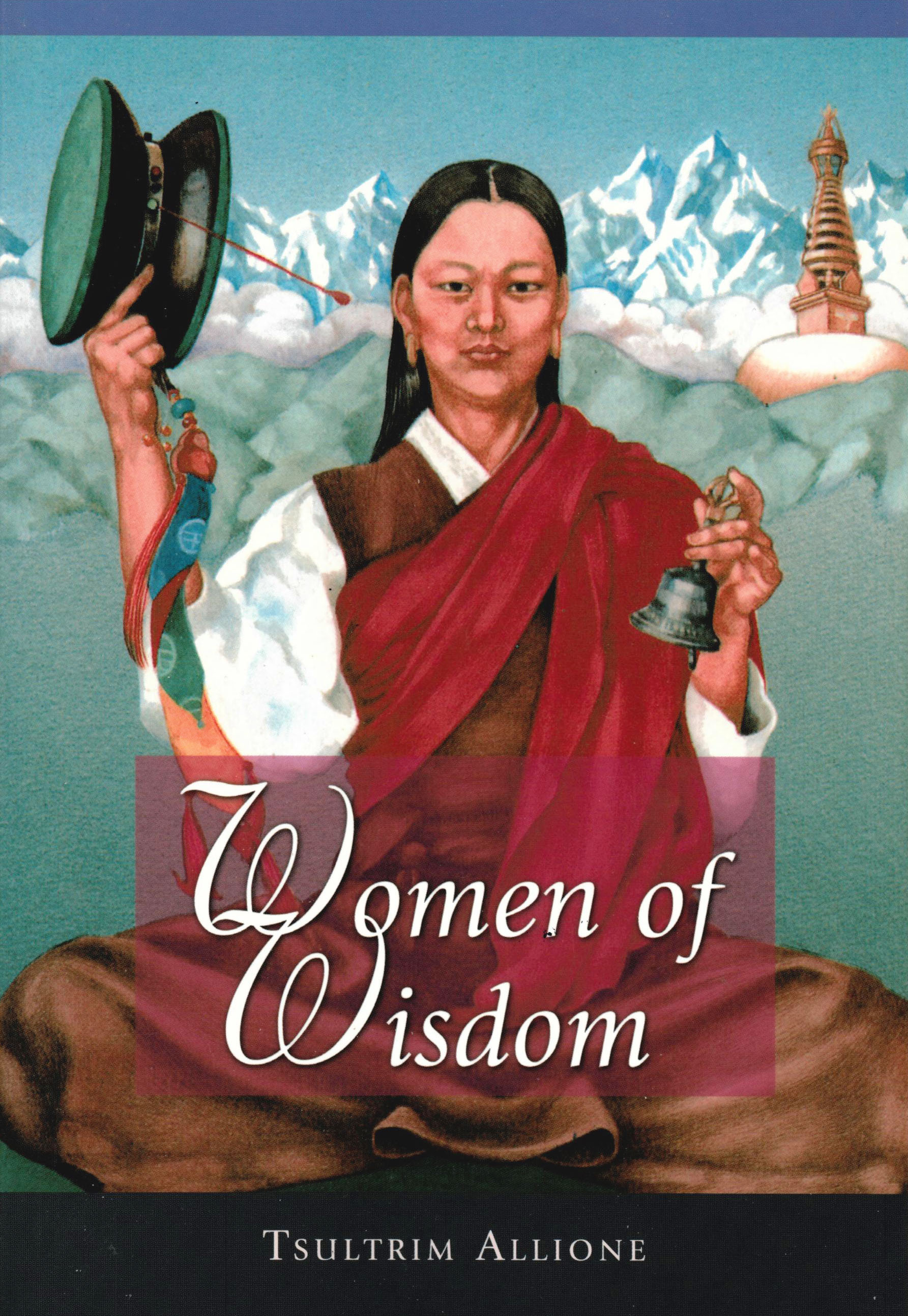
Lama Tsultrim Allione is a world-renowned Buddhist teacher in the Tibetan tradition and the bestselling author of books including Women of Wisdom, Feeding Your Demons, and Wisdom Rising: Journey into the Mandala of the Empowered Feminine. Lama Tsultrim is the founder of Tara Mandala, an international Buddhist community and 700-acre retreat center in Pagosa Springs,
Colorado, which houses the Trikaya Tara Temple (the only Tara temple in the West) and Tara’s Pure Land, a rare Buddhist open-air cremation grounds and Zhitro temple. A home for the sacred feminine teachings of Vajrayana Buddhism, Tara Mandala is a vibrant global community of practitioners with over 40 practice groups around the world.
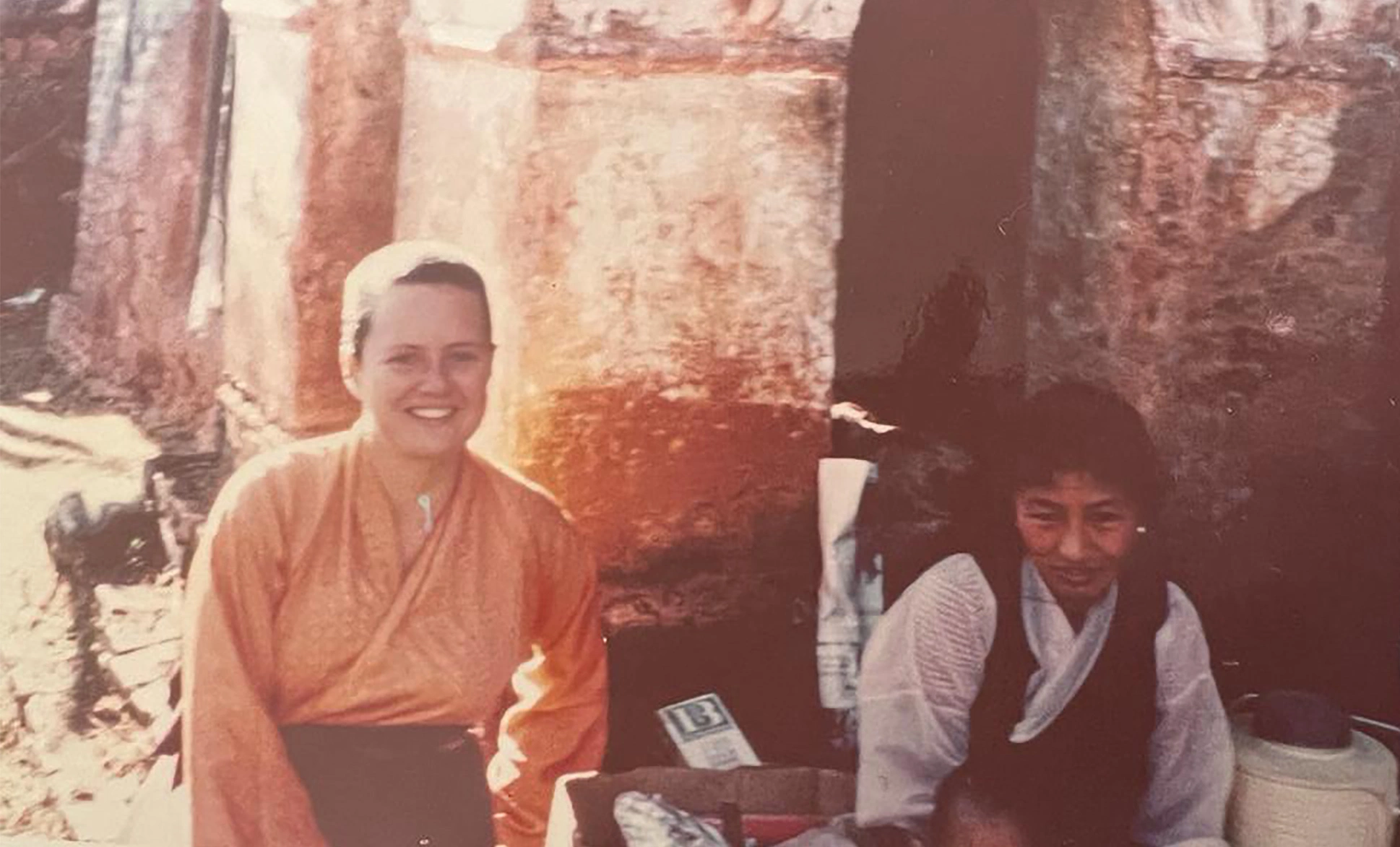
In Bodhgaya, India, in 1970, at the age of 22, she became the first American to be ordained as a Tibetan Buddhist nun. She later disrobed, married, became a mother of three, and is now a grandmother to six grandchildren. In 2007, she was recognized in Tibet and Nepal as the emanation of the renowned 11th-century Tibetan yogini, Machig Labdrön, and in 2012, she received the Machig Labdrön Empowerment from His Holiness the 17th Karmapa. A pioneering woman in American Buddhism, she is one of the few female Lamas in the world today.
Background & Early Life
Lama Tsultrim was born in Bangor, Maine, on October 3, 1947, as Joan Rousmanière Ewing. Her family moved to Keene, New Hampshire, when she was eight years old. Her father, James D. Ewing, was the publisher of a small-town New England newspaper, and her mother, Ruth D. Ewing, a former labor mediator, was an activist involved with the League of Women Voters and community mental health.
She was raised in a family steeped in academia and philosophy. Her maternal grandparents both completed their doctorates in philosophy at Harvard University—her grandmother, Frances R. Dewing, was among the first women to receive a PhD from Harvard-Radcliffe. Her grandfather went on to become a professor at Harvard, while her grandmother, Frances, taught philosophy and psychology at Mount Holyoke and Smith Colleges. Her paternal grandfather Oscar R. Ewing served in the President’s cabinet under Harry Truman.





Lama Tsultrim grew up with her older sister, Carolyn, and younger brother, Thomas. In her youth, she was a competitive horseback rider and downhill skier. When she was 15 years old, her grandmother, Frances, gave her a book on Buddhism, activating the seed that would come to fruition in a life devoted to the Buddhist teachings. A year later, while visiting her grandparents in Cambridge, Massachusetts, she stumbled upon Carl Jung’s book, Man and His Symbols, which featured a Tibetan mandala on the cover. This book triggered a lifelong interest in the mandala and the symbology of Tibetan Buddhism.
In 1965, Lama Tsultrim began college at the University of Colorado in Boulder, where she found her first book on yoga in the university library. In 1967, at the age of 19, after reading every book she could find about Tibet, she traveled to Nepal and India in hopes of learning to paint mandalas. Upon meeting Tibetan refugees in Nepal, Lama Tsultrim had an immediate feeling of “arriving home.” She began to sit each morning in the Kagyu monastery next to Swayambhu stupa in Kathmandu and observe the rituals. At this time, she was living with the American yogi Bhagavan Das and Dr. Richard Alpert, an eminent Harvard psychologist and psychedelic pioneer. Alpert and Bhagavan Das embarked on a now-famous journey to visit the Hindu guru Neem Karoli Baba, and Lama Tsultrim left on an arduous journey, hitch-hiking across Northern India to see His Holiness the Dalai Lama in Dharamsala, where she began a lifelong study of Tibetan Buddhism.
 Study & Practice
 Study & Practice
After a six-month stay in India and Nepal, Lama Tsultrim returned to college in the U.S., with the feeling that what she now longed to learn was not being taught in American universities. In 1969, she made her way to Samye Ling, the first Tibetan monastery established in the West in Dumfriesshire, Scotland.
There, she met Trungpa Rinpoche, arriving the same day he returned from the hospital after a car accident, and shortly before his departure to the United States. During her six-month visit, she received from Trungpa Rinpoche the Sadhana of Mahamudra, which he had composed at Taksang in Bhutan.
Leaving Samye Ling for Nepal in the winter of 1969, she practiced the Sadhana of Mahamudra daily while traveling overland from London to Kathmandu in a VW bus with five other people. Arriving in Nepal at the end of 1969, she met His Holiness the 16th Karmapa, the revered leader of the Karma Kagyu lineage of Tibetan Buddhism, and a great master and committed monk. The Karmapa spotted Lama Tsultrim in a large crowd at Swayambhu and made prophecies that she would benefit beings through the Dharma. Unaware of this, but feeling a spontaneous devotion to His Holiness, she recalled a line from the Sadhana of Mahamudra: “The only offering I can make is to follow your example.” She decided at that moment to become a monastic.
In Bodhgaya, India, on the full moon of January 1970, she was ordained as Karma Tsultrim Chödron by the 16th Karmapa, Rangjung Rigpe Dorje, in a ceremony attended by the four main reincarnate tulkus—His Excellence Tai Situ, H.E. Jamgon Kongtrul, H.E. Gyaltsap Rinpoche, and H.E. Sharmar Rinpoche—who served as her witnesses. At 22 years old, she became the first American to be ordained by H.H. Karmapa.
After her ordination, Lama Tsultrim returned to Nepal and studied with Sapchu Rinpoche, Lama Thupten Yeshe, and Lama Zopa Rinpoche. In 1971, she traveled to Darjeeling and received teachings on Ngöndro (Preliminary Practices) and Chenrezig practice with Kyabje Kalu Rinpoche. She went to see His Holiness the Karmapa in Sikkim at Rumtek monastery, but as a foreigner, she was allowed to stay for only one week and was not able to see him again before his passing in 1981.
Lama Tsultrim went on to Bodhgaya in the winter of 1971, reconnecting with Baba Ram Dass (formerly Richard Alpert) and meeting his followers, who were there practicing the first Goenka Vipassana courses. She then traveled to Sarnath, where she studied Buddhist philosophy with Nyichang Rinpoche. That spring, she traveled to Himachal Pradesh, where she met H.E. Khamtrul Rinpoche, and later, in Manali, encountered her heart teacher Apho Rinpoche, grandson of the great yogi Shakya Shri. There she practiced and completed half of her first

Ngöndro, and received Shinè Lhakthong (Shamanta/Vipassana) teachings. In late 1972, at the age of 25, Tsultrim returned to America. She went directly to Trungpa Rinpoche’s center in Vermont, Tail of the Tiger (now Karmê Chöling), where she went into retreat to finish Ngöndro. During her time at Tail of the Tiger, she met the poet Allen Ginsberg and went on to travel with him around Wyoming and Montana. With Ginsberg and Ram Dass, she later traveled through Colorado, New Mexico, and Wyoming.

After a year in the United States, Trungpa Rinpoche sent Lama Tsultrim back to India as his emissary to invite His Holiness the 16th Karmapa to the United States. During this visit, she received the Dam Ngag Dzod Empowerments from Dilgo Khyentse Rinpoche, a ceremony that took three months to complete, in Tashi Jong, hosted by H.E. Khamtrul Rinpoche. Upon completion, she returned to Manali to be with Apho Rinpoche—there, she learned her first Chöd practice of Naro Sang Chöd from Gegyen Khyentse. At this time, she made the difficult decision to return her monastic vows. Shortly after disrobing, she married a Dutch man, Paul Kloppenburg, in Delhi. They returned to America to live on Vashon Island, off the coast of Washington State.
On Vashon Island, Lama Tsultrim and her husband began to study with the great, all-knowing Dezhung Rinpoche. It was during this period that she gave birth to her two daughters, Sherab and Aloka. The family then moved to Boulder to study with Trungpa Rinpoche. In Colorado, she separated from her husband and became one of the first meditation instructors trained by Trungpa Rinpoche. She began to teach at Naropa Institute (now Naropa University) and worked for Trungpa Rinpoche’s organization, Vajradhatu (now Shambhala International). She was in the first group to receive the Vajra Varahi Empowerment from Trungpa Rinpoche and was asked to become a Vajrayana Meditation instructor.
In 1978, while working at Naropa, Lama Tsultrim met Italian documentary filmmaker Costanzo Allione, who became her second husband. She moved to Italy with her two daughters, and there met Chögyal Namkhai Norbu Rinpoche, with whom she would study and practice Dzogchen teachings for the next 18 years. In 1980, she gave birth to twins: a boy, Costanzo, and a girl, Chiara. When they were two and a half months old, her daughter Chiara died of Sudden Infant Death Syndrome (SIDS).
Chiara’s passing awakened a deep desire to uncover the life stories of women teachers from the Buddhist tradition. Her research culminated in the publication of her first book, Women of Wisdom—a groundbreaking exploration of the lives of great Tibetan women practitioners—in 1984. Lama Tsultrim then moved to New York to earn her Master’s degree in Buddhist Studies/Women’s Studies from Antioch University. After her second marriage ended in 1986, she moved back to the United States and began teaching widely under Chögyal Namkhai Norbu Rinpoche. In 1988, she met her third husband, David Petit, a teacher of dance and theater at the Waldorf School in Spring Valley, New York, which her children attended. This marriage proved to be a true partnership on every level until the time of David’s sudden death in 2010.
Tara Mandala
In 1993, after her children had grown up, Lama Tsultrim recalled a powerful vision she’d had in Manali in 1972, to create a western retreat center where meditation could be practiced as it had been in Tibet. She envisioned a place that would explore the interface between Western psychology and Buddhism. In September of 1993, following her dreams and visions, she and her husband, David, found the beautiful 700 acres of rolling hills, flowering meadows, and forests in the San Juan Mountains of Southwest Colorado that would become Tara Mandala.
 Photo credit: Clinton Spence
 Photo credit: Josh Brownlee
The next spring, Lama Tsultrim and David moved to the land with a group of practitioners and began to hold retreats, build retreat cabins, and host visiting teachers. In 1999, the first stupa on the land was consecrated by Chögyal Namkhai Norbu Rinpoche, dedicated to Nyala Pema Duddul, a great Dzogchen master, who took the rainbow body in 1872. The community lived on the land for 10 years before any permanent buildings were built; retreats were held in large tents and yurts. Between 2005 and 2008, three buildings were completed at Tara Mandala: the Community Building, which houses the kitchen, dining room, offices, store, and bathing facilities; Prajna Residence Hall, which houses 40 people in spacious sunlit rooms; and the extraordinary three-story mandala-shaped Tara Temple.
Machig Labdrön’s Lineage
From the time she first learned Chöd from Gegyen Khyentse in 1972, Lama Tsultrim has felt a deep connection to Machig Labdrön, the 11th-century Tibetan yogini and founder of the Chöd lineage. Chöd (“cutting through”) is a Tibetan practice rooted in Bön ritual and the Prajñāpāramitā teachings that involves offering one’s body in a ritual act of release from self-clinging. In 1981, Lama Tsultrim had a vision of Machig while practicing Chöd with Chögyal Namkhai Norbu. The vision led to the discovery and translation of Machig’s biography for her book, Women of Wisdom.
For many years to follow, Lama Tsultrim focused her teaching on Machig’s lineage. While

teaching Norbu Rinpoche’s Chöd, she developed the practice of Feeding Your Demons®, a contemporary adaptation of the ancient Chöd teachings into a five-step method for transforming negative emotions, fears, illness, and self-defeating patterns. She explores these teachings of “feeding, not fighting” our inner and outer demons in her book, Feeding Your Demons: Ancient Wisdom for Resolving Inner Conflict (Little Brown, 2008). She later developed Kapala Training, an international program that combines Feeding Your Demons with other practices of Machig Labdrön’s lineage.
While leading a pilgrimage to Tibet in 2007, Lama Tsultrim was recognized as an emanation of Machig Labdrön by the resident Lama of Zangri Khangmar (Machig’s monastery in Tibet). Before Lama Tsultrim’s arrival, the resident Lama had had a dream of a white Dakini coming from the West, loudly sounding a damaru (a traditional drum used in Chöd practice). There were other indicative signs during the visit, including rainbows that stayed for hours and rain after a long drought. After these signs manifested, Lama Karma Dorje Rinpoche, tulku of the brother of the second Karmapa, Karma Pakshi, announced the recognition. He gave Machig’s relics to Lama Tsultrim to bring back to Tara Mandala, declaring that the future of Machig’s lineage would be in the West.
The pilgrimage group then returned to Nepal, where they were received by Lama Tsering Wangdu, holder of Machig’s lineage from Tingri Langkhor—the seat of Phadampa Sangye in Tibet—and abbot of Shelkar Chode monastery in Kathmandu, dedicated to Machig Labdrön’s lineage. He had also had a dream. Three days before the group arrived, he dreamed of Machig Labdrön and her entire lineage in the sky above him. Machig said to him, ‘In three days I will be there.’ When the pilgrimage group arrived, he offered the Machig Chöd Empowerment at the monastery and saw Machig Labdrön dissolve into Lama Tsultrim’s heart through the top of her head. While visiting Tara Mandala in 2008, Lama Wangdu gave Lama Tsultrim the title of ‘Lama’ and formally recognized her as an emanation of Machig Labdrön, writing a recognition letter, a long life prayer, and her praises.

Loss & Return
On July 22, 2010, Lama Tsultrim’s husband, David Petit, died suddenly of a heart attack. He was cremated on the land, in front of the stupa, which he had built. At the time of his death, he was proclaimed a great yogi by many lamas who knew his practice. There were numerous rainbows every day after his death, and on the third day, one of the rarest atmospheric phenomena, a moonbow, extended from Ekajati Peak to the house where David died. Extensive traditional rituals were performed for him at Tara Mandala and at Adzom Rinpoche’s monastery in Tibet, for the 49 days after his death. David’s tögal teacher, Tsoknyi Rinpoche, traveled to Tara Mandala to perform his 49th day ceremony.
David’s ashes were blended with clay and made into tsatsas (clay stupas with mantra rolls placed inside) and placed in a tsakang (a memorial stone house) on the ridge where he practiced in the early mornings.
After David’s death, Lama Tsultrim made a long pilgrimage to Asia. She began with a six-week stay in Kangding (Dartsedo) to receive the entrustment ceremony (katey) and oral transmission (lung) of Dzinpa Rangdröl from Do Dasel Wangmo, the great-granddaughter of the tertön Do Khyentse.
She went on to central Tibet to Machig Labdrön’s cave and birthplace, and to Nepal and India, where she became re-acquainted with the 17th Karmapa, Orgyen Trinley, and Sey Rinpoche, son and lineage holder of Apho Rinpoche. After visiting Chögyal Namkhai Norbu Rinpoche in Australia, she took a short trip to New Zealand.
At the end of 2011, Lama Tsultrim resumed teaching, offering the Chöd Empowerment and Prajña Paramita teachings in California, and teaching in Switzerland and Italy.
She continues to travel around the world to teach and lead retreats, and is currently working on several new books. Under her care and guidance, Tara Mandala has grown into a thriving international community of practitioners, and continues to flourish around the globe.
Children
Lama Tsultrim is the mother of three grown children and a beloved grandmother of six. Her daughter, Sherab, is an environmental architect and landscaper; her husband Eric manages a Medical Center in Colorado, and they have two sons. Her daughter Aloka works in leadership development and is a mother of two. Lama Tsultrim’s son, Costanzo (Dorje Gyaltsab Tulku Ösel Dorje), has completed nearly four years of solitary retreat at Tara Mandala, received his MA in Buddhist Philosophy, and is a PhD candidate through Rangjung Yeshe Shedra and Kathmandu University. He is the Resident Teacher at Tara Mandala and leads the Ösel Nyingtig program. Together with his wife, Cady Allione, the current Executive Director of Tara Mandala, they are also busy raising two boys.


She writes:
“We find conflict in so many places today, within ourselves, in relationships, between countries, and even in places we associate with peace, like the Himalayas. What is the solution? The Buddha teaches that violence leads to more violence. So how can we be actively engaged in change, yet not caught in patterns that perpetuate suffering? Meditation can create a working basis for changing the fundamental causes of suffering and moving toward natural liberation.”
Lama Tsultrim’s teachings arise from the blessings of her many wonderful Tibetan Buddhist teachers, her 40-year dedication to the Buddhist teachings, and her experience as a Western woman and a mother.
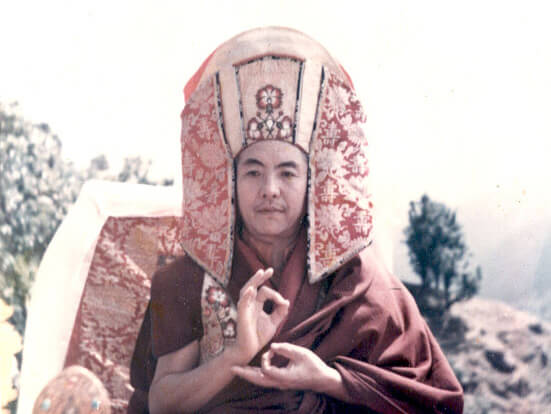
16th Karmapa Rangjung Rigpe Dorje
The sixteenth Gyalwa Karmapa (August 14, 1924 – November 5, 1981) was the spiritual leader of the Karma Kagyu lineage, one of the four largest schools of Tibetan Buddhism. He was born in Derge province in Eastern Tibet and was discovered based on a letter left by the previous Karmapa Khakhyab Dorje (1871-1922). In 1931, he was ordained as a novice monk and at the age of 23 received his final ordination along with the initiations and explanations of the highest Karma Kagyu teachings.
In 1959, due to the occupation of Tibet, Karmapa left Tsurphu monastery and settled in Bhutan, where he undertook the construction of a new monastery in Rumtek, which became Karmapa’s official seat outside Tibet and a center of Buddhist study, ritual, and practice. The Karmapas are the holders of the Black Crown and are
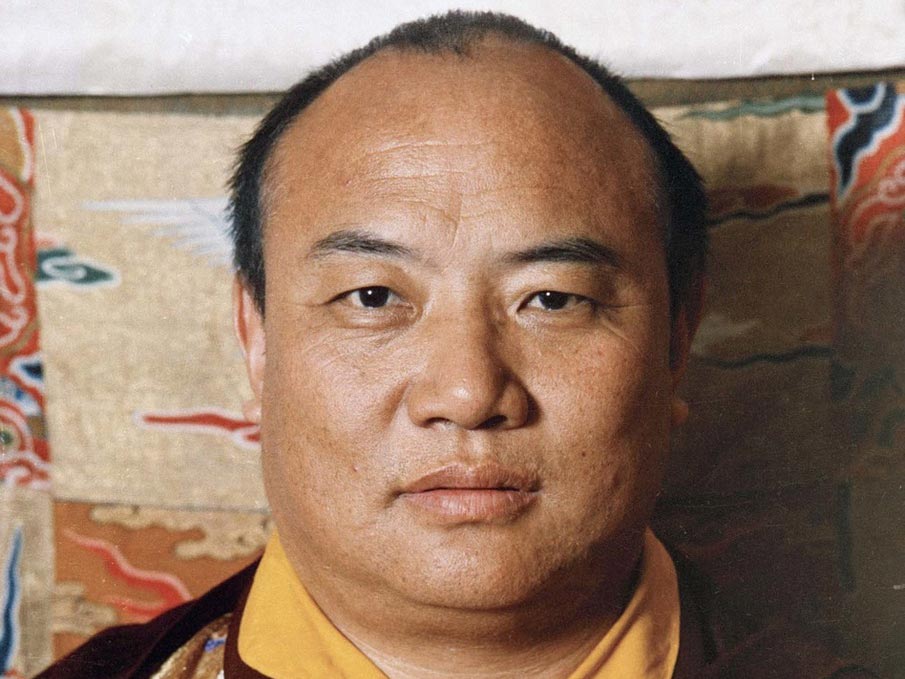
thus sometimes known as “the Black Hat Lamas”. This crown is traditionally said to have been woven by the dakinis from their hair and given to the Karmapa in recognition of his spiritual realization. Lama Tsultrim received her ordination from Karmapa in 1969 in Bodhgaya.
Kalu Rinpoche
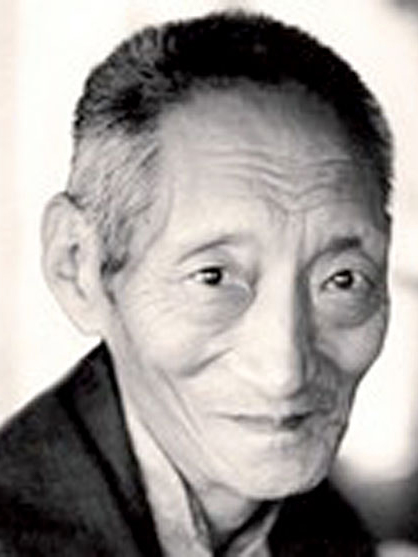
Kalu Rinpoche (1905 – May 10, 1989) was a Buddhist lama, meditation master, scholar, and teacher. He was one of the first Tibetan masters to teach in the West. He was an outstanding Tibetan Tantra Master who meditated in retreat caves and hermitages for more than 30 years. In the late 1960s, Kalu Rinpoche began to attract Western disciples in India. By the 1970s, he was teaching extensively in the Americas and Europe, and during his three visits to the West, he founded teaching centers in over a dozen countries. In France, he established the first retreat center to teach the traditional three-year retreats of the Shangpa and Karma Kagyu lineages to Western students. Lama Tsultrim received the Kagyu Ngondro from Kalu Rinpoche.
Apho Rinpoche
Apho Yeshe Rangdrol (1922-1974) was the grandson of the great Drukpa Kagyu yogi Shakya Shri. His seat in Tibet was called Kyiphug, a retreat center. After he escaped from Tibet, he lived in the Himalayan border areas of Ladakh, Lahoul, Spiti, and Pange, where he started a number of 3-year retreat centers, and eventually settled in Manali in 1971, where he built a home. He became a widely respected yogi. He was a humorous and compassionate, enlightened Master who touched the hearts and minds of many people in Tibet, and in the Himalayan regions, and of most of the early Western students of Tibetan Buddhism. Lama Tsultrim completed her ngöndro in a small cabin behind his home in the early 1970’s. She also received the Naro Sang, Chöd, Ph’owa, and Shine Latong in the tradition of Shakya Shri from him.
Chögyam Trungpa Rinpoche
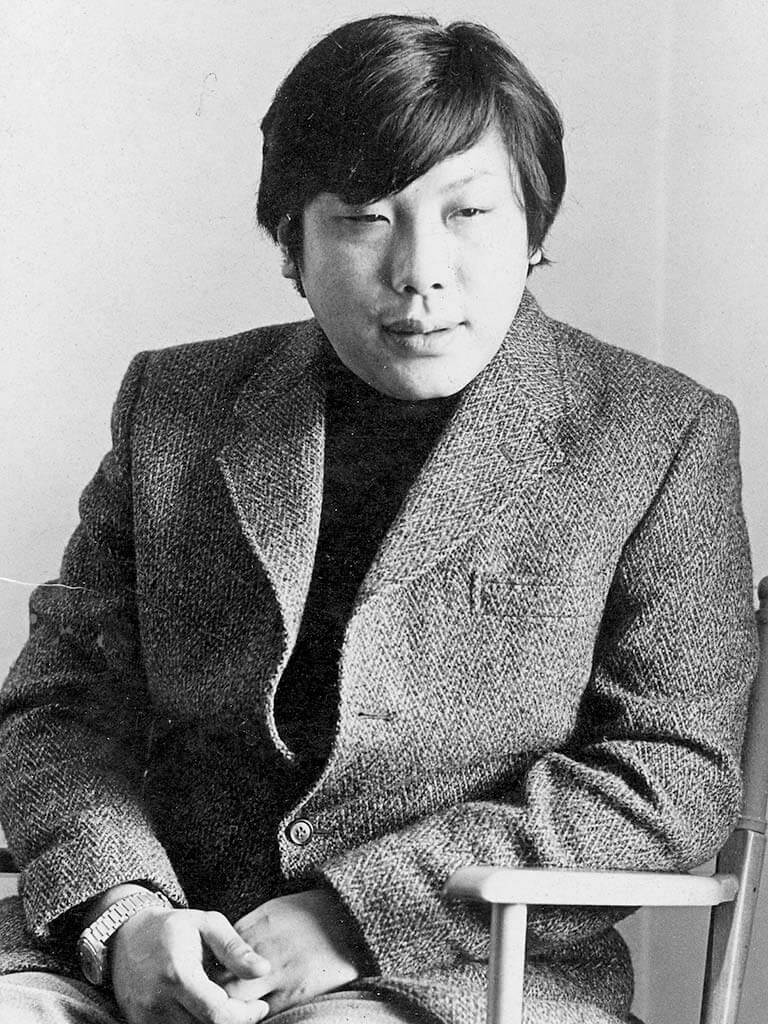
Chögyam Trungpa (March 5, 1939 – April 4, 1987) was a Buddhist meditation master and holder of both the Kagyu and Nyingma lineages, and the eleventh Trungpa tülku. His main teachers were Shechen Kongtrul Pema Drimé Lekpé Lodrö, Dilgo Khyentse Rinpoche, the Sixteenth Karmapa, and Khenpo Gangshar. He arrived in the United States in 1970, where he became a major figure in the introduction and dissemination of Tibetan Buddhism teachings to the West. He founded Naropa University and Shambhala International. He is the author of numerous books, including Shambhala: The Sacred Path of the Warrior, Cutting Through Spiritual Materialism, and The Myth of Freedom, as well as the translation of many traditional texts. Lama Tsultrim was the first teacher Chögyam authorized to teach. She received numerous practices from him including Shamatha, Vajrayogini, and Kagyu Ngöndro.
Chögyal Namkhai Norbu
Chögyal Namkhai Norbu (1938 – September 27, 2018) was born in Derghe, eastern Tibet, in 1938. As a child, he was recognized as the reincarnation of the great Dzogchen Master Adzom Drukpa (1842-1924) and later by the sixteenth Karmapa as a reincarnation of Shabdrung Ngawang Namgyal (1594-1651), the first Dharmaraja of Bhutan. In 1960, following the deterioration of the social and political situation in Tibet, he moved to Italy, where he worked at the ISMEO (Institute for the Middle and Extreme Orient) in Rome, and later on, from 1962 to 1992, he taught Tibetan and Mongolian language and literature at the Istituto Universitario Orientale in Naples. His academic works reveal a profound knowledge of Tibetan culture and a steadfast determination to keep the extraordinary cultural heritage of Tibet alive and fully accessible. In the mid-seventies, Chögyal Namkhai Norbu started giving Dzogchen teachings, encountering a growing interest
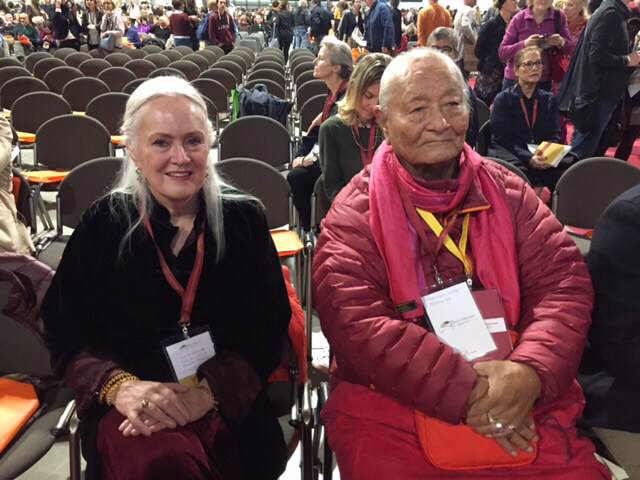
first in Italy and then throughout the West. In 1981, he founded the first centre of the Dzogchen Community in Arcidosso, Tuscany. Over the years, thousands of people from all over the world have become members of the Dzogchen Community. Centres have been created in the United States, in various parts of Europe, in Latin America, in Russia, and in Australia. He authorized Lama Tsultrim as his first Western teacher in the late 1980’s. She received numerous practices from him, including Chöd, Zhitro, Simhamukha, Dzogchen, Semde, Longde, Nen ngag de, and Mandarava, and maintained a close relationship with him. He has traveled to teach at Tara Mandala on multiple occasions.
Orgyen Khakhyab Lingpa
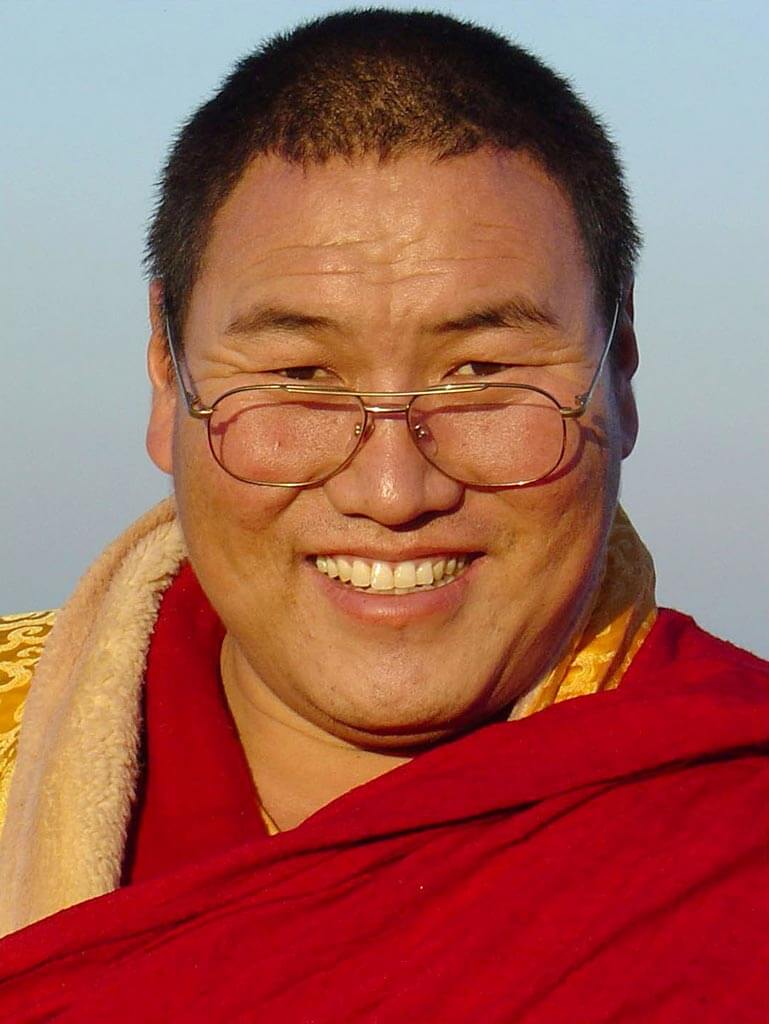
Born in 1971 near Chamdo in Eastern Tibet, Orgyen Khakhyab Lingpa is a living siddha widely seen as one of the very greatest Dzogchen masters in Tibet today. He is also recognized as a reincarnation of King Trisong Detson, Vimalamitra, Jigme Lingpa, and Ngari Panchen. An extraordinary prodigy from a young age, Orgyen Khakhyab Lingpa began his studies at the age of 5 and undertook a full-time retreat at 11. At his teacher’s request, Rinpoche began teaching Dzogchen in 1984 when he was 13. Orgyen Khakhyab Lingpa is famous for his one-on-one Dzogchen instruction and his powerful, energetic transmissions. Today, he teaches regularly at his monastery and throughout Tibet and China on texts and practices from the major liturgical traditions within the Nyingma lineage, especially The Essence of the Vast Expanse (Longchen Nyingtig). He visited Tara Mandala several times and transmitted Tri Yeshe Lama, Zhitro, Tröma, P’howa, and the Green Tara practices to Lama Tsultrim and a small group of practitioners.
Tulku Sang-ngag Rinpoche
Gochen Tulku Sang-ngag Rinpoche (1952 -) is the founder and spiritual director of Ewam International Centers around the world. Born into one of the oldest families in Tibet, which eventually came to be known under the name Namchak, or “sky iron,” in an area called Chamdo in the Kham region of Tibet in 1952, Rinpoche was recognized in early childhood by the great Rimé lama [representing all traditions of Tibetan Buddhism], Jamyang Khyentse Chökyi Lodrö [1893-1959], as well as by the former Zigar Kongtrul Rinpoche, to be the reincarnation of the Gochen Tulku. He is an outstanding meditation master and scholar, and a lineage holder of the Namchak lineage and other profound and widely practiced lineages of Tibetan Buddhism. He is also widely regarded as a master stupa builder and helped to guide the building of the stupa dedicated to Nyala Padma Duddul and the Tara Temple at Tara Mandala. His primary residence is in Santa Fe,
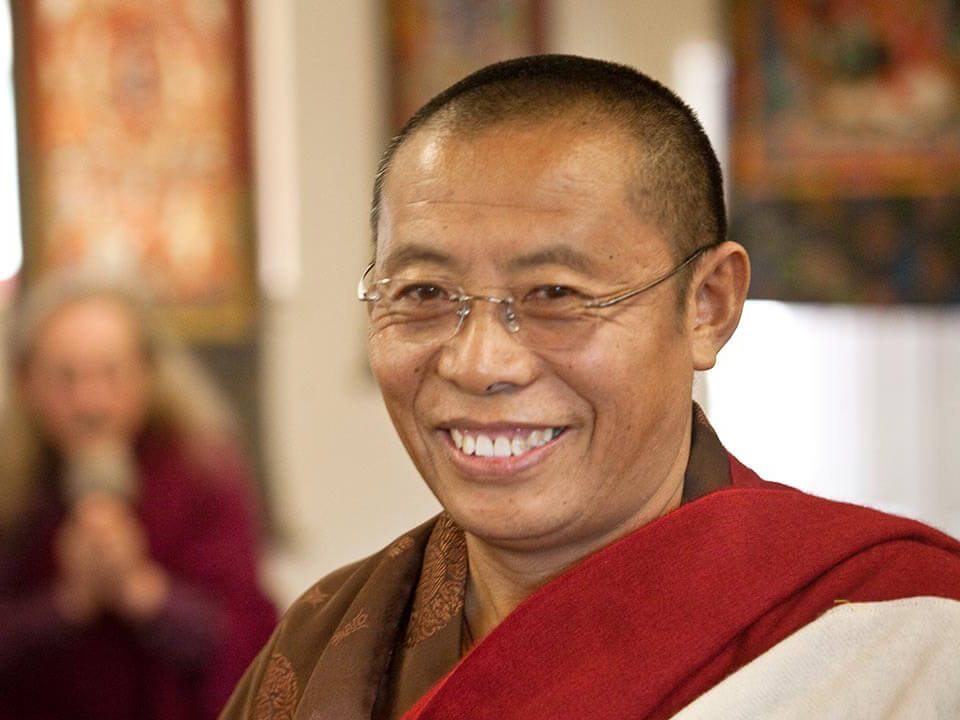
New Mexico, where he established a retreat and practice center, Pema Khandro Ling. He has established Turquoise Leaf, a practice center for Tibetan nuns in Nepal, and the Garden of One Thousand Buddhas in Montana. Lama Tsultrim received the Dzinpa Rangdrol cycle, Dudjom Rinpoche Mountain Retreats, and the Dechen Lama from him.
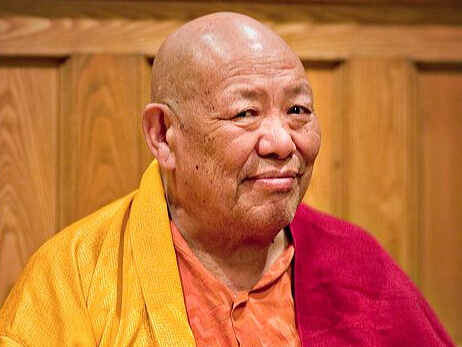
Lama Tsering Wangdu Rinpoche
Lama Tsering Wangdu Rinpoche (1935–2023) was a lineage holder of the Longchen Nyingthig, Shije, and Chöd traditions. Born in 1935 in Tingri Langkor, Tibet, he received transmission and training from his root Lama, Naptra Rinpoche, and completed the traditional 108 charnel ground Chöd pilgrimage before he was twenty. Naptra Rinpoche sent Lama Wangdu to Nepal on pilgrimage shortly before the Chinese closed the border in 1959. A well-trained and experienced yogi, he lived in Nepal ever since, spending much of his life in retreat and serving the Tibetan refugee community. He spent part of each year in Portland, Oregon, USA, teaching and leading retreats, and the rest of the year training monastics at Pal Gyi Ling in Nepal. Lama
Tsultrim first met and studied with Lama Wangdu in 1974 and has received the Rinchen Trengwa Dentog Chigma practice from him. He was the first Rinpoche to recognize her as an emanation of Machig Labdrön.
Following his passing, Tara Mandala in Colorado hosted a traditional cremation ceremony for Lama Wangdu in November 2023. It was only the second ceremony of its kind held in the United States in the traditional Tibetan manner, the first having been that of Chögyam Trungpa Rinpoche in 1987. His Kudung was brought from Portland and installed in the temple, where practitioners performed continuous Vajrasattva and Chöd throughout the preceding days. Chöd was the tradition he himself had principally transmitted during his lifetime. Tibetans and Westerners gathered from across the country to attend.
The fire pūjā began at dawn on the day of cremation. Throughout the day, numerous auspicious signs were observed: rainbows appeared at sunrise and continued until sunset, and eagles circled overhead, said to be a symbol of Phadampa Sangye, of whom Lama Wangdu was considered a reincarnation. When the remains were gathered the following day, relics were found among them. These small, sacred spherical relics are said to appear only in the remains of great Lamas, and their presence was seen as a further testament to Lama Wangdu’s realization. Tara Mandala has offered to house a permanent stūpa for Lama Wangdu on its grounds.
Lama Wangdor Rinpoche
Wangdor Rinpoche (1925–2019) was a Tibetan Buddhist master who spent more than 30 years meditating in the caves first used by the Tibetan saint, Padmasambhava, above Lotus Lake (Tso Pema) in the Himachal Pradesh region of Northern India. In solitary retreat during the early years, he was eventually joined over time by more than 50 cave-dwelling yogis and yoginis who looked to him for guidance and support. Beginning in the 1970s, he constructed a monastery near the lake as well as a retreat center on the mountain, available to practitioners of all lineages and nationalities, projects which have taken nearly 20 years to complete. Wangdor Rinpoche held both Nyingma and Kagyu Dzogchen/Chagchen lineages and was considered a Rimé (eclectic) teacher. His teachings were from heart texts on Dzogchen, the maha-ati and mahamudra yogas, which he received in lineage from Nambla Janchub Dorje, Kunu Rinpoche, and Scholars
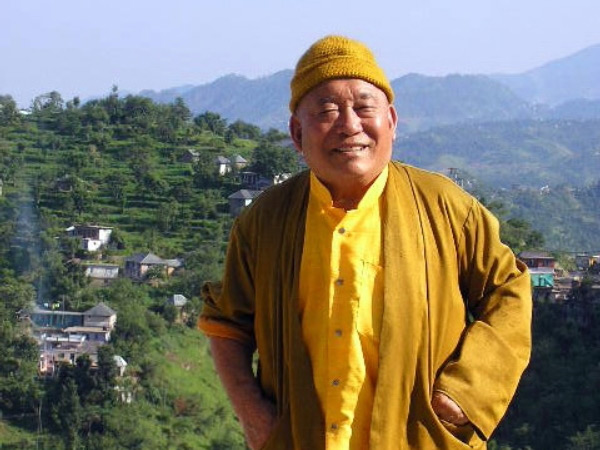
Chonchok Sumon Khenpo of Trungpa Rinpoche’s line; Tucksie Rinpoche and Pumdong Key Rinpoche. Lama Tsultrim received Tri Yeshe Lama and Trekcho teachings from him.
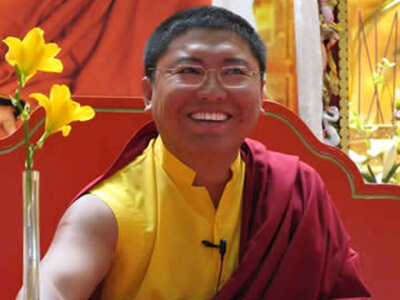
Tsoknyi Rinpoche
Tsoknyi Rinpoche or Ngawang Tsoknyi Gyatso (1966 – ), founder of the Pundarika Foundation, was born in 1966 and recognized as a tulku at the age of eight. When he was 13, he was brought to Khampagar Monastery at Tashi Jong in India, the seat of Khamtrul Rinpoche. His teachers include some of the most renowned masters of Tibet: Khamtrul Rinpoche Dongyu Nyima, his father Tulku Urgyen Rinpoche, Dilgo Khyentse Rinpoche, Nyoshul Khen Rinpoche, and Adeu Rinpoche. Rinpoche is the spiritual head of two nunneries in Nepal, as well as one of the largest nunneries in Tibet. He also heads 50+ practice centers and hermitages with over 2,000 nuns and 900 monks that practice the Tsoknyi and Ratna Lingpa Lineages in the eastern region of Tibet
(Nangchen). Yeshe Rangsal in Crestone, Colorado, is his seat in the West. Tsoknyi Rinpoche has taught at Tara Mandala and transmitted the Trekcho practice to Lama Tsultrim.
Lama Pema Dorje Rinpoche
Lama Pema Dorje Rinpoche (1942–2018) was born into a yogi family named Jova, whose ancestors can be traced back to Milarepa’s paternal line. His father, Kathok Rigdzin Dorje Rinpoche, was a disciple of Taklung Gangshar Rinpoche and Taklung Chodung Rinpoche. From these two teachers, Rinpoche received the entire Longchen Nyingtik teachings, as well as the Machik Labdrön chö teachings. When he was twenty, he went to Mount Kailash for an extended retreat. After that, he met Golok Serta Rinpoche, a lineage holder of the first Dudjom Lingpa’s treasure teachings, from whom he received the main Tröma Nakmo practice and became a follower of the Dudjom Tersar lineage. He was also a student of H.H. Dudjom Rinpoche and a lineage holder of Dudjom Lingpa and H.H. Dudjom Rinpoche. He also studied with H.H. Dilgo Khyentse Rinpoche, H.E. Chagdud Rinpoche, Lama Kunzang Dorje Rinpoche, and many other teachers. Lama Pema taught the White Tara and Tibetan Yoga for Longevity practices yearly at Tara Mandala until his passing in 2018.
Drupön Lama Karma
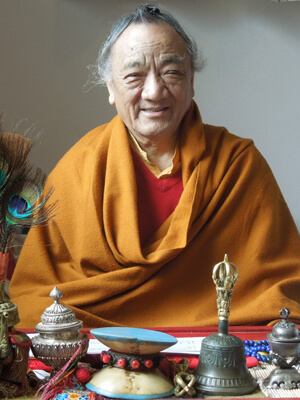
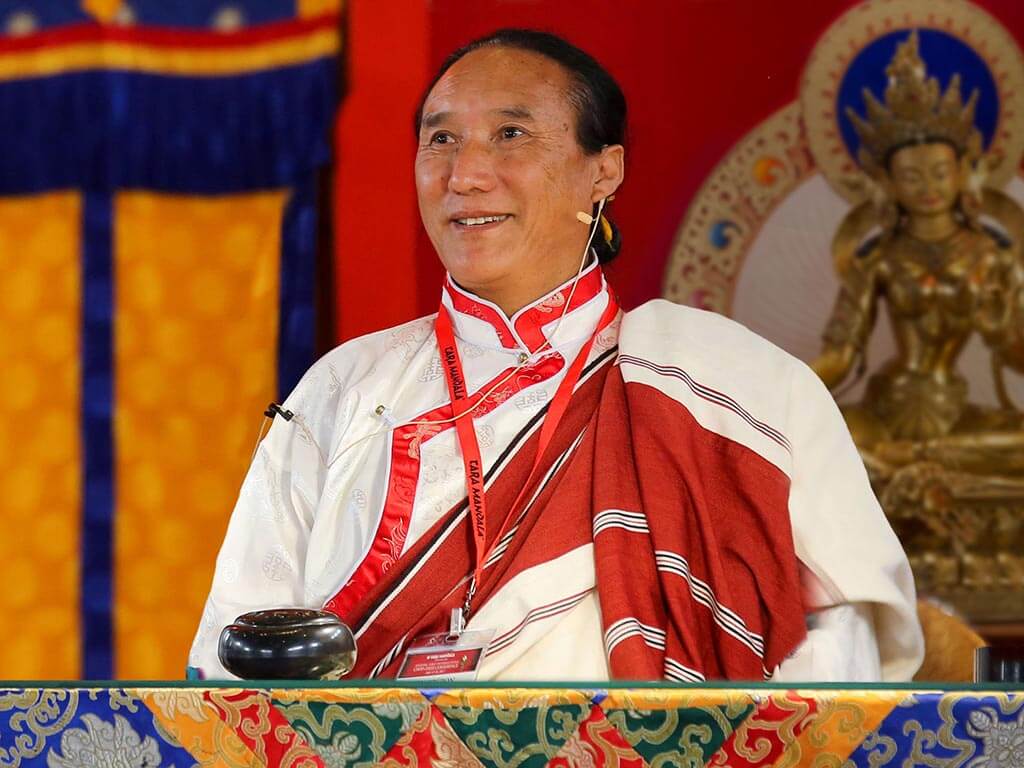
Venerable retreat master (Drubpön) Lama Karma (1954 –) was born in eastern Bhutan and joined the Long-Nying Chöling Monastery at a young age. His root teacher was Lama Naljorpa, the great yogi of mahamudra and Dzogchen, from whom he received numerous vows, empowerments, instructions, and oral transmissions, including the Chöd Rinchen Trengwa and the Chöd practice of Laughter of the Dakinis from the Longchen Nyingtik Tradition. A heart student of Tertön Pedgyal Lingpa Rinpoche, he served as the scribe for the entirety of Pedgyal Lingpa’s Kusum Gongdü treasure cycle. Drubpön Lama Karma studied with other great teachers, including H.H. Dodrupchen Rinpoche, H.H. Penor Rinpoche, H.H. Taklung Tsetrul Rinpoche, H.H. Dilgo Khyentse Rinpoche, H.H. Dudjom Rinpoche, and the 16th and 17th Karmapas. He has spent over 16 years in strict meditation retreats. Drubpön is renowned as a genuine retreat
master throughout Bhutan and has been one of the most important Bhutanese lamas to disseminate the teachings and maintain the tradition of Tertön Pedgyal Lingpa. He was the resident Lama at Tara Mandala for several years, where he taught the Chöd Rinchen Trengwa and the Queen of Great Bliss Wisdom Dakini & Twenty-One Taras sadhanas.
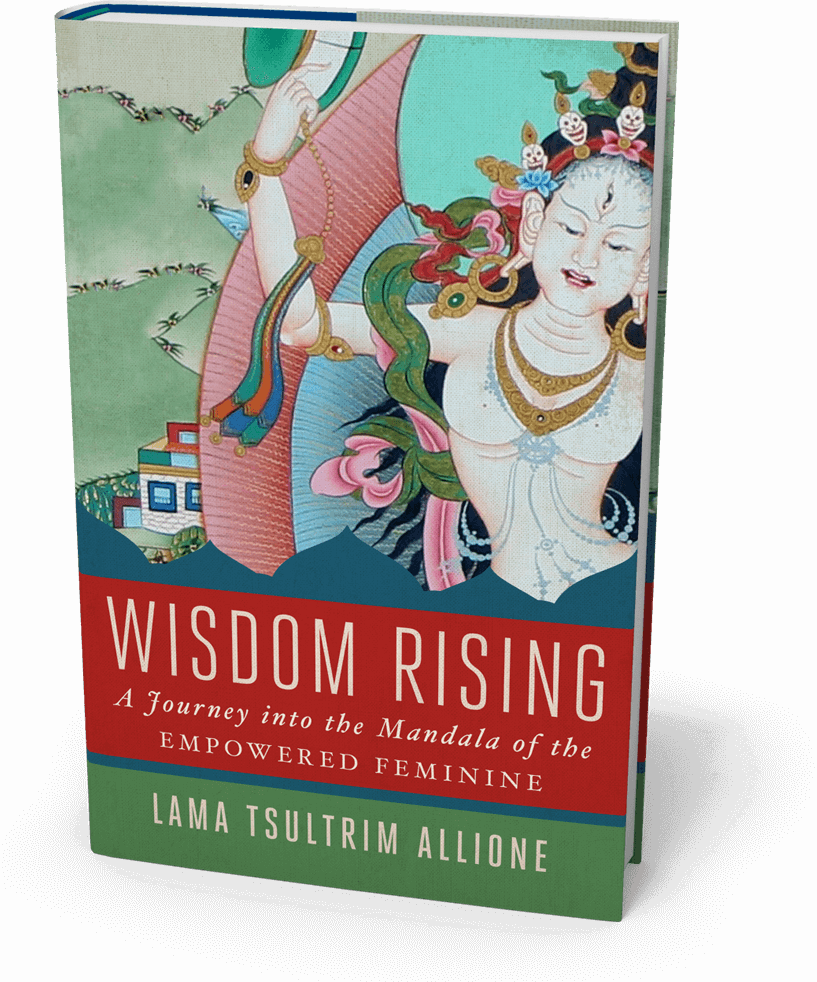
Wisdom Rising: Journey into the Mandala of the Empowered Feminine
A method of inner transformation and empowerment into wisdom and fierce compassion. Be a part of the rising and return of the sacred feminine.
An immersive exploration of the sacred feminine as a living force of clarity, compassion, and awakened power. Rooted in contemplative wisdom traditions and expressed through story, symbol, and practice, this transformative journey invites readers into the mandala—a sacred map of wholeness—where the feminine is not an idea, but an embodied path. The practice within is a method of inner transformation and empowerment into wisdom and fierce compassion. Be a part of the rising and return of the sacred feminine.
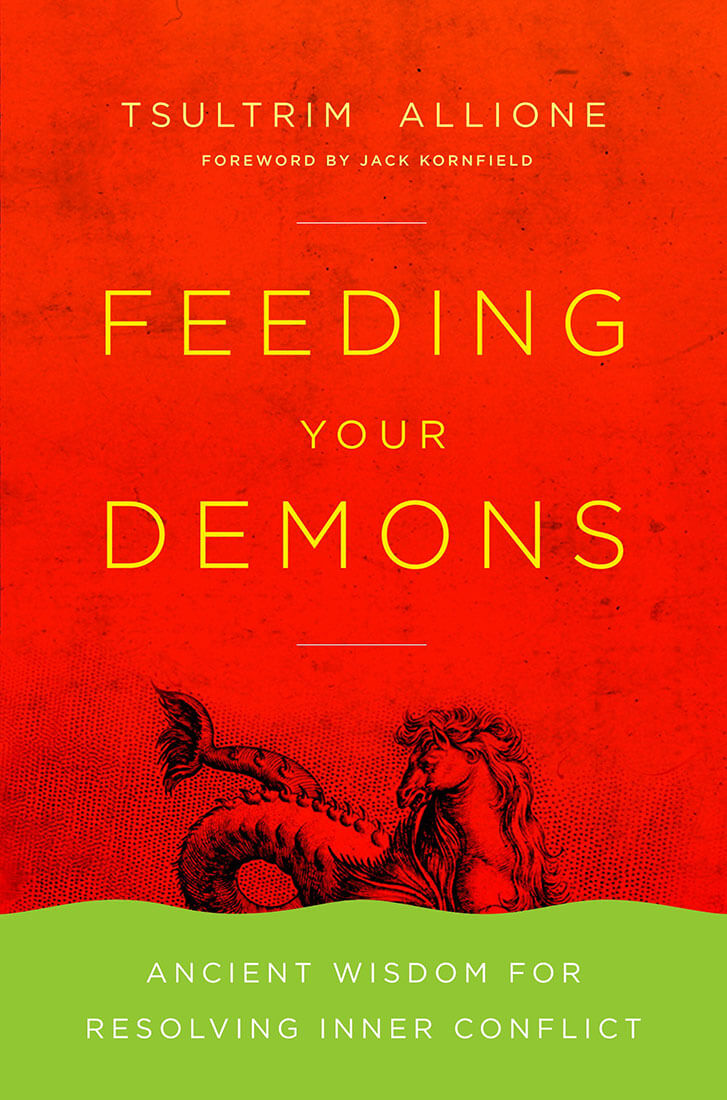
Feeding Your Demons®
Tsultrim Allione brings an eleventh-century Tibetan woman’s practice to the West for the first time with Feeding Your Demons: Ancient Wisdom for Resolving Inner Conflict, an accessible and effective approach for dealing with negative emotions, fears, illness, and self-defeating patterns. Allione – one of only a few female Buddhist leaders in this country and comparable in American religious life to Pema Chödrön – bridges this ancient Eastern practice with today’s Western psyche. She explains that if we fight our demons, they only grow stronger. But if we feed them, nurture them, we can free ourselves from the battle. Through the clearly articulated five-step practice outlined in Feeding Your Demons, we can learn to overcome any obstacle and achieve freedom and inner peace.
Feeding Your Demons® was elected one of The Best Spiritual Books of 2008 on SpiritualityandPractice.com.
Read the review here.
Women of Wisdom
Women of Wisdom by Tsultrim Allione is an exploration and celebration of the spiritual potential of women as exemplified by the lives of six Tibetan female mystics. These women achieved full illumination despite cultural prejudices and a host of other problems that male practitioners do not encounter, and their stories are an inspiration to everyone on the spiritual path.
Tsultrim Allione’s extensive autobiography, preface, and introduction about her own difficulties and triumphs along the path speak directly to women in the West who pursue a spiritual life, offering valuable insights to all those interested in women’s spirituality, regardless of background or tradition.