Explore Mandala Method Training and the Mandala Method Certification Program at Tara Mandala.
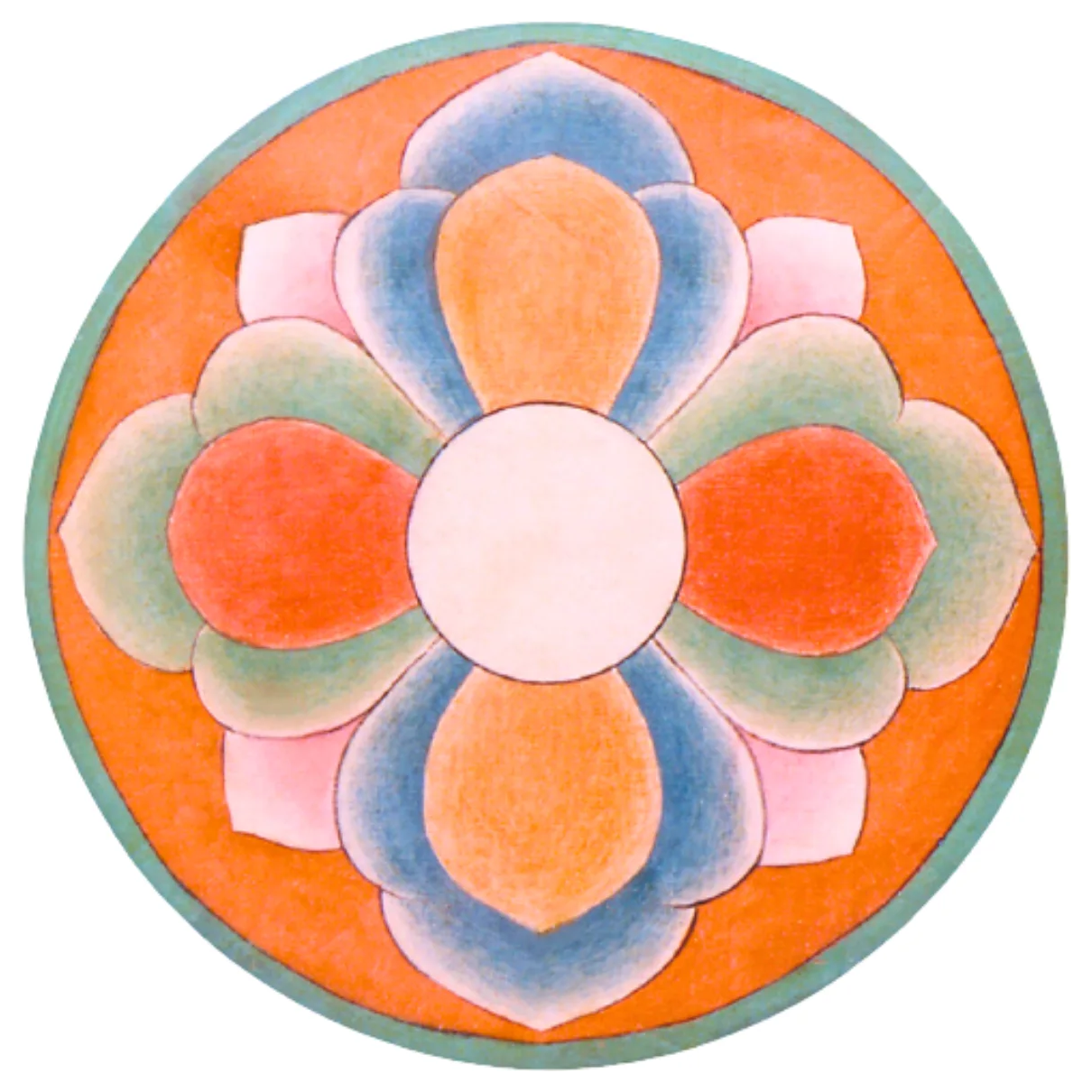
The Mandala Method is Tara Mandala’s training pathway for emotional and spiritual transformation. Rooted in Tibetan Buddhist teachings on the mandala principle and the five buddha families, it offers a trauma-aware and contemplative approach to working with the mind and emotions. In this framework, the mandala functions as a map of the psyche, showing how core emotional patterns can arise as reactive habits or transform into awakened expressions of wisdom.
The Mandala Method helps practitioners recognize recurring emotional patterns such as anger, attachment, pride, jealousy, and ignorance, and learn how these energies can transform into their corresponding wisdom qualities.
The Mandala Method integrates meditation, visualization, sound, art, and movement within this mandala framework. Drawing on the teachings of the five buddha families and the five elements, it presents
a system for understanding and transforming emotional energy as part of the path of awakening. The Mandala Method grows out of Lama Tsultrim Allione’s book Wisdom Rising: Journey into the Mandala of the Empowered Feminine and her decades of meditation retreat, teaching, and transmission within the Tibetan Buddhist tradition.
The Mandala Method is designed for practitioners who want a clear, step-by-step framework for recognizing and transforming emotional patterns, as well as for professionals who wish to apply mandala-based practices in one-on-one work with clients. The method offers practical tools for working with emotions through the lens of the five buddha families, helping practitioners understand how reactive emotional patterns can transform into wisdom qualities.
The Mandala Method can be studied as a standalone training or as part of Magyu: The Mother Lineage, Tara Mandala’s long-term path of study and practice. The Magyu path emphasizes the teachings of the sacred feminine within Tibetan Buddhism and draws especially on the lineage of the great Tibetan yogini Machig Labdrön.
The Mandala Method training is offered through three core courses and an optional certification pathway for healing and helping professionals. The three courses focus on personal exploration of the sacred feminine, the sacred masculine, and their union, using the mandala framework as a guide for inner transformation.
For those who wish to bring these practices into professional settings, the Mandala Method Certification Program prepares practitioners to facilitate mandala-based practices in one-on-one work while maintaining a strong foundation in contemplative practice and emotional safety.
Mandala Method at a Glance
- Origin: Developed by Lama Tsultrim Allione at Tara Mandala, based on Tibetan Buddhist mandala teachings and Wisdom Rising
- Core structure: Three core retreats
- Mandala of the Empowered Feminine
- Mandala of the Sacred Masculine
- Mandala of the Union of Feminine and Masculine
- Formats: Live online courses including guided practice sessions, with some self-paced options, plus periodic retreat based offerings
- Audience: Practitioners, therapists, coaches, counselors, spiritual directors, and Tara Mandala students
- Options: Personal practice track or Certification Program for one to one work with others
- Connection to Tara Mandala paths: Can be taken on its own or as part of Magyu, the Mother Lineage long term study path
How the Mandala Method Works
Five Families, Feminine and Masculine, and Three Courses
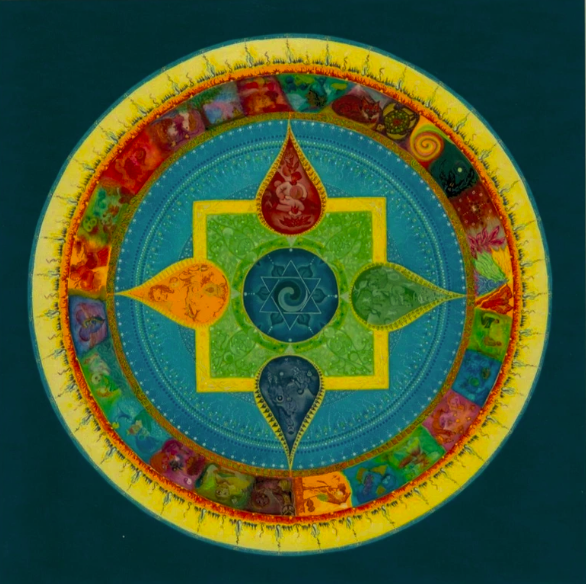
At the heart of the Mandala Method are the five buddha families, a Tibetan Buddhist map of five emotional styles and their associated wisdom qualities. Each family represents a cluster of emotional patterns along with a corresponding wisdom quality. In simple terms, they describe five ways we get stuck and five ways those same energies can show up as clarity, compassion, and effective action when transformed.
The mandala presents these five families in a circle with a center and four directions. Each direction is associated with a color, an element, a core emotional pattern, and a wisdom. Working with the mandala helps you see which patterns you tend to repeat, where you are overdeveloped or underdeveloped, and how to bring your system into better balance.
The Mandala Method adds another layer by working consciously with what psychology calls feminine and masculine energies. In this context, “feminine” and “masculine” refer to inner qualities and styles, not fixed gender roles. Each of us has both. When one side is underused or overdriving, it can show up as self sabotage, relationship conflict, or burnout. When they work together, there is more stability, clarity, and ease.
The three Mandala Method courses build on each other:
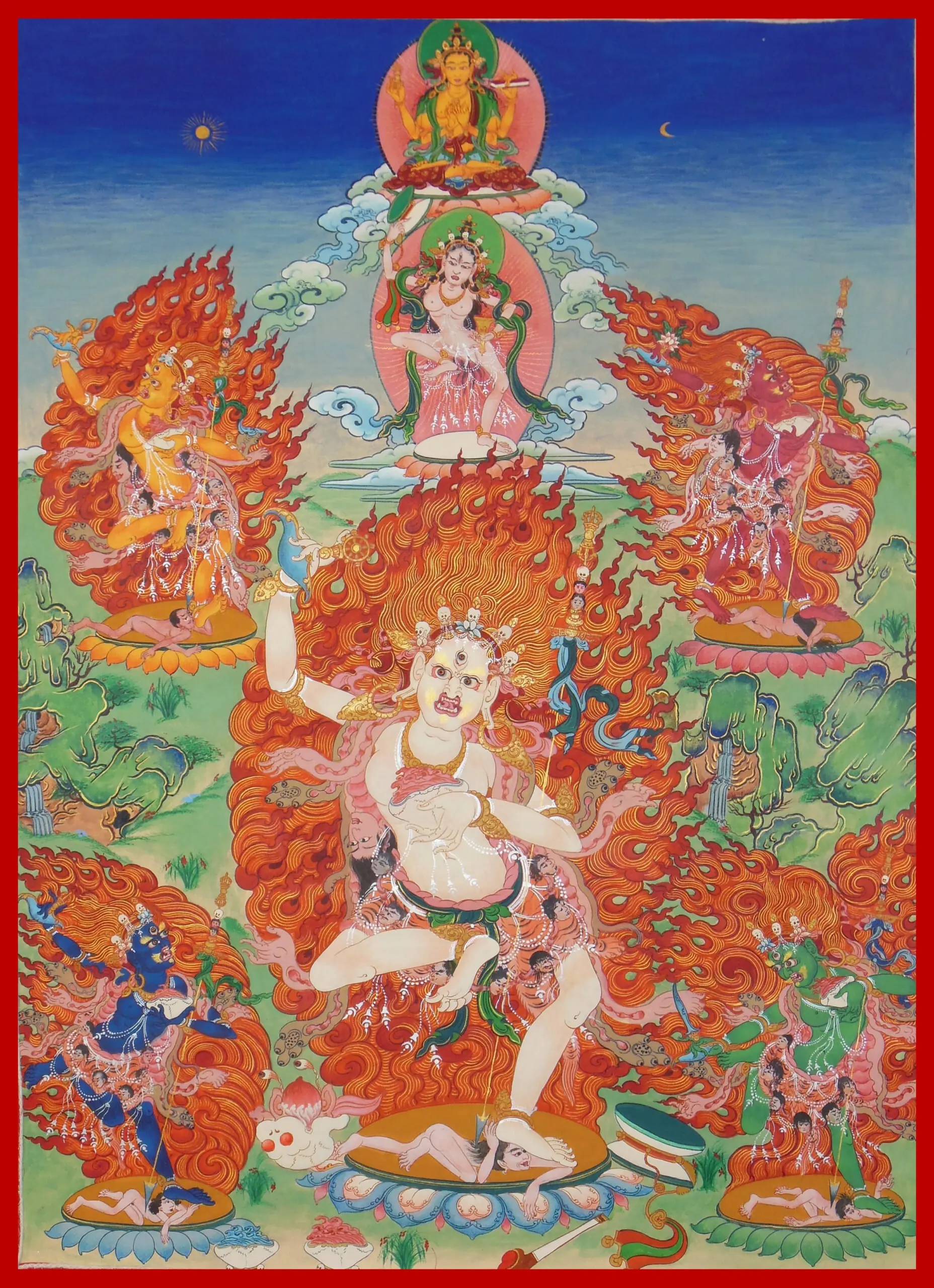
- The Empowered Feminine course focuses on the Mandala of the Five Wisdom Dakinis, female figures in Tibetan Buddhism that personify different types of awakened energy.
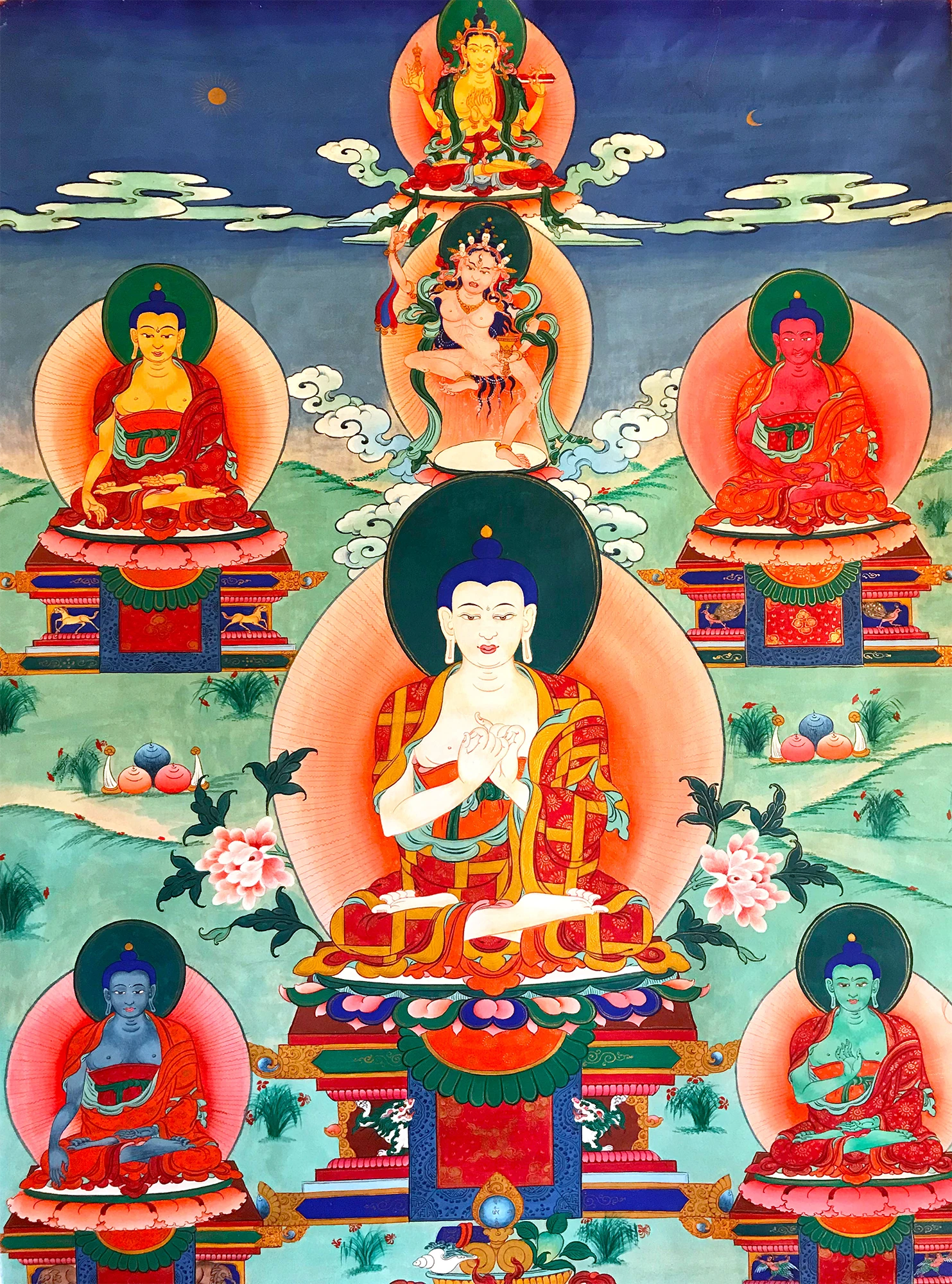
- The Sacred Masculine course focuses on the Mandala of the Five Buddhas, which works primarily with the inner masculine, clarity, and action.
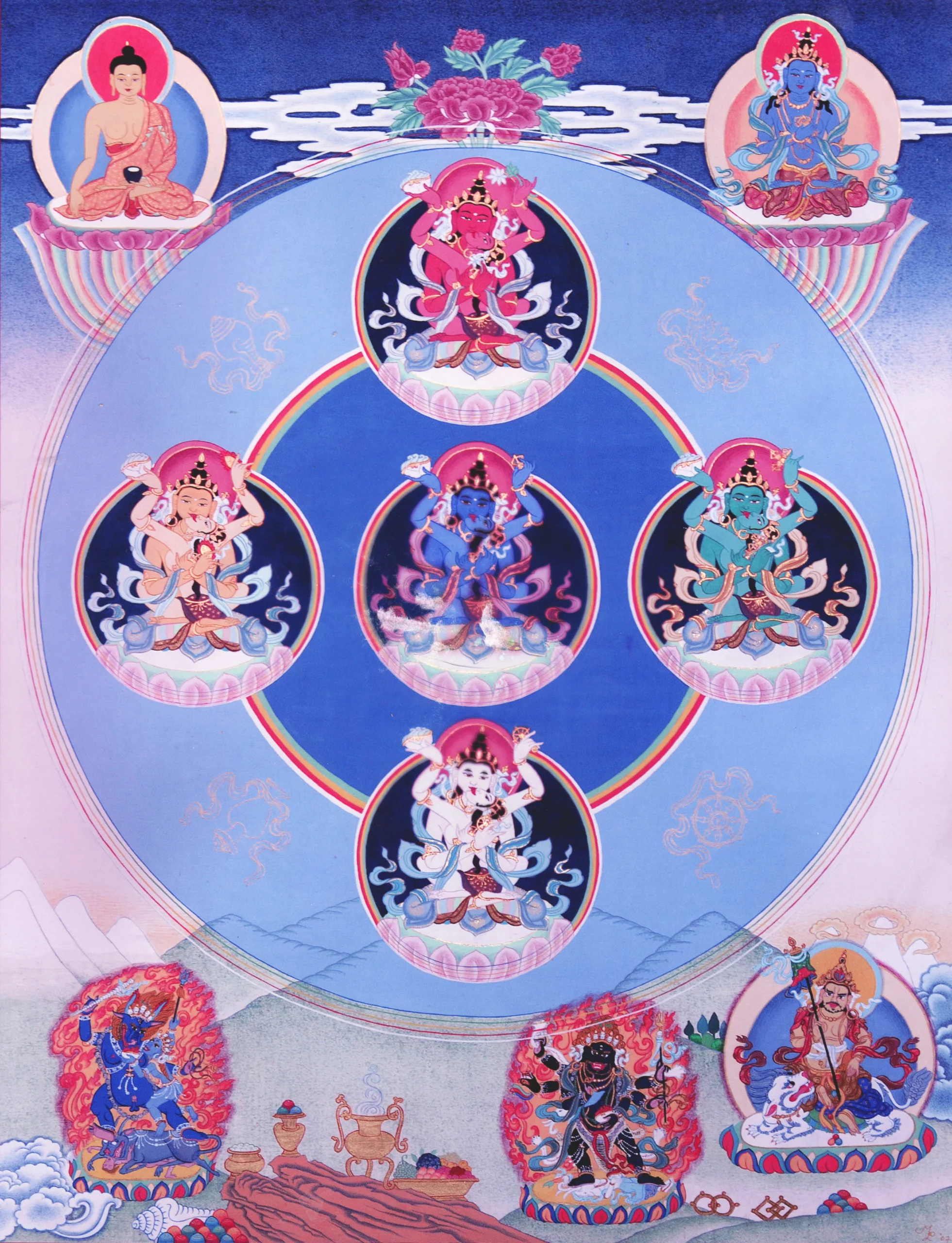
- The Sacred Union course brings them together through the Mandala of Yab Yum, a traditional image of a male and female figure in union that symbolizes the inseparable partnership of two kinds of inner energy often called feminine and masculine.
Across all courses you use a consistent set of tools: daily mandala meditation practices, guided inner journeys, “Mandala Work with Your Hands” art processes, element meditations, and a structured Five Family Life Review, a reflection practice that looks at your life stories through the lens of the five families. The method is experiential, which means you do not just study the concepts; you test them directly in your body, emotions, and relationships.
Mandala Method Courses
The Mandala Method training is organized into three courses. They are open to anyone, and best taken in sequence (though this is not required.) Each course combines teaching, guided practices, art and movement based work, and structured personal practice hours.
Journey into the Mandala of the Empowered Feminine
Focus: Inner feminine, emotional transformation, and the Mandala of the Five Wisdom Dakinis
This course introduces the mandala principle and the five buddha families through the lens of the empowered feminine. You work with the Mandala of the Five Wisdom Dakinis, female figures in Tibetan Buddhism that personify different types of awakened energy, to recognize your own emotional patterns and begin to shift them into more grounded, responsive ways of being. The emphasis is on inner work that is accessible to people of all gender identities.
This course includes:
- Introduction to the mandala principle and the five buddha families
- Teachings on the empowered feminine within Buddhism
- Teachings on the obscurations and wisdoms associated with each family
- Creation of a simple personal altar
- Guided Five Family Life Review to help you identify your own patterns
- Daily Mandala of the Five Wisdom Dakinis meditation practice
- Guided inner journey using dakini imagery from a chosen family
- “Mandala Work with Your Hands” art processes
Format and prerequisites
- Format: Live online and self-paced course options with video teachings with an authorized Tara Mandala teacher
- Prerequisites: None; open to all practitioners, including those new to Tara Mandala and to Buddhism
Practice requirements for Magyu and or Certification track
- 50 hours of Mandala of the Dakini practice
- 0.5 hour post practice for each session, using Mandala Art with Your Hands, Journey with Dakini, or Feeding Your Demons, if you already know that method
- Total: 75 hours of practice for this level
Journey into the Mandala of the Sacred Masculine
Focus: Inner masculine, clarity and action, and the Mandala of the Five Buddhas
This course works with the Mandala of the Five Buddhas and the “sacred masculine” qualities of skillful action and wise compassion. You explore how your inner masculine shows up, where it tends to overdrive or collapse, and how it can support rather than override your inner feminine. This level is also open to all gender identities.
This course includes:
- Teachings on the five buddhas and their core attributes
- Exploration of mental obscurations, skandhas, and mudras associated with each buddha
- Teachings on what is meant by “sacred masculine” in this context
- Deeper identification of your own obscurations and strengths in relation to the masculine
- Daily Mandala of the Five Buddhas meditation practice
- Guided inner journey using buddha imagery from a chosen family
- “Mandala Work with Your Hands” art processes
- “Unblocking the Encumbered Energy” sound and light practice for all five families
- Element meditations for all five families
Additional content for Certification participants
- Introduction to Mandala Method pillars and mode of working
- Introduction to the Five Family Assessment, a simple questionnaire that helps map your tendencies into the five Buddha families
- Partner work using enhancement practices such as guided inner journeys, art, elements, and unblocking practices
- Review of feedback forms and simple partner feedback processes
Format and prerequisites
- Format: Scheduled course, offered periodically, typically with live online teachings and guided practice sessions
- Prerequisites: For Certification track participants only, completion of Journey into the Mandala of the Empowered Feminine, or equivalent training through an authorized Tara Mandala course or teacher
Practice requirements for Magyu and or Certification track
- 50 hours of Buddha mandala practice, about 10 hours per Buddha
- 0.5 hour post practice for each session, using Mandala Art with Your Hands, Journey with a Buddha, or Feeding Your Demons, if you already know that method
- Total: 75 hours of practice for this level
Partner work for Certification participants
Certification track students also complete guided practice with assigned partners, including:
- Guided Journey with a Dakini
- Guided Journey with a Buddha
- Element meditations
- Unblocking the Encumbered Energy (sound and light) practice
- Mandala Work with Your Hands
Journey into the Union of Sacred Feminine and Masculine
Focus: Yab Yum Mandala, relationship patterns, and integration of feminine and masculine
This offering brings the previous two courses together through the Mandala of Yab Yum, a traditional image of a male and female figure in union that symbolizes the inseparable partnership of two kinds of inner energy often called feminine and masculine. You look more directly at how your patterns play out in relationships, both inner and outer, and how the five families show up in attachment, anger, disconnection, jealousy, and other relational themes.
This course includes:
- Teachings on Yab Yum symbolism and male and female Buddhas
- Exploration of integration of feminine and masculine beyond binary gender language
- Working with obscurations in relationships and how they can shift into clearer relating
- Teachings on outer, inner, and secret mandala levels
- Teachings on relationship to self and others through the Yab Yum model
- Daily Mandala of the Male and Female Buddhas meditation practice
- Guided inner journey using Yab Yum imagery from a chosen family
- Mandala Work with Your Hands art processes
- Unblocking the Encumbered Energy practice for all five families
- Element meditations for all five families
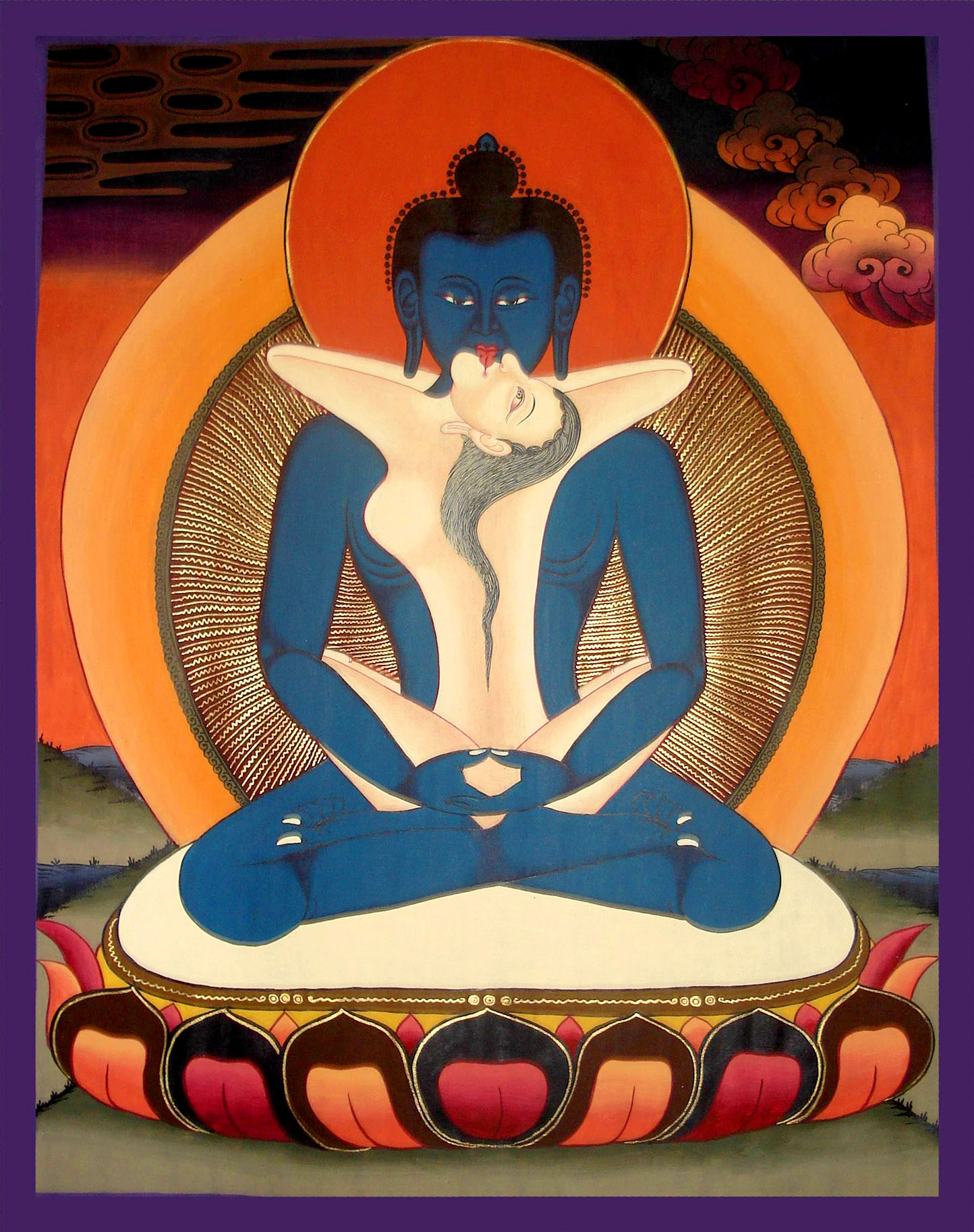
Focus: Yab Yum Mandala, relationship patterns, and integration of feminine and masculine
This offering brings the previous two courses together through the Mandala of Yab Yum, a traditional image of a male and female figure in union that symbolizes the inseparable partnership of two kinds of inner energy often called feminine and masculine. You look more directly at how your patterns play out in relationships, both inner and outer, and how the five families show up in attachment, anger, disconnection, jealousy, and other relational themes.
This course includes:
- Teachings on Yab Yum symbolism and male and female Buddhas
- Exploration of integration of feminine and masculine beyond binary gender language
- Working with obscurations in relationships and how they can shift into clearer relating
- Teachings on outer, inner, and secret mandala levels
- Teachings on relationship to self and others through the Yab Yum model
- Daily Mandala of the Male and Female Buddhas meditation practice
- Guided inner journey using Yab Yum imagery from a chosen family
- Mandala Work with Your Hands art processes
- Unblocking the Encumbered Energy practice for all five families
- Element meditations for all five families
Additional content for Certification participants
- Guided enhancement practice feedback with peers
- Introduction to guiding Five Family Life Review, a structured reflection on your life through the lens of the five Buddha families, including trauma sensitivity and worksheet options
- Practice guiding Life Review sessions
- Practice Guiding Element Meditations
- Introduction to guiding each of the mandala practices
Format and prerequisites
- Format: Scheduled course, generally offered online with live sessions, with possible retreat options
- Prerequisites: For Certification track participants only, completion of Journey into the Mandala of the Empowered Feminine and Journey into the Mandala of the Sacred Masculine, or equivalent mandala training with Tara Mandala
Practice requirements for Magyu and or Certification track
- 50 hours of Yab Yum mandala practice, about 10 hours per Yab Yum
- 0.5 hour post practice for each session, using Mandala Art with Your Hands, Journey Male and Female Buddhas, or Feeding Your Demons, if you already know that method
- Total: 75 hours of practice for this level
Partner work for Certification participants
Certification track students complete guided practice with partners, including:
- Guided inner journey using Yab Yum imagery
- Five Family Life Review
- Mandala of the Dakinis practice
- Mandala of the Five Buddhas practice
- Mandala of the Yab Yum practice
Mandala Method Certification Program
Who Certification is for
The Mandala Method Certification Program is for people who want to work one to one with others using the Mandala Method practices. It is especially suited to therapists, coaches, counselors, spiritual directors, sangha leaders, and experienced practitioners who already support others and want a structured mandala based framework in their toolkit.
Certification authorizes you to use Mandala Method practices with individuals in a one to one setting. It does not grant permission to lead groups, workshops, or retreats under the Mandala Method name. Group level training may be offered separately in the future.
Program Structure
The Certification Program consists of the three Mandala Method courses plus a Capstone Certification Retreat. At each course level, certification participants attend additional training time and complete partner work between modules.
Core components:
- Journey into the Mandala of the Empowered Feminine
- Journey into the Mandala of the Sacred Masculine
- Journey into the Union of Sacred Feminine and Masculine
- Capstone Certification Retreat
The first three courses can be taken by anyone, whether or not they plan to certify. Certification participants join an additional training track and complete defined practice and partner work. The Capstone Certification Retreat is open only to those who have applied, been accepted, and completed all practice and partner requirements.

The Path to Certification
To become certified in the Mandala Method you move through a clear sequence.
1. Complete an application for Mandala Method Certification
Therapists, coaches, counselors, sangha leaders, and other facilitators who wish to use the Mandala Method with individuals apply and are reviewed for fit, experience, and readiness. There is a modest application fee that covers processing and an interview.
2. Complete Journey into the Mandala of the Empowered Feminine
- Take the course, self paced or during a scheduled cohort.
- Complete 50 hours of Mandala of the Dakini practice plus associated post practice work, using art, guided inner journeys, or Feeding Your Demons if you know it.
- Total: 75 hours of practice.
3. Complete Journey into the Mandala of the Sacred Masculine
- Take the course in a scheduled offering.
- Participate in the Certification Track instruction day.
- Complete 50 hours of Buddha mandala practice plus post practice work.
- Attend monthly partner training sessions and guide guided inner journeys, element meditations, unblocking practices, and Mandala Work with Your Hands.
4. Complete Journey into the Union of Sacred Feminine and Masculine
- Take the Yab Yum mandala course in a scheduled offering.
- Participate in the Certification Track instruction day.
- Complete 50 hours of Yab Yum mandala practice plus post practice work.
- Attend monthly partner training sessions and complete additional partner practice, including guided inner journeys using Yab Yum imagery, Life Review, and guiding the three mandala practices.
5. Complete the Certification Capstone Retreat
- Attend the Capstone Retreat, usually offered annually on a cohort basis.
- Receive deeper training in the Mandala Method pillars, psychological foundations, trauma considerations, and ethical and multicultural topics.
- Complete supervised guiding practice and receive feedback.
What the Capstone Covers
The Certification Capstone deepens your understanding of how to apply the Mandala Method in one to one work. Topics include:
- Mandala Method pillars and style of working
- Mandala as a template of psychological wholeness
- Introducing the mandala and five families to individuals
- Identifying encumbered emotions and corresponding wisdoms
- Psychological foundations for mandala work
- Introducing the symbolism of the dakinis, buddhas, and yab yum
- When to use dakini, buddha, or yab yum based practices
- Use of Five Family Assessment and Five Family Life Reviews
- Continued guiding practice and feedback on all practices

- Trauma considerations, including scope of practice and referral
- Ethical and multicultural considerations
- How certification relates to Tara Mandala and its wider programs
- Ongoing support, supervision, and case presentations after certification
Certified practitioners continue to have access to regular online supervision and case presentation sessions so their work remains well supported and aligned with best practices.
What Certification Authorizes
Once fully certified, Mandala Method practitioners are authorized to work one to one with individuals using:
- Five Family Assessment
- Five Family Life Review practices for each of the five families
- Mandala of the Dakini meditation practice
- Mandala of the Buddha meditation practice
- Mandala of the Yab Yum meditation practice
- Guided inner journeys using Dakini, Buddha, or Yab Yum imagery
- Unblocking the Encumbered Energy sound and light practice for all five families
- Element meditations for all five families
- Mandala Work with Your Hands processes
Certification does not authorize group level teaching or retreats using the Mandala Method brand. Those who wish to work with groups can indicate that interest so they can be contacted if a separate group certification track is developed.
Mandala Method FAQ
Are Mandala Method practices only for Buddhists?
No. The Mandala Method is grounded in Tibetan Buddhist teachings, but it is designed to be accessible to people of any or no religious background. You should be comfortable engaging with deity imagery and meditation, but you are not required to adopt any particular belief system.
Do I have to take the Mandala Method courses in order?
No, not for personal work, although it is recommended. However, if you plan to enter the Certification Program you are expected to complete the courses in sequence, or demonstrate equivalent training with Tara Mandala. For personal practice only, you can sometimes start where your previous experience fits, but the recommended path is to begin with Journey into the Mandala of the Empowered Feminine so you have a shared foundation.
Do I need to complete all personal practice hours to move between levels?
For Certification participants, practice hours and partner work are required before moving on to the next stage. For personal practice students, the hours are strongly recommended so you receive the full benefit of the method, but the requirements can be somewhat more flexible depending on the program.
When can I start the Mandala Method Certification Program?
You begin by applying to the Mandala Method Certification Program before or while taking Journey into the Mandala of the Empowered Feminine. Once accepted, you are recognized as a certification track participant and receive information about the extra training days, partner work expectations, and the timeline for the Capstone Retreat.
What if I have already learned dakini, buddha, or yab yum practices at Tara Mandala?
If you have completed earlier Tara Mandala courses that cover these mandalas, you may receive credit for some requirements. You still need to apply to the Certification Program and speak with the team so they can map your prior training to the current structure and confirm what, if anything, needs to be repeated or refreshed.
What if I learned five family or mandala style practices in other Buddhist organizations?
Prior training in other Tibetan Buddhist contexts can be very helpful, but Mandala Method certification is specific to the Tara Mandala implementation. You will still need to complete the core Mandala Method levels, though your background may make the material more familiar and you may move through it more easily.
Is Feeding Your Demons included in Mandala Method Certification?
Feeding Your Demons is not taught inside the Mandala Method Program itself. If you have learned it through Kapala Training or other authorized programs, you can choose to use it as one of your post practice options. It remains a separate training and certification path.
Once certified, can I use enhancement practices without the full mandala?
Yes. Once you are certified, you can use enhancement practices such as Life Reviews, guided inner journeys, Mandala Work with Your Hands, element meditations, or Unblocking the Encumbered Energy within individual sessions, even when you are not guiding a full mandala practice. You are still expected to work within your scope of practice and to follow the ethical guidelines presented in the training.
Once certified, can I lead groups, workshops, or retreats with the Mandala Method?
No. Current certification covers one to one work only. Leading groups, daylongs, or retreats under the Mandala Method name would require a separate training and authorization. If you are interested in future group certification, you can note that in your application.
How do I register for the Certification add on days?
Once you are accepted into the Certification Program you will receive instructions on how to register for the certification track in each course. Typically you sign up for the main course first, then add the certification training day or days as an additional option at registration.