
At Tara Mandala, we invite you to begin where you are. Meditation and mindfulness are not about becoming someone else. They are about remembering your own clarity, compassion, and strength. Whether you are new to practice or returning after time away, these teachings offer a grounded, accessible way in.
If you are wondering how to start meditating, the sections below offer

a few clear entry points. Each practice has its own shape and purpose, but all of them can help you settle, open, and begin again.

Try a Relaxation Practice
Meditation can support both body and mind. Even a few minutes a day may help calm stress, steady attention, and open space for creativity. Mindfulness, rooted in the teachings of the Buddha, helps us notice thoughts and emotions with gentleness rather than judgment.
A simple place to begin is The Nine Relaxation Breaths, a short practice for releasing tension and settling into the present moment.
The Nine Relaxation Breaths
Sit comfortably and close your eyes or lower your gaze.
For the first three breaths, notice any physical tension. Breathe into those areas and let the tension soften on the exhale.
For the next three breaths, become aware of emotional tension. Breathe into what you notice, and allow it to release.
For the final three breaths, bring attention to mental tension or worry. Meet it with awareness, then gently let it go.
Sit quietly for a moment and notice how you feel.
This practice is often a helpful first step before meditation, and it also prepares you for the Five-Step Feeding Your Demons® Process.
Practice Calm Abiding (Shamatha) Meditation
Vipashyana (Skt. vipaśyanā; Tib. lhaktong) means “special insight” or “clear seeing.” Where Shamatha steadies the mind, Vipashyana reveals the changing, interconnected nature of experience. It helps us look directly at how thoughts, sensations, and identity arise and pass.
Trungpa Rinpoche described Vipashyana as “a flash of lightning in a clear night sky.” In that moment, what seemed fixed begins to appear more fluid and open.
Learning meditation is a little like learning music or language. It takes practice, patience, and guidance. A qualified teacher can help you understand what is unfolding and answer questions as you go.
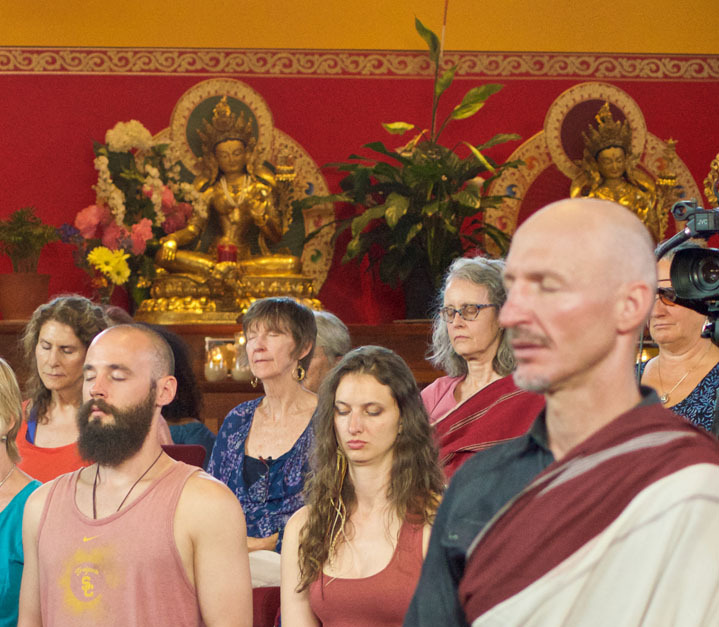
Instructions on Shamatha Meditation with Lama Tsultrim Allione
The Feeding Your Demons® Process, created by Lama Tsultrim Allione, is a five-step practice that transforms inner struggle through compassion. It draws on the teachings of the 11th-century Tibetan yogini Machig Labdrön and makes them accessible for modern practitioners.
Instead of pushing against fear, anger, or self-criticism, the practice invites us to listen more closely. You meet what feels difficult, ask what it needs, and offer what brings relief. Over time, this can move us from
conflict toward integration.
You can learn the full method in our Feeding Your Demons® Level I Course and deepen further through the Feeding Your Demons® Certification Program.
Deepen Your Practice with Mahayana Principles
In Tibetan, the word for meditation, gompa, means “to familiarize.” You are gradually becoming familiar with your own mind, patterns, and potential. This takes time. It is not about getting meditation right, but about showing up again and again.
There will be periods of calm and periods of upheaval. Thoughts may feel louder for a while, or old emotions may surface. This does not mean something is going wrong. It means that practice is bringing what has been hidden into the light of awareness. As many wise teachers say, the path itself is the goal.
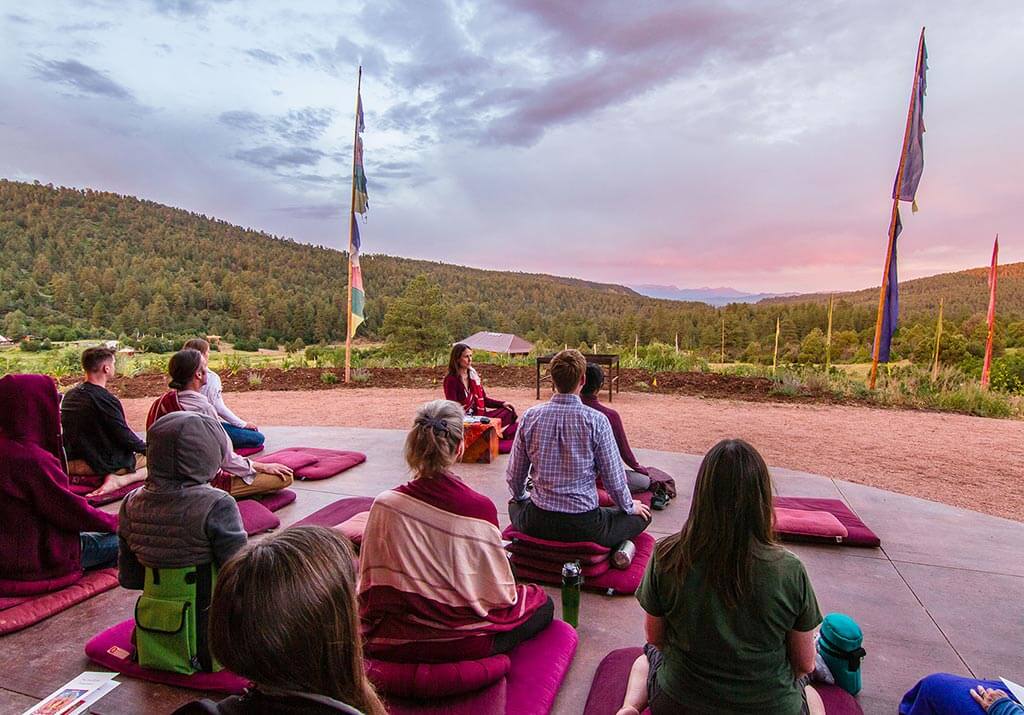 Photo credit: Josh Brownlee
The Four Immeasurables
The Four Immeasurables are Love, Compassion, Joy, and Equanimity. They are called immeasurable because their benefits extend beyond any one person or situation. Through contemplation and meditation on these qualities, we gradually open the heart.
For example, you might silently repeat phrases such as “May I be happy, may others be happy” or “May all beings know peace.” Over time, this reshapes how you relate to yourself, your relationships, and the world.
Lojong (Mind Training) and Tonglen (Sending and Taking)
Lojong means “mind training.” It is a collection of short, pithy slogans that help us transform both adversity and joy into fuel for awakening. They are easy to remember and surprisingly powerful in daily life.
Within this tradition, Tonglen is a practice of exchanging self-centeredness for care toward others. On the in-breath, you imagine taking in the suffering of others as dark smoke. On the out-breath, you send relief, love, or clarity as bright light. This may sound simple, but it can be a profoundly healing way to relate to your own pain and the pain of others.

Together, these teachings cultivate Bodhichitta (the awakened heart that deeply wishes for the liberation and well-being of all beings).
Micro-FAQ: What is Bodhichitta in everyday language?
Bodhichitta is the combination of courage and tenderness that arises when you truly care about the suffering of others and want to help, while also recognizing your own capacity for wisdom and compassion.
Discover the Vajrayana Path
At its core, Tara Mandala focuses on Vajrayana, the “diamond vehicle” of Buddhism. Vajrayana uses visualization, mantra recitation, symbolic rituals, and direct transmission from teacher to student to transform how we experience ourselves and the world.
This path includes the Great Perfection (Dzogchen) and the lineage of Machig Labdrön, founder of the Chöd tradition. It is both powerful and subtle, designed for practitioners who are ready for deeper commitment and guidance.
Tara Mandala offers several long-term practice paths, each providing structure and support for a daily practice that can unfold over many years.
Developed by Lama Tsultrim, Magyu brings together traditional Vajrayana teachings and contemporary psychological insight. It emphasizes the integration of spiritual growth with emotional maturity, honoring both the inner and outer lives of practitioners.
The Mandala Method explores the ancient Buddhist mandala as a living template. It helps you understand how different aspects of your experience can be brought into harmony, both within yourself and in your relationships and work in the world.
The Ösel Nyingtig: Heart Essence of Luminosity
The Ösel Nyingtig is a multi-year program for dedicated practitioners. Co-taught by Lama Tsultrim and her son, Dorje Gyaltsab Tulku Ösel Dorje (Costanzo Allione), it offers a direct path to recognizing luminous awareness as the heart of your own mind.
The Gateway Program adapts a traditional three-year solitary retreat curriculum in the Dzinpa Rangdröl (Self-Liberation of Clinging) teachings for modern life. Practitioners follow a structured sequence of practices while continuing to live and work in the world.
The Heart of Buddhism: A Yearlong Program
For those interested in foundational learning and practice, The Heart of Buddhism: A Yearlong Buddhist Studies Program offers an integrated introduction to Buddhist view, meditation, and ethics.
Meet the Dakini
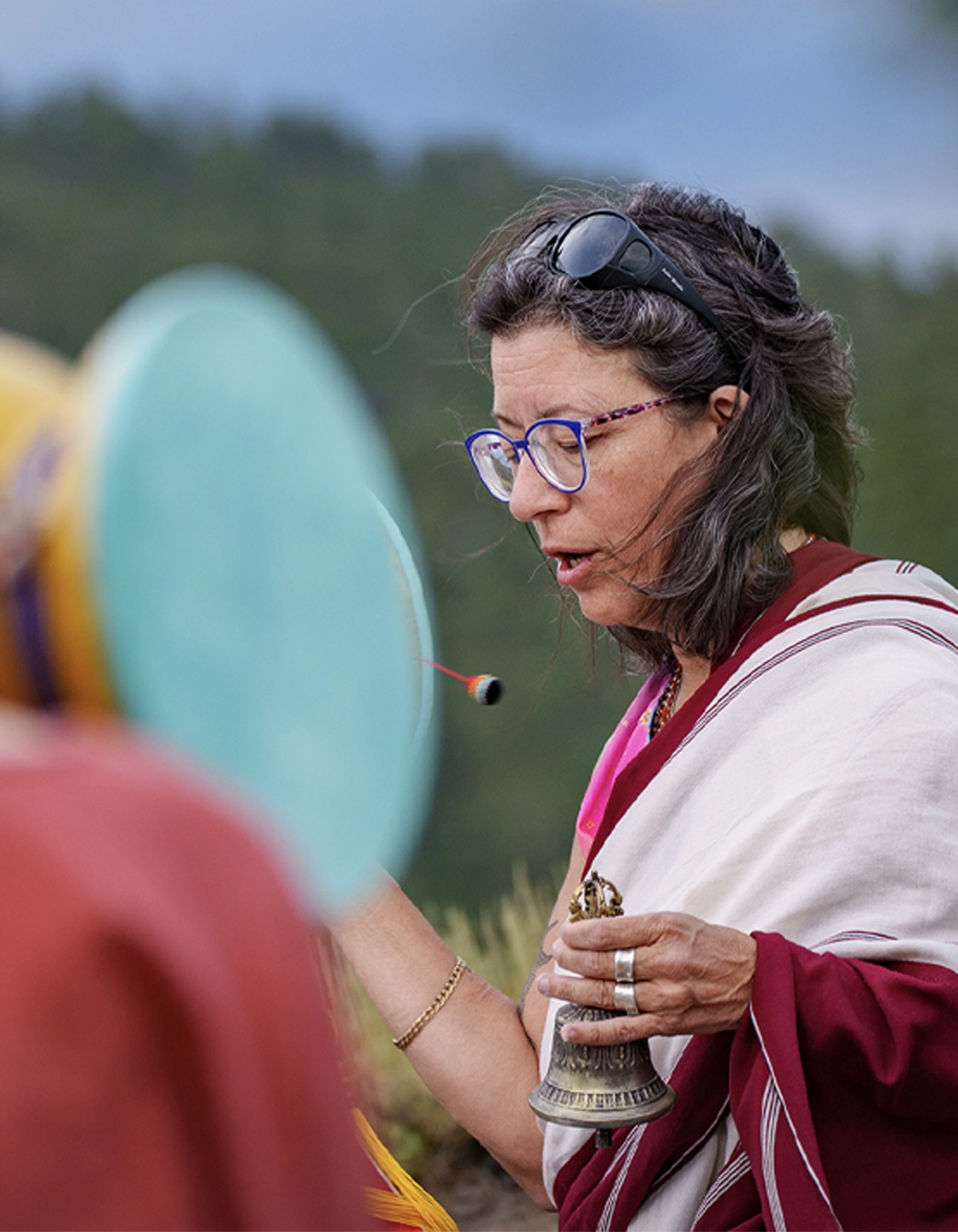
Dakini (Skt. Ḍākinī; Tib. Khandro) means “sky dweller” or “sky dancer.” In Tibetan Buddhism, the dakini is the most sacred expression of the feminine principle. She is both human and divine, playful and fierce, ordinary and utterly mysterious.
Dakinis can appear in many ways. Sometimes she is a spiritual teacher who arrives at just the right moment. Sometimes she is a vision, a dream, or a sudden realization that cuts through confusion. At other times, she may appear outrageous or even repulsive, shattering fixed ideas so that deeper truth can be seen.
In general, the dakini represents the constantly changing flow of energy with which practitioners must learn to dance in order to become realized. Ultimately, all women can be understood as dakini manifestations, each expressing wisdom and power in unique ways.
If you would like to experience the dakini principle within the mandala of the five buddha families and learn more about the sacred feminine in Tibetan Buddhism, we encourage you to explore our Journey into the Mandala of the Empowered Feminine Self-Paced Program based on the teachings of Lama Tsultrim Allione.
In her book Wisdom Rising, Lama Tsultrim describes the dakini as a messenger of spaciousness and a force of truth, revealing where we cling and what we try to hide, even from ourselves. Dakinis often appear at times of transition, between past and future, sleep and waking, old identity and new.
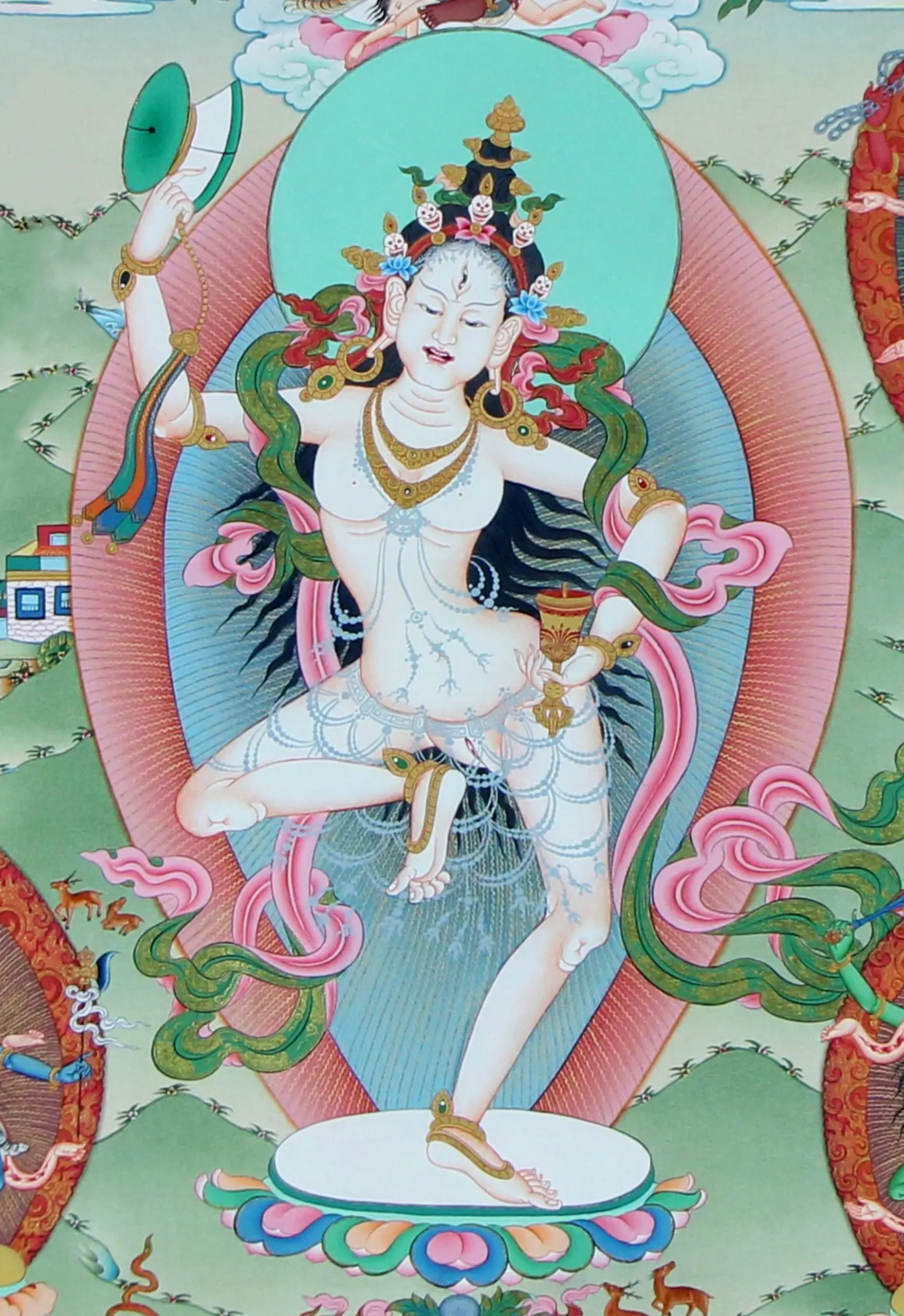
Read more about Green Tara & the 21 Taras here.
Dakinis guard the most intimate aspects of Vajrayana practice. Tradition says that without the blessing of the dakini, the fruition of Vajrayana is not possible.
Often, a dakini appears when a practitioner is ready to move from an intellectual to an experiential understanding of the teachings. The story of the monk Saraha is one example. He left his university, met a low-caste woman making arrows, and recognized her as his teacher when she reminded him that the Buddha’s meaning is known through symbols and actions, not only words and books.
On an ultimate level, the real wisdom dakini is the luminous emptiness of awareness itself. In this sense, the Great Mother Dharmakaya is the source from which all dakinis arise.
Live Teachings and Community Practice
Sangha, or community, is a vital part of the path. Practice deepens when we travel it together.
Lama Live! is a free monthly livestream event where practitioners from around the world gather for meditation, prayer, and teachings from Lama Tsultrim Allione and guest teachers. Whether you join from Pagosa Springs, elsewhere in Colorado, or anywhere in the world, you are welcome.
Practice Resources
- Long Life Prayers
- Lama Tsultrim Long Life Prayers
- Lama Tsultrim 70th Birthday Booklet & Long Life Prayers
- Long Life Prayer for Orgyen Khakhyab Lingpa
- Long Life Prayer for Tsoknyi Rinpoche
- Long Life Prayer for Lama Wangdu
- Long Life Prayer for Tulku Sang ngag Rinpoche
- Long Life Prayer for Lama Sonam Tsering
- Long Life Prayer For Namchak Khenpo
- Long Life Prayer For Chagdüd Khandro
- Long Life Prayer For Venerable Drubpön Lama Karma
- Long Life Prayer For Rigdzin Longyang Rinpoche
- Prayer to All the Lamas
- Ngang Drak Rigdzin
- Meal Chant
- Bodhichitta and Dedication
- Nine Breaths
- Song to Rouse Joy by Tulku Sang-ngag Rinpoche
- Prayer of Samantabhadra for Solstice
- Three Kaya Prayer
- Taking Happiness & Sorrow On the Path
- Jigme Lingpa Tsog
- The Faithful Student Song
- E-friendly version of the text
- Recording of Jetsunma Khachö Wangmo singing the Faithful Student Song (recording made by Daniel Donner)
- Praise to Machig Labdrön
- Elemental Prayer
- The Three Candles
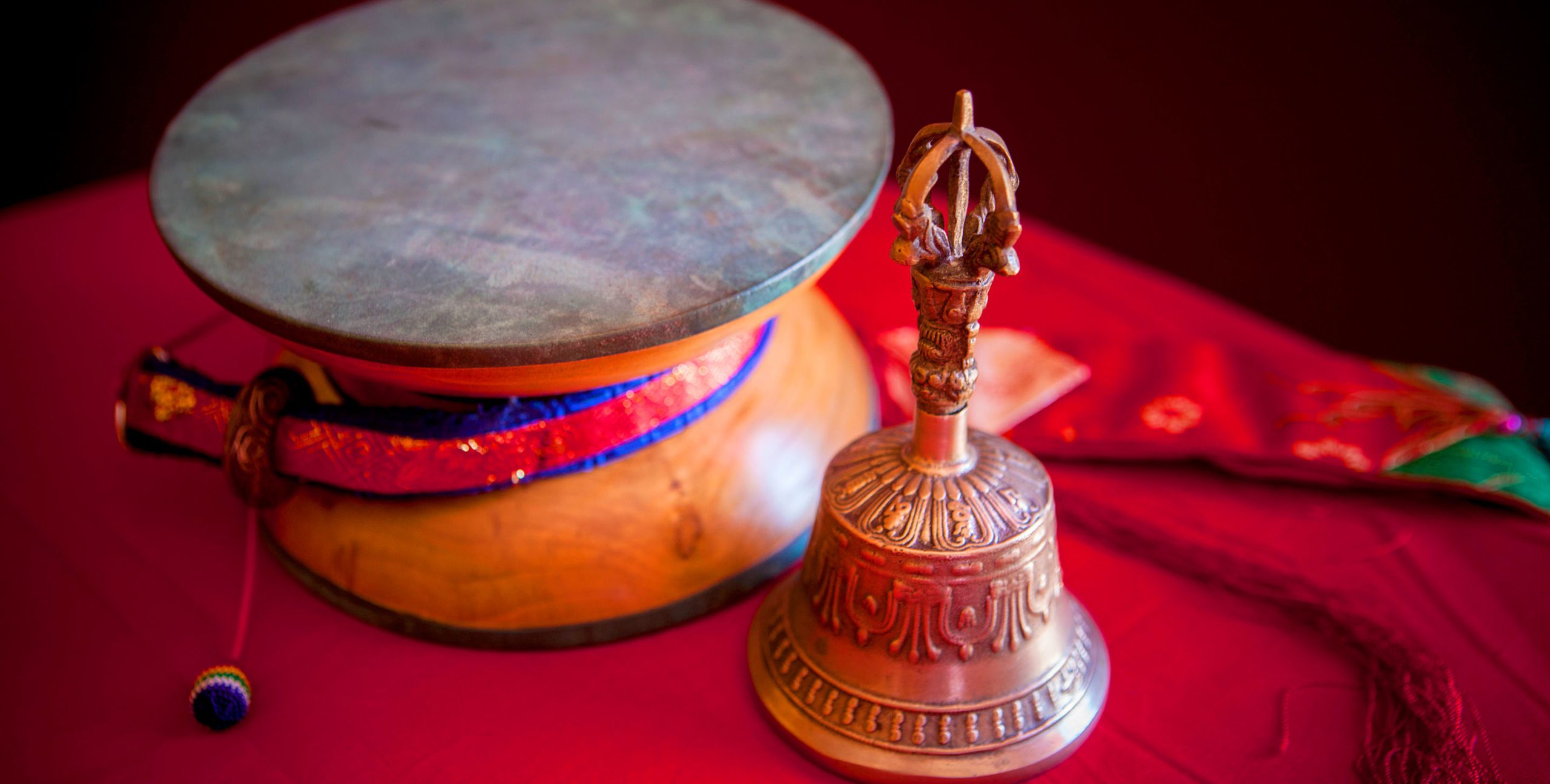
You can also view key practice days, holidays, and anniversaries according to the Tibetan lunar calendar based on the Phugpa tradition. To add these sacred dates to your personal schedule, click here, then “+ Google Calendar” at the bottom left corner of the calendar.
Every path here begins with one simple act: taking a breath and turning inward. From there, a complete mandala of teachings, practices, and community becomes available to support your journey.
October 2026 |
||||||
| Sun | Mon | Tue | Wed | Thu | Fri | Sat |
|---|---|---|---|---|---|---|
|
1
|
2
|
3
|
||||
|
4
|
5
|
6
|
7
|
8
|
9
|
10
|
|
11
|
12
|
13
|
14
|
15
|
16
|
17
|
|
18
|
19
|
20
|
21
|
22
|
23
|
24
|
|
25
|
26
|
27
|
28
|
29
|
30
|
31
|